I just received the following email:
Hello Christopher Perez... And thank you for submitting your "trains" portfolio for our consideration. I'm pleased to let you know that this work has been selected for publication as a Bonus Feature on LensWork Extended #78 computer DVD for September-October, 2008. Congratulations!
Of course, there are a few things we will want to organize as soon as possible...
I am very pleasantly surprised, very happy, and a little in shock. Stay tuned. Brooks will be interviewing me as part of the distribution of my work. I just hope I don't make a d*mned fool of myself!
Thursday, July 17, 2008

Thursday, July 10, 2008
How I did this... [7]
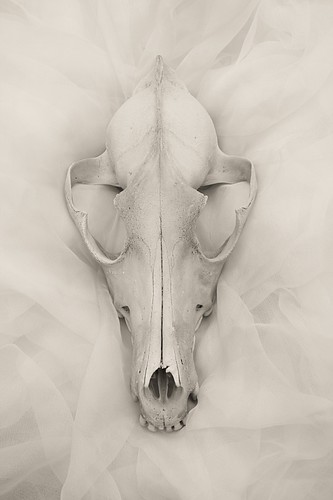
For the last of this series of posts I wanted to spend a moment to talk about an image that garnered the kind of response an ego-addled-mind can only dream of. This image has won awards, prints have been purchased, and the photo has been viewed on Flickr 7,000 times.
As I was developing my understanding and skills of modern image manipulation tools, I thought it would be good to start very simply. Later, I could work my way up in complexity as needs or desires demanded.
It was winter. It was cold out. Yet, I wanted to make a few images. I had stumbled upon David Hobby's Strobist Blog and was thrilled by the strobe images he described. David links his blog to Flickr, the same community site where I have my photo dump page.
An idea occurred to me make a series of images of a recently acquired mammalian skulls using the simplest of lighting methods. I stumbled downstairs one fine weekend and stood in my light/darkroom and thought awhile. What I came up with was a way to suspend my Alien Bees 3x4foot softbox/B800 between two tables. I then placed white rag board on all sides as a means of filling the subject completely from every angle with light. Then I scrounged through my rag-bag of backdrop materials and hauled out some things suitable. For the background I wondered if a subtle white on white might work well.
After about 30 minutes of fooling around with the light, materials, rag board, backdrop, and subject matter, I was ready to try my hand at making a few images. For the next two hours I had played with different ideas, different skulls, and different camera angles. The thing that stuck me as the most powerful representation was a bare white on white shot from nearly the top view of the biggest mammalian skull I had on hand, the coyote head.
The processing was very straight forward. I brought the image into the free Open Source application called the Gimp. I adjusted the levels slightly and bumped the contrast just a little. The changes were slight, but I hoped effective. Then I added a platinum tint to warm the photograph.
After downsizing the image and posting it on my Flickr pages I thought it might be fun to share this with the Strobist Flickr pool. I didn't think much about it until somewhat later when David Hobby mentioned he had taken a few of the pool images and shared them at Apples latest OS-X release party. People ooh'd and ah'd and seemed to like David's selection. So imagine my surprise when this image had been included in that showing!
Again, time passed and I didn't think much about the photo. This, even after a c0uple friends and colleagues purchased a few prints.
Around the end of 2007, David Hobby announced that he had lined up a few awards for a small contest he was running. David brought in outside help to judge Strobist images and to make a selection of five images from the vast pool of fine photographs. As David shared what the awards would be, I noticed that Alien Bees had offered an ABR800 ring light. I had been lusting after one and said so on Mr. Hobby's blog. It was like rolling dice and I was excited by the possibilities.
At the end of December, David started to announce the winners. My photo had won 4th place. I was stunned. I was shocked. I was amazed. I was very happy.
The ABR800 was eventually mine, and it's arrival led to yet another photoshoot with my favorite models, Sofia and Jane Archer. But that's a story partially told previously...
As I was developing my understanding and skills of modern image manipulation tools, I thought it would be good to start very simply. Later, I could work my way up in complexity as needs or desires demanded.
It was winter. It was cold out. Yet, I wanted to make a few images. I had stumbled upon David Hobby's Strobist Blog and was thrilled by the strobe images he described. David links his blog to Flickr, the same community site where I have my photo dump page.
An idea occurred to me make a series of images of a recently acquired mammalian skulls using the simplest of lighting methods. I stumbled downstairs one fine weekend and stood in my light/darkroom and thought awhile. What I came up with was a way to suspend my Alien Bees 3x4foot softbox/B800 between two tables. I then placed white rag board on all sides as a means of filling the subject completely from every angle with light. Then I scrounged through my rag-bag of backdrop materials and hauled out some things suitable. For the background I wondered if a subtle white on white might work well.
After about 30 minutes of fooling around with the light, materials, rag board, backdrop, and subject matter, I was ready to try my hand at making a few images. For the next two hours I had played with different ideas, different skulls, and different camera angles. The thing that stuck me as the most powerful representation was a bare white on white shot from nearly the top view of the biggest mammalian skull I had on hand, the coyote head.
The processing was very straight forward. I brought the image into the free Open Source application called the Gimp. I adjusted the levels slightly and bumped the contrast just a little. The changes were slight, but I hoped effective. Then I added a platinum tint to warm the photograph.
After downsizing the image and posting it on my Flickr pages I thought it might be fun to share this with the Strobist Flickr pool. I didn't think much about it until somewhat later when David Hobby mentioned he had taken a few of the pool images and shared them at Apples latest OS-X release party. People ooh'd and ah'd and seemed to like David's selection. So imagine my surprise when this image had been included in that showing!
Again, time passed and I didn't think much about the photo. This, even after a c0uple friends and colleagues purchased a few prints.
Around the end of 2007, David Hobby announced that he had lined up a few awards for a small contest he was running. David brought in outside help to judge Strobist images and to make a selection of five images from the vast pool of fine photographs. As David shared what the awards would be, I noticed that Alien Bees had offered an ABR800 ring light. I had been lusting after one and said so on Mr. Hobby's blog. It was like rolling dice and I was excited by the possibilities.
At the end of December, David started to announce the winners. My photo had won 4th place. I was stunned. I was shocked. I was amazed. I was very happy.
The ABR800 was eventually mine, and it's arrival led to yet another photoshoot with my favorite models, Sofia and Jane Archer. But that's a story partially told previously...
Wednesday, July 09, 2008
How I did this... [6]
My fevered mind keeps coming up with more and more ideas for photo projects.
A few months ago I realized that I had a desire to make a few images of icons in a modern vein. Reading The Historian brought to mind images of Byzantium. The flat lit Notan-like detailed icons were what I had in mind.
In similar time, I reread William Mortensen's book Pictorial Lighting from 1937. He described the use of Notan light as being particularly strong for creating icon-like images. Mortensen gave instructions in the book for a lighting setup that gave Notan effects.
The Basic Light configuration is a two light approach to rendering detail and subtle texture. One light is placed as close to the lens as possible to illuminate the subject. A second light is pointed at head level at a white backdrop. The exposure of the two lights is balanced. The backdrop light is set to match the skin tones of the subject. In this way, the white backdrop is not purely white, rather, it has just enough tone to ensure the limb effects of the subject is revealed.
Limb effects relates to the way the edges of a curved surface is effected by light placed next to the point of view. When lit in the Basic Light manner, limb effects lead to darker edges of the subject. This is what gives the desired separation between the subject and very nearly equally toned backdrop.
In the case of the images I wanted to make, I thought about Mortensen's comments on ring light use. In 1937, ring lights were uncommon. By 1943 when he wrote a book on electronic lighting, he had come to the idea of a ring light as perhaps a great way to achieve Notan light. Ring lights would give the ultimate in limb effects.
Working with Sofia, a bellydancer, I wanted as much limb effect as I could get. The images I wanted to create were not to be "familiar", as in a good photo of a relative or friend. Rather, I wanted something timeless, a little more remote feeling, and very tranquil. The Alien Bees ABR800 ring light was a great solution.
After spending a fair amount of time on making images of Sofia in motion we were coming down to the end of the photo-session. I put up a black backdrop and lit it from behind. We found a large pillow for the model to sit on and my wife and I worked to drape Sofia in various ways using her bellydance veils.
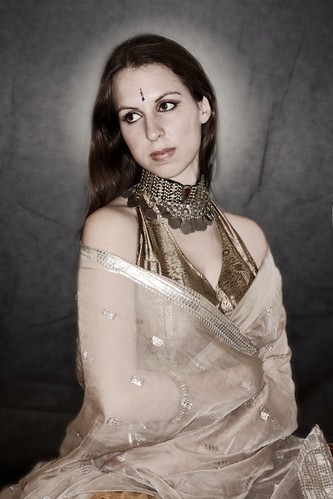
Processing the images later helped me complete my original vision. A subtle halo was added. The background was manipulated into something a little softer and darker. The model color was desaturated slightly by mixing an overlay of platinum tints.
As with other images of my series "How I did this...", this image is popular on Flickr. Sofia represents for me the iconic Maiden in a timeless, calm, and pleasing manner.
A few months ago I realized that I had a desire to make a few images of icons in a modern vein. Reading The Historian brought to mind images of Byzantium. The flat lit Notan-like detailed icons were what I had in mind.
In similar time, I reread William Mortensen's book Pictorial Lighting from 1937. He described the use of Notan light as being particularly strong for creating icon-like images. Mortensen gave instructions in the book for a lighting setup that gave Notan effects.
The Basic Light configuration is a two light approach to rendering detail and subtle texture. One light is placed as close to the lens as possible to illuminate the subject. A second light is pointed at head level at a white backdrop. The exposure of the two lights is balanced. The backdrop light is set to match the skin tones of the subject. In this way, the white backdrop is not purely white, rather, it has just enough tone to ensure the limb effects of the subject is revealed.
Limb effects relates to the way the edges of a curved surface is effected by light placed next to the point of view. When lit in the Basic Light manner, limb effects lead to darker edges of the subject. This is what gives the desired separation between the subject and very nearly equally toned backdrop.
In the case of the images I wanted to make, I thought about Mortensen's comments on ring light use. In 1937, ring lights were uncommon. By 1943 when he wrote a book on electronic lighting, he had come to the idea of a ring light as perhaps a great way to achieve Notan light. Ring lights would give the ultimate in limb effects.
Working with Sofia, a bellydancer, I wanted as much limb effect as I could get. The images I wanted to create were not to be "familiar", as in a good photo of a relative or friend. Rather, I wanted something timeless, a little more remote feeling, and very tranquil. The Alien Bees ABR800 ring light was a great solution.
After spending a fair amount of time on making images of Sofia in motion we were coming down to the end of the photo-session. I put up a black backdrop and lit it from behind. We found a large pillow for the model to sit on and my wife and I worked to drape Sofia in various ways using her bellydance veils.
Processing the images later helped me complete my original vision. A subtle halo was added. The background was manipulated into something a little softer and darker. The model color was desaturated slightly by mixing an overlay of platinum tints.
As with other images of my series "How I did this...", this image is popular on Flickr. Sofia represents for me the iconic Maiden in a timeless, calm, and pleasing manner.
Tuesday, July 08, 2008
How I did this... [5]
During the winter my wife and I discovered that a nearby lake is home to a wide variety of birds. The weather is just warm enough that the scaups, ducks, cormorants, and kingfishers congregate in a common area. Of course it helps to have free access to the lake and surrounding pathways and being able to buy food for the birds just outside the gate.
After the worst of the winter weather had done its job to chill everyone to the bone, I hauled out the Big Bird lens and headed down to see how my favorite Buffelheads were doing. The sun was peeking out between the clouds and the air was surprisingly warm.
After working on Buffelheads in flight and seeing how close I could come to the Wood Ducks I suggested it was time to pack it all up and head for home.
We stopped to take a look at the Cormorants all lined up on a downed tree. The arrangement was rather appealing. I hadn't recalled seeing so many birds on the log at the same time. As I started to wander off my wife asked me "Aren't you going to take a picture?"
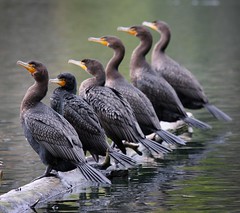
I set up the tripod, mounted the Big Bird lens onto the camera, and firmly fixed the whole arrangement to see what kind of photos I could get. I tried a couple different locations and shot what I could in each place. Since I didn't have a remote shutter release, I set the camera on 2 second delay in the hope that the system would settle down long enough to grab a clear clean image. In fact, all of the images from this quick session are very sharp.
After the worst of the winter weather had done its job to chill everyone to the bone, I hauled out the Big Bird lens and headed down to see how my favorite Buffelheads were doing. The sun was peeking out between the clouds and the air was surprisingly warm.
After working on Buffelheads in flight and seeing how close I could come to the Wood Ducks I suggested it was time to pack it all up and head for home.
We stopped to take a look at the Cormorants all lined up on a downed tree. The arrangement was rather appealing. I hadn't recalled seeing so many birds on the log at the same time. As I started to wander off my wife asked me "Aren't you going to take a picture?"
I set up the tripod, mounted the Big Bird lens onto the camera, and firmly fixed the whole arrangement to see what kind of photos I could get. I tried a couple different locations and shot what I could in each place. Since I didn't have a remote shutter release, I set the camera on 2 second delay in the hope that the system would settle down long enough to grab a clear clean image. In fact, all of the images from this quick session are very sharp.
Thursday, July 03, 2008
How I did this... [4]
There is a taxidermist near the house. I had been wanting to go in to see what they might have. Kerik Kouklis (a platinum printer from California) had a series of images of mammalian skulls that attracted my attention. I visited the bone and fur shop with Kerik's work in mind.
I learned that certain bones are unlawful to sell. Other bones are offered for sale with no hindrance of the law. After choosing the largest lawful skull I could find and paying for it, I quickly headed home. The project I had in mind would look nothing like Kerik's work. Rather, what I saw in my mind's eye was a body of work a little more ethereal in nature.
In similar time I had stumbled upon David Hobby's Strobist blog and was excited by the work and lighting techniques that he brought to readers attention. David also runs a Flickr pool devoted to followers of his Strobist pages. From these two sources of inspiration I wanted to try my hand at photographing the etherial theme as a white on white work.
My light setup was, well, there's no other way to put it, bone simple.
I chose the backdrop and grabbed two three foot high tables. I mounted an Alien Bee B800 onto a three by four foot softbox and rested by the edges of the softbox to suspend between the two tables. Then I took five sheets of white ragboard. One sheet of ragboard rested vertically against the two tables to form the "back" of the unsophisticated light box. Two sheets of ragboard rested vertically from the floor to just under the Alien Bee softbox to form the "sides" of the box. Then two more sheets of ragboard were used to form the "front" of the light box.
The last two sheets of ragboard were required so that I could shoot between the sheets and through the makeshift barn door like opening they formed. The idea was make sure light from the Alien Bee B800/Softbox bounced from all sides and angles, spilling all over and around the subject.
The whole time the subject rested quietly in the middle. I suppose this was an unintended benefit of working with a dead subject.
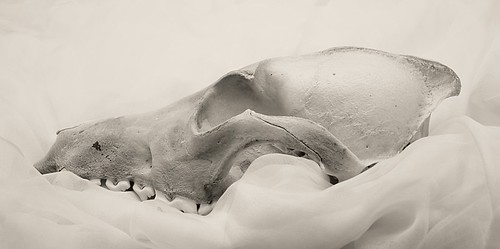
Post processing in the Gimp was kept to a minimum. The original exposures contained all the detail I was hoping for. I added Ken Lee's Bronze Quadtone tint to bring a little platinum warmth to the final print.
If my Flickr post of this image is any indication, people like the image. This photo has received well over 1,000 views.
We will see something very similar to this when I write about the award winning skull image that is also posted on my Flickr site.
I learned that certain bones are unlawful to sell. Other bones are offered for sale with no hindrance of the law. After choosing the largest lawful skull I could find and paying for it, I quickly headed home. The project I had in mind would look nothing like Kerik's work. Rather, what I saw in my mind's eye was a body of work a little more ethereal in nature.
In similar time I had stumbled upon David Hobby's Strobist blog and was excited by the work and lighting techniques that he brought to readers attention. David also runs a Flickr pool devoted to followers of his Strobist pages. From these two sources of inspiration I wanted to try my hand at photographing the etherial theme as a white on white work.
My light setup was, well, there's no other way to put it, bone simple.
I chose the backdrop and grabbed two three foot high tables. I mounted an Alien Bee B800 onto a three by four foot softbox and rested by the edges of the softbox to suspend between the two tables. Then I took five sheets of white ragboard. One sheet of ragboard rested vertically against the two tables to form the "back" of the unsophisticated light box. Two sheets of ragboard rested vertically from the floor to just under the Alien Bee softbox to form the "sides" of the box. Then two more sheets of ragboard were used to form the "front" of the light box.
The last two sheets of ragboard were required so that I could shoot between the sheets and through the makeshift barn door like opening they formed. The idea was make sure light from the Alien Bee B800/Softbox bounced from all sides and angles, spilling all over and around the subject.
The whole time the subject rested quietly in the middle. I suppose this was an unintended benefit of working with a dead subject.
Post processing in the Gimp was kept to a minimum. The original exposures contained all the detail I was hoping for. I added Ken Lee's Bronze Quadtone tint to bring a little platinum warmth to the final print.
If my Flickr post of this image is any indication, people like the image. This photo has received well over 1,000 views.
We will see something very similar to this when I write about the award winning skull image that is also posted on my Flickr site.
Tuesday, July 01, 2008
How I did this... [3]
When I made the transition to digital tools, one of the things I was interested in pursuing was wildlife photography. When I worked with film, I just couldn't bring myself to spend the money it took to practice the craft. I felt it would take too much film to "get it right". So I never bothered.
The digital equipment I purchased changed all that. As I read through the owners manual I realized that I could fire off over six images a second at fill clip and not have to spend any more money to try my hand at wildlife photography. I hoped the auto focus could keep up.
I shouldn't have worried. The AF is brilliantly fast, just so long as I keep the focus point on the portion of the subject that I really want in focus.
During the winter, my favorite bird is in abundance in the neighborhood I live in. They tend to roost together in very large numbers. As such, everything that looks promising to eat throughout the area is inspected, poked, prodded, and tested for its food value. These highly social birds work the ground looking to tasty treats in what seems like roving herds.
One late afternoon, as the sun was headed for the horizon, I spied a roving band of crows. They were working their way down the street looking for dinner. As soon as I parked the car and leap into the house to grab the camera, I was headed out the door with a wave to my wife and the words ".... I'll be back shortly..."
The birds were moving away from me. Every time I got "close" to these skittish eating machines they would move on down the road. Thinking it was me they were concerned about I felt rather dejected. The group of birds looked good and would make great subject matter, if only I could find a way to not scare them off.
Feeling desperate to get an image, any image, I crossed the street and tried to work my way ahead of the birds. I didn't look at them as I passed. I tried to look as non-threatening as I could. Then, three houses ahead of the pack, I crossed the street to their side, crouched down, and waited.
I damaged my knees in a motorcycle accident over two decades ago. So the squatting position was a little painful. The temperature was dropping with the sun. And the whole situation was tenuous at best. I was sure the birds would know I was there and fly off before they got within range of the lens I had on the camera.
I waited. I watched. I wondered. Sure enough, the feed hoards worked their way toward me. The excitement was killing me. So to speak.
I started taking pictures as soon as the birds filled a quarter of the frame. Still, they moved forward. Now I was shaking with excitement as some of the birds were nearly filling the view finder. The zoom was a boon in the situation as I could reframe without moving too much. All the birds could hear was the camera's shutter as I tried to capture as much as I could.

Suddenly, and quite without warning, the birds flew up into the trees over the road. There they sat squawking and yacking to each other. Something or someone had spooked them. My little photo session with the crows was finished.
Reviewing what I just captured back in the warmth of the house I could see some promise in the images in the camera. After processing and posting some of the photos up on my Flickr pages I could see that one image in particular was getting a lot of "hits". Currently, the views stand at well over 800 on this one. People seem to like it.
The digital equipment I purchased changed all that. As I read through the owners manual I realized that I could fire off over six images a second at fill clip and not have to spend any more money to try my hand at wildlife photography. I hoped the auto focus could keep up.
I shouldn't have worried. The AF is brilliantly fast, just so long as I keep the focus point on the portion of the subject that I really want in focus.
During the winter, my favorite bird is in abundance in the neighborhood I live in. They tend to roost together in very large numbers. As such, everything that looks promising to eat throughout the area is inspected, poked, prodded, and tested for its food value. These highly social birds work the ground looking to tasty treats in what seems like roving herds.
One late afternoon, as the sun was headed for the horizon, I spied a roving band of crows. They were working their way down the street looking for dinner. As soon as I parked the car and leap into the house to grab the camera, I was headed out the door with a wave to my wife and the words ".... I'll be back shortly..."
The birds were moving away from me. Every time I got "close" to these skittish eating machines they would move on down the road. Thinking it was me they were concerned about I felt rather dejected. The group of birds looked good and would make great subject matter, if only I could find a way to not scare them off.
Feeling desperate to get an image, any image, I crossed the street and tried to work my way ahead of the birds. I didn't look at them as I passed. I tried to look as non-threatening as I could. Then, three houses ahead of the pack, I crossed the street to their side, crouched down, and waited.
I damaged my knees in a motorcycle accident over two decades ago. So the squatting position was a little painful. The temperature was dropping with the sun. And the whole situation was tenuous at best. I was sure the birds would know I was there and fly off before they got within range of the lens I had on the camera.
I waited. I watched. I wondered. Sure enough, the feed hoards worked their way toward me. The excitement was killing me. So to speak.
I started taking pictures as soon as the birds filled a quarter of the frame. Still, they moved forward. Now I was shaking with excitement as some of the birds were nearly filling the view finder. The zoom was a boon in the situation as I could reframe without moving too much. All the birds could hear was the camera's shutter as I tried to capture as much as I could.
Suddenly, and quite without warning, the birds flew up into the trees over the road. There they sat squawking and yacking to each other. Something or someone had spooked them. My little photo session with the crows was finished.
Reviewing what I just captured back in the warmth of the house I could see some promise in the images in the camera. After processing and posting some of the photos up on my Flickr pages I could see that one image in particular was getting a lot of "hits". Currently, the views stand at well over 800 on this one. People seem to like it.
Saturday, June 28, 2008
Friday, June 27, 2008
How I did this... [2]
Portland has a few good graffiti artists. I really enjoy seeing their work, but many times I need to rush to get photos of a scene before someone paints over it. The "authorities" tend to be very confused about what is and what is not "gang" related. So, they try to paint over everything and anything looking like streetart.
However, there is a neat place up on Belmont where the graff stays up for long periods of time. The artist(s) are wonderfully creative! So when my wife told me that some new art went up, I was excited to see what they'd come up with. If the web address on the art is any indication, the artist(s) hails from somewhere north of the US border. I like Canada. I can see that a wee-trip north to photograph their own streetart could yeild some good images.
My wife and I pulled the Prius up to the curb on the opposite side of the street. The parking space in front of the art was filled with some huge gas guzzling blob. I needed the widest angle lens I had. That wasn't too difficult as I have a 10-22mm f/3.5-4.5 EF-S Canon lens that mounts perfectly to my new 40D.
The scene had a very wide dynamic range. Shadow details were easily 20 stops lower than the exceedingly bright back-lit thin clouds. This led me to the idea of realizing the subject as a high dynamic range tone-map. I set the 40D's automatic exposure bracketing function for +/-2EV and made sure the shutter would trip multiple times at high speed. The camera was hand held and I wanted as little motion between exposures as possible.
Once captured, I imported three images (one each +/-/0 EV) into an Open Source application called Qtpfsgui. I checked the box that forced an alignment, just in case the three images needed it. The first step yielded a high dynamic range tiff format file. These files tend to be flat looking and really aren't very interesting.
To make the photo "sing", I selected Qtpfsgui's tone map funtion and used the Fattal filter to re-write the tones they way my mind's eye "saw" them when I first took the three photo stack. There are modifiable parameters in the tone mapping software that allow a user to stretch the image re-mapping in several dimensions. Since I have been working with the application for some time it was easy for me to select the parameter values that closely matched my desired output.
After saving the tone mapped image as a jpg, I opened another Open Source application called the Gimp. The Gimp is a great Photoshop-like application that you can use to edit photos. In this case, I used the Gimp to snug up the upper and lower values and to bring down the "shadow" (darker) tones.
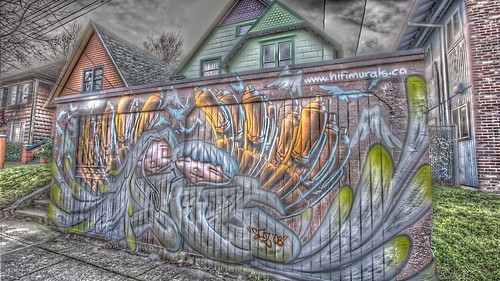
I love the way I can go from image capture to finished product in such little time. Add to this the use of Open Source (aka: free, as in no cost) image manipulation software and I'm thrilled with how my image processing has been streamlined.
However, there is a neat place up on Belmont where the graff stays up for long periods of time. The artist(s) are wonderfully creative! So when my wife told me that some new art went up, I was excited to see what they'd come up with. If the web address on the art is any indication, the artist(s) hails from somewhere north of the US border. I like Canada. I can see that a wee-trip north to photograph their own streetart could yeild some good images.
My wife and I pulled the Prius up to the curb on the opposite side of the street. The parking space in front of the art was filled with some huge gas guzzling blob. I needed the widest angle lens I had. That wasn't too difficult as I have a 10-22mm f/3.5-4.5 EF-S Canon lens that mounts perfectly to my new 40D.
The scene had a very wide dynamic range. Shadow details were easily 20 stops lower than the exceedingly bright back-lit thin clouds. This led me to the idea of realizing the subject as a high dynamic range tone-map. I set the 40D's automatic exposure bracketing function for +/-2EV and made sure the shutter would trip multiple times at high speed. The camera was hand held and I wanted as little motion between exposures as possible.
Once captured, I imported three images (one each +/-/0 EV) into an Open Source application called Qtpfsgui. I checked the box that forced an alignment, just in case the three images needed it. The first step yielded a high dynamic range tiff format file. These files tend to be flat looking and really aren't very interesting.
To make the photo "sing", I selected Qtpfsgui's tone map funtion and used the Fattal filter to re-write the tones they way my mind's eye "saw" them when I first took the three photo stack. There are modifiable parameters in the tone mapping software that allow a user to stretch the image re-mapping in several dimensions. Since I have been working with the application for some time it was easy for me to select the parameter values that closely matched my desired output.
After saving the tone mapped image as a jpg, I opened another Open Source application called the Gimp. The Gimp is a great Photoshop-like application that you can use to edit photos. In this case, I used the Gimp to snug up the upper and lower values and to bring down the "shadow" (darker) tones.
I love the way I can go from image capture to finished product in such little time. Add to this the use of Open Source (aka: free, as in no cost) image manipulation software and I'm thrilled with how my image processing has been streamlined.
Thursday, June 26, 2008
How I did this... [1]
I use Flickr as an on-line gallery space for many of my images. The site is well organized, easy to upload to, and allows the ability to receive feedback and comments from community participants. There are currently over seven million registered Flickr users.
Compare this with the number of viewers a decent photographer might get during a one month gallery showing and you can begin to understand why I like Flickr. It's a great way to have ones work viewed and reviewed by potentially hundreds of thousands of people.
In this series I would like to take five of my most viewed images posted on Flickr and share a few thoughts and comments. I would like to share how I made the image, what it meant to me at the time, and what the image has become.
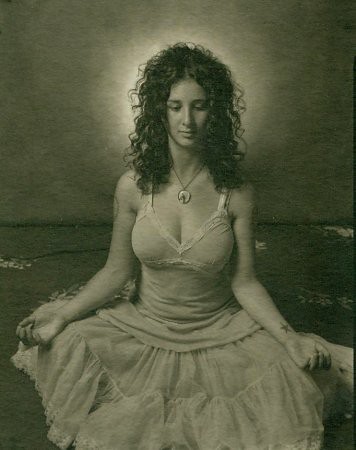
The first image I would like to talk about is rather special to me. Here's why.
My wife and I had recently moved into Portland after spending far too long living in an outlying suburb. Once in town I realized there was a large community of photographers who met on a regular basis. Some groups met to critique each others work. Others met just to enjoy a beer and conversation.
I met Ray Bidegain in one of the small gatherings that take place monthly on the east side of town. Ray, as you may already be aware, is a very fine platinum print artist. His work includes figure studies (for which he is rightfully well known) and landscape images. After seeing his work, I was hooked on the idea of making my own alternative prints. Ray's work was selling well at the time and I thought perhaps I could make and sell a few images too.
Ray was renting studio space up in the north west part of town and was looking for other photographers to share the rent. It was a nice space. A little small, but it had large west facing windows. The space also had a large hand painted backdrop. I signed up with Ray and started paying him rent to sublet the space.
I posted a call for models in the local Craigslist Artists group. This gal was the first to reply.
We set a time and date and I started to gather my materials for the shoot. At the time I was working with an 8x10 Deardorff front swing camera with a 300mm f/4.5 Schneider Xenar in number 5 Compound shutter. I also worked in 4x5 using a nice Arca Swiss Discovery, which Ray has since purchased from me. The 8x10 film was TMax400. The 4x5 film was Ilford FP4+.
The image here was produced all in camera. The Arca Swiss 4x5 had a 150mm Schneider Symmar Convertable f/5.6 in #1 Prontor shutter mounted to the fore. The model was asked to meditate, which she obviously knew how to do. The halo was such a huge bonus that I was thrilled by the very first print I ever made of the model. I used a large softbox high off camera left and placed a 7 inch coned monolight directly behind the models head pointed at the backdrop. The setup was as simple as that.
I have since sold many prints. My Flickr page has received over 1,300 views to date. People have responded positively in all respects.
This image is a 4x5 inch contact Palladium print that I made. It is window mounted to 11x14 inches, and, I have to say, it looks great.
So many things came together all at the same time. It's one of those experiences that I feel I have been working a lifetime to participate in. I feel lucky.
Compare this with the number of viewers a decent photographer might get during a one month gallery showing and you can begin to understand why I like Flickr. It's a great way to have ones work viewed and reviewed by potentially hundreds of thousands of people.
In this series I would like to take five of my most viewed images posted on Flickr and share a few thoughts and comments. I would like to share how I made the image, what it meant to me at the time, and what the image has become.
The first image I would like to talk about is rather special to me. Here's why.
My wife and I had recently moved into Portland after spending far too long living in an outlying suburb. Once in town I realized there was a large community of photographers who met on a regular basis. Some groups met to critique each others work. Others met just to enjoy a beer and conversation.
I met Ray Bidegain in one of the small gatherings that take place monthly on the east side of town. Ray, as you may already be aware, is a very fine platinum print artist. His work includes figure studies (for which he is rightfully well known) and landscape images. After seeing his work, I was hooked on the idea of making my own alternative prints. Ray's work was selling well at the time and I thought perhaps I could make and sell a few images too.
Ray was renting studio space up in the north west part of town and was looking for other photographers to share the rent. It was a nice space. A little small, but it had large west facing windows. The space also had a large hand painted backdrop. I signed up with Ray and started paying him rent to sublet the space.
I posted a call for models in the local Craigslist Artists group. This gal was the first to reply.
We set a time and date and I started to gather my materials for the shoot. At the time I was working with an 8x10 Deardorff front swing camera with a 300mm f/4.5 Schneider Xenar in number 5 Compound shutter. I also worked in 4x5 using a nice Arca Swiss Discovery, which Ray has since purchased from me. The 8x10 film was TMax400. The 4x5 film was Ilford FP4+.
The image here was produced all in camera. The Arca Swiss 4x5 had a 150mm Schneider Symmar Convertable f/5.6 in #1 Prontor shutter mounted to the fore. The model was asked to meditate, which she obviously knew how to do. The halo was such a huge bonus that I was thrilled by the very first print I ever made of the model. I used a large softbox high off camera left and placed a 7 inch coned monolight directly behind the models head pointed at the backdrop. The setup was as simple as that.
I have since sold many prints. My Flickr page has received over 1,300 views to date. People have responded positively in all respects.
This image is a 4x5 inch contact Palladium print that I made. It is window mounted to 11x14 inches, and, I have to say, it looks great.
So many things came together all at the same time. It's one of those experiences that I feel I have been working a lifetime to participate in. I feel lucky.
Wednesday, June 25, 2008
As Mel Brooks once said...
"A funny thing happened on the way to the Coliseum."
There is a group of photographers in Portland who gather on a regular basis. We critique each others work. Sometimes I don't get home until well after 10pm.
I attend several of these kinds of groups. One is devoted to casual conversations over beer and food. Another is quite serious about tools and technique. Yet another consists of artists, teachers, and professionals.
The groups have gotten to know me. When I moved into Portland from the 'burbs I was still in my large format traditional silver print phase. People saw my work and commented positively about many of the images. Later, I moved into making hand coated Palladium prints from large to ultra large format negatives. About a year after I started printing Palladium, and after several very successful gallery shows, I jumped headlong into a war over photographic fundamentalism. Like all religious battles, things got messy.
Working with new tools and modeling my processes after traditional techniques I started to create images that thrilled me. I felt free to explore just about any photographic expression that came to mind. One evening I decided to share some of the work that I had processed just the week before.
It was late. People were tired. Some folks had left already.
When it was my turn, I carefully arranged my photos for people to review.
I quickly sensed that some people were challenged by what I was sharing. As people started to comment and critique the images, it came as no surprise that they had a wide range of thoughts on the topic of photography. In short, my work was nothing like they had "expected" a "real" photograph to be.
I heard comments like "... these are not photographs...", "... I don't know what these are...", "... your images are flat... they lack depth...", "... do you realize that you are threatening illustrators by making it too easy?... they will loose their jobs over this!..."
To balance the whole charade were two photographers who came up to me afterward and said "... this is really great!", "You might be onto something... much like the Impressionists were onto something when they were tossed out of the Salons in Paris..." The last comment may be on the verge of overkill, still, my ego loved to hear it.

I learned several things from the experience. I had a chance to witness the differences in how people "see" photography. It was at first surprising to watch people make assumptions about what is and what is not photography. There seems to a very clear set of "rules" about what a photograph is.
Thinking about this a bit, I have come to the realization that two things were at play. First, people on the inside of the business of making photographs have a very different view of the art than, say, the typical lay viewers, the Great Unwashed Masses. Where I had nothing but praise from the general public for me new work, the photographic establishment was, by and large, reacting quite negatively.

Second, I once again had the opportunity to feel the gulf between what I created, my intentions and hope for the work, and the way people actually respond. Depending on the viewer, the gap between "me" and "them", and the way people respond can be very large.
I am reminded of the unspoken responsibilities of an artist. While there are many dimensions and approaches to expressing art, I can see where it is helpful to provide context. There needs to be some way of connecting with viewers. In general, it seems to me that if an artist assumes a particular context, they may be missing an opportunity to connect with viewers. For on that night of late evening photo critique I had failed to hook my viewers in a way that was meaningful, accessible, or knowable to them.
There is a group of photographers in Portland who gather on a regular basis. We critique each others work. Sometimes I don't get home until well after 10pm.
I attend several of these kinds of groups. One is devoted to casual conversations over beer and food. Another is quite serious about tools and technique. Yet another consists of artists, teachers, and professionals.
The groups have gotten to know me. When I moved into Portland from the 'burbs I was still in my large format traditional silver print phase. People saw my work and commented positively about many of the images. Later, I moved into making hand coated Palladium prints from large to ultra large format negatives. About a year after I started printing Palladium, and after several very successful gallery shows, I jumped headlong into a war over photographic fundamentalism. Like all religious battles, things got messy.
Working with new tools and modeling my processes after traditional techniques I started to create images that thrilled me. I felt free to explore just about any photographic expression that came to mind. One evening I decided to share some of the work that I had processed just the week before.
It was late. People were tired. Some folks had left already.
When it was my turn, I carefully arranged my photos for people to review.
I quickly sensed that some people were challenged by what I was sharing. As people started to comment and critique the images, it came as no surprise that they had a wide range of thoughts on the topic of photography. In short, my work was nothing like they had "expected" a "real" photograph to be.
I heard comments like "... these are not photographs...", "... I don't know what these are...", "... your images are flat... they lack depth...", "... do you realize that you are threatening illustrators by making it too easy?... they will loose their jobs over this!..."
To balance the whole charade were two photographers who came up to me afterward and said "... this is really great!", "You might be onto something... much like the Impressionists were onto something when they were tossed out of the Salons in Paris..." The last comment may be on the verge of overkill, still, my ego loved to hear it.
I learned several things from the experience. I had a chance to witness the differences in how people "see" photography. It was at first surprising to watch people make assumptions about what is and what is not photography. There seems to a very clear set of "rules" about what a photograph is.
Thinking about this a bit, I have come to the realization that two things were at play. First, people on the inside of the business of making photographs have a very different view of the art than, say, the typical lay viewers, the Great Unwashed Masses. Where I had nothing but praise from the general public for me new work, the photographic establishment was, by and large, reacting quite negatively.
Second, I once again had the opportunity to feel the gulf between what I created, my intentions and hope for the work, and the way people actually respond. Depending on the viewer, the gap between "me" and "them", and the way people respond can be very large.
I am reminded of the unspoken responsibilities of an artist. While there are many dimensions and approaches to expressing art, I can see where it is helpful to provide context. There needs to be some way of connecting with viewers. In general, it seems to me that if an artist assumes a particular context, they may be missing an opportunity to connect with viewers. For on that night of late evening photo critique I had failed to hook my viewers in a way that was meaningful, accessible, or knowable to them.
Thursday, June 19, 2008
System Resolution - from Luminous Landscape
I have spent a lot of time with friends and alone testing resolution of MF and LF lenses as part of real world camera systems. One of the big limitations for putting anything to film has been the resolution limits of the film itself and diffraction at smaller apertures.
In their own way, if I'm reading this correctly, nothing has changed when it comes to digital photography. Check out this article and see what you think.
The optical sensor in a CCD or CMOS array becomes the limiting "airy disk" and optical diffraction limits how far you can stop down. I'm happy to see that the laws of physics remain in full effect.
In their own way, if I'm reading this correctly, nothing has changed when it comes to digital photography. Check out this article and see what you think.
The optical sensor in a CCD or CMOS array becomes the limiting "airy disk" and optical diffraction limits how far you can stop down. I'm happy to see that the laws of physics remain in full effect.
Wednesday, June 11, 2008
Monday, June 09, 2008
Tuesday, June 03, 2008
Thursday, May 22, 2008
Explorations
About six months ago I found a process for handing images with incredible dynamic ranges. In traditional silver processing, this is sometimes considered a Holy Grail - to be able to retrain sufficient detail in the shadows while at the same time retaining details in the highlights. So many approaches have, well, developed over time. One approach I ended up with was using Rodinal 150:1 to 200:1 and implementing "semi-stand" 5 inversions every 10 minutes agitation. The approach worked very well. I could clearly see a beneficial effect. However, the local contrast was still not as high as I wanted.
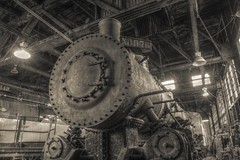
Once my transition to digital was well under way, I found a series of open source tools that might fulfill my needs. I started testing the tools on my favorite subject, steamlocomotives. Here was the most difficult subject I could find. I have shot hundreds of sheets of large format film in an attempt to capture the spirit and light of the roundhouse that the engines live in. Here in this building were incredibly deep shadows and very very bright sun bathed highlights. It's difficult to convey just how many hours I spent trying to figure out the best film/processing/printing combinations.

Shockingly, it took me all of fifteen minutes working with my newfound open source digital tools to stumble upon the exact image style that I had spent the previous decade searching for. Here, finally, was a set of tools that I could use to creatively express what my eyes saw and my heart felt.
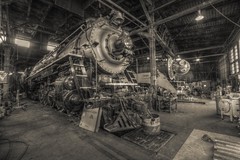
I have since spent time working out alternative approaches to achieving similar results. I have found that I'm in love with the way these tools allow me to "draw" the kinds of images you see here. To me, these are wonderful expressions of light and space.

Once my transition to digital was well under way, I found a series of open source tools that might fulfill my needs. I started testing the tools on my favorite subject, steamlocomotives. Here was the most difficult subject I could find. I have shot hundreds of sheets of large format film in an attempt to capture the spirit and light of the roundhouse that the engines live in. Here in this building were incredibly deep shadows and very very bright sun bathed highlights. It's difficult to convey just how many hours I spent trying to figure out the best film/processing/printing combinations.
Shockingly, it took me all of fifteen minutes working with my newfound open source digital tools to stumble upon the exact image style that I had spent the previous decade searching for. Here, finally, was a set of tools that I could use to creatively express what my eyes saw and my heart felt.
I have since spent time working out alternative approaches to achieving similar results. I have found that I'm in love with the way these tools allow me to "draw" the kinds of images you see here. To me, these are wonderful expressions of light and space.
Tuesday, May 13, 2008
Wednesday, May 07, 2008
Wednesday, April 30, 2008
Thursday, March 20, 2008
People and their camera equipment
I stumbled upon Ken Rockwell's thoughts on camera gear. His comments mirror my own thoughts on the subject. Namely, that people who obsess over the "best" camera equipment are missing the point.
I have been following various newsgroups, on-line forums, and trade-shows for years. Decades, actually. I used to wonder if Leica 35mm cameras were truly imbued with a special quality that their users could benefit from. I used to think that if it was good enough for St. Ansel, it was good enough for me. I used to test and test and test all manner of lenses, cameras, and systems just to see what was the "best". I have even published a great deal on the 'net on this very topic.
After reading his article, it appears to me that Ken and I arrived at similar thoughts in similar time. That is, cameras and lenses are just tools. They are tools that can be used wisely or unwisely, depending upon one's personal approach. But that cameras and lenses are no different than other kinds of tools that people use to create things.
Certainly a woodworker will haul out a hammer when the job at hand calls for it. Then they might choose a bandsaw or a tablesaw or a mitersaw when a different kind of works needs to be done. I seldom hear woodworkers become passionate about the kinds of tools they use or why they selected what they did quite like I hear "photographers" yack-on about their equipment. The same holds true for my experience in talking and participating in other fields of arts and craft.
When I came upon Luminous Landscape's rebuttal to Ken Rockwell, I was further amazed. Here, very redundantly, was a defense of all the bloviating, all the wringing of hands, all the too common commotion around camera and lens selection. I just don't "get it".
Art or craft is art or craft. Nothing more. Nothing less. The tools of one's art or craft are important in so far as they allow one to create what they desire to create. Ninety nine and one half percent of the equipment talk on-line, in the forums, over on the newgroups, in the various blogs is missing the point of art and craft entirely!
It doesn't matter a whit what you use to create your art or craft. All that I'm looking for is how does your work impact me emotionally.
There. I said it. Now it's time to get out there and make and share one's art and craft. Good luck.
The more art and craft in the world the better.
I have been following various newsgroups, on-line forums, and trade-shows for years. Decades, actually. I used to wonder if Leica 35mm cameras were truly imbued with a special quality that their users could benefit from. I used to think that if it was good enough for St. Ansel, it was good enough for me. I used to test and test and test all manner of lenses, cameras, and systems just to see what was the "best". I have even published a great deal on the 'net on this very topic.
After reading his article, it appears to me that Ken and I arrived at similar thoughts in similar time. That is, cameras and lenses are just tools. They are tools that can be used wisely or unwisely, depending upon one's personal approach. But that cameras and lenses are no different than other kinds of tools that people use to create things.
Certainly a woodworker will haul out a hammer when the job at hand calls for it. Then they might choose a bandsaw or a tablesaw or a mitersaw when a different kind of works needs to be done. I seldom hear woodworkers become passionate about the kinds of tools they use or why they selected what they did quite like I hear "photographers" yack-on about their equipment. The same holds true for my experience in talking and participating in other fields of arts and craft.
When I came upon Luminous Landscape's rebuttal to Ken Rockwell, I was further amazed. Here, very redundantly, was a defense of all the bloviating, all the wringing of hands, all the too common commotion around camera and lens selection. I just don't "get it".
Art or craft is art or craft. Nothing more. Nothing less. The tools of one's art or craft are important in so far as they allow one to create what they desire to create. Ninety nine and one half percent of the equipment talk on-line, in the forums, over on the newgroups, in the various blogs is missing the point of art and craft entirely!
It doesn't matter a whit what you use to create your art or craft. All that I'm looking for is how does your work impact me emotionally.
There. I said it. Now it's time to get out there and make and share one's art and craft. Good luck.
The more art and craft in the world the better.
Subscribe to:
Comments (Atom)