Friday, November 21, 2008

Thursday, November 20, 2008
Wednesday, November 12, 2008
Monday, November 03, 2008
Friday, October 24, 2008
Seeing
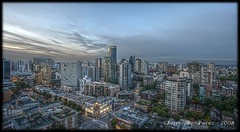
My wife and I headed north on a rather rotten day. We were going to Vancouver, BC to visit a friend of mine who popped over from England for a convention. The day was doubly rotten. One of my wife's dear friend lost her battle with cancer. We didn't realize this until we were already in British Columbia. Sad. Very sad. Add to this that my friend has hit a patch of rotten luck, and it could have turned into a pity party. It ended up much better than that. Fortunately.
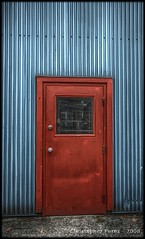
As we visited that fine city to the north of us, I learned something about the way I see the world. It starts with the acknowledgment that I love to travel. Moving about the globe seems to enable my photographic vision. In simple terms, everything is fresh and new to me. So taking fun images is like shooting fish in a barrel. Its easy.
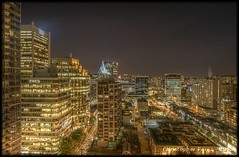
I worked several themes during the trip. From our 24th floor hotel room we were able to over look much of Vancouver's West End high rise skyline. I took the opportunity to make a few images whenever the sky and lighting looked like it might be interesting.
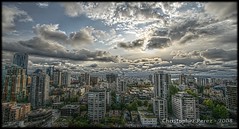
Thinking back to St. Ansel and his body of work, people seem to remember his Yosemite Valley photos. Highly valued, St. Ansel had much to "say" about the valley. He photographed there for decades and came away with more than a few nice things. How on earth did the valley remain fresh and interesting to him?
After we returned home and I had the chance to process a few things I realized I just don't see my own city in the same way as I do other places. It seems that my own town is too familiar to me. So how do I awaken my photographic vision in a place where I get to see everything of "interest" nearly daily? How do I expand my ideas to include the familiar and, at the same time, seek out new and potentially good photographic ideas?
Wednesday, October 22, 2008
Monday, October 20, 2008
Monday, September 29, 2008
Thursday, September 25, 2008
Photo idea
Here is a video FILLED with really great ideas!!! Here's a link to what Jarvis has to say on the shoot.
Thursday, September 18, 2008
Art
I have been giving a lot of thought to art, what it means, and how I view it.
In this society the easy measure of success is financial. If you are selling photographs, then you are 1) good and 2) successful.
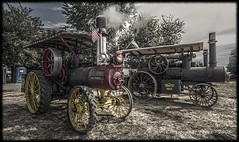
I have come to view success a little differently. In short, success to me will be if someone a few hundred years from now picks up a print I made and appreciates it. The only drawback with this definition is that I won't be there to witness the event.
There may be, however, a few key indicators to potential future appreciation.
My wife and I went to the Charles Russell Museum in Great Falls, Montana recently. While waiting for my wife I spied an interesting painting. I stood before it and considered what it was that made it so interesting to me.
The first thing I noticed with the sense of "depth" the image had. The second thing I noticed was how it made me feel. There were trees in the foreground and a high snow-capped mountain behind. Everything in the image was carefully arranged and composed. Light spilled from the high right throughout the scene. Everything was as it "should" be. Classic traditional art.
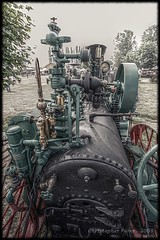
I continued to look at it with deeper more careful observation. As I did this, I noticed that the bark on the trees that were in deep shadow contained beautiful "correctly" contrasted details. It was almost as if I could reach out and touch the bark and feel the coolness of the tree's shade. The dried grass field in the foreground was clearly and cleanly articulated. The straw colors reminded me of the dry late summer heat. Looking up onto the mountain, snow fields were beautifully painted, with just a hint of blue, just like glaciers I saw throughout the Rockies. It seemed there was a small bit of haze between the foreground features and the mountain, just like smoke or humidity found in late summer. Finally, I considered the cloud formations. They were delicately rendered, exactly as I remembered similar cloud groups I saw in the Grand Tetons.

Taken in total, the painting was a near perfect articulation of scenes I had grown up with. From a photographers perspective, this scene was precisely as a human eye and brain would see and experience a view like this in real life.
From a photographer's perspective I knew instantly how photographs fail to recreate similar scenes. Had a camera been used to make the image the shadows would have been dark and muddied. The snow-capped peaks would be been too bright and over-exposed to properly capture the hint of blue. The haze might have been removed or reduced with the use of a UV filter. The colors would have been "punched up" through the use of Fuji Velvia or a similar function on a digital camera. A photographer would have had to work incredibly hard to come close the revealing what the painting did. A photograph would have been "something else".
As a culture and society that has looked at photographs for over 150 years, we have become "educated" as to the hard stern limits of photographic technologies. We learned from the great English photographers who captured the light of India and from the wonderful French photographers who worked the tourist post card trade in Egypt. We learned from Life magazine and National Geographic. We learned from the Great Saint Ansel Adams. We have learned what is and what is not a photograph.
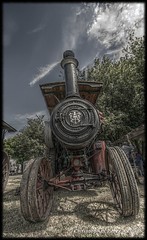
So, what happens when image making technologies evolve and change? What happens when an image capture device is able to retain the hint of blue in the high mountain ice field? What happens when the "micro-contrast" of deeply shadowed tree bark is not only retained, but nicely enhanced? What happens when a photograph looks more like what the eye perceives than not? Is it still a photograph? Or, just as importantly, is it art?
William Mortensen had a lot to say on the topic of what comprises long lasting art image making. One of the things he noted is that careful composition is essential. He also placed strong emphasis on the quality of light deployed in the making of an image. Mortensen talked about the differences between "notan" style and "chiaroscuro" style lighting. The most descriptive guidance he left us are his Camera Craft published books. From 1937 and into the 1950's, William Mortensen wrote about art, image structure, image control, and, where appropriate, how to position, cloth, and light a human subject.
It seems that certain images have stood the test of time. Whether viewing the ancesteral cave paintings in France, or the incredible tile work from Byzantium, or the awesome paintings of the pre-Rennaisance Italy, much of the work is "visibly" and "knowingly" considered by many to be true "art". That is to say, images created several thousand years ago still hold appeal to viewers all these years later.
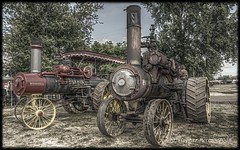
In current times I see that some photographic artists are stuggling with what has become of their craft. In one dimension there is the emergance of digital creation tools. In another dimension there is the now wide open possibilities that new tools and processes allow image makers. In yet another dimension is the question of how blurred the lines between "truth" and "manipulation" has become. Simply put, some people are asking questions about photography as a stand alone art form in an age where anything and everything can be created, manipulated, and managed from concept through to execution.
These are tough times for photo-traditionalists. From my own observations, it has appeared that photo-"insiders" long understood how to "look" at a work and find it "acceptable" and "pleasing" to them. I also observed how viewers unfamiliar with photographic techniques and processes can often times become befuddled by what they are looking at. It seems as if they failed to "see" what photo-"insiders" "see".
Things change.
Its interesting to watch as other struggle and strive to find a place in this rapidly evolving growing field of expression. In my own work, I have come to recognize the power of a well executed, properly lit, neatly processed image. It took the adoption of new tools and techniques to realize this vision. I couldn't be more excited by the possibilities.
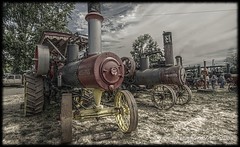
In this society the easy measure of success is financial. If you are selling photographs, then you are 1) good and 2) successful.
I have come to view success a little differently. In short, success to me will be if someone a few hundred years from now picks up a print I made and appreciates it. The only drawback with this definition is that I won't be there to witness the event.
There may be, however, a few key indicators to potential future appreciation.
My wife and I went to the Charles Russell Museum in Great Falls, Montana recently. While waiting for my wife I spied an interesting painting. I stood before it and considered what it was that made it so interesting to me.
The first thing I noticed with the sense of "depth" the image had. The second thing I noticed was how it made me feel. There were trees in the foreground and a high snow-capped mountain behind. Everything in the image was carefully arranged and composed. Light spilled from the high right throughout the scene. Everything was as it "should" be. Classic traditional art.
I continued to look at it with deeper more careful observation. As I did this, I noticed that the bark on the trees that were in deep shadow contained beautiful "correctly" contrasted details. It was almost as if I could reach out and touch the bark and feel the coolness of the tree's shade. The dried grass field in the foreground was clearly and cleanly articulated. The straw colors reminded me of the dry late summer heat. Looking up onto the mountain, snow fields were beautifully painted, with just a hint of blue, just like glaciers I saw throughout the Rockies. It seemed there was a small bit of haze between the foreground features and the mountain, just like smoke or humidity found in late summer. Finally, I considered the cloud formations. They were delicately rendered, exactly as I remembered similar cloud groups I saw in the Grand Tetons.
Taken in total, the painting was a near perfect articulation of scenes I had grown up with. From a photographers perspective, this scene was precisely as a human eye and brain would see and experience a view like this in real life.
From a photographer's perspective I knew instantly how photographs fail to recreate similar scenes. Had a camera been used to make the image the shadows would have been dark and muddied. The snow-capped peaks would be been too bright and over-exposed to properly capture the hint of blue. The haze might have been removed or reduced with the use of a UV filter. The colors would have been "punched up" through the use of Fuji Velvia or a similar function on a digital camera. A photographer would have had to work incredibly hard to come close the revealing what the painting did. A photograph would have been "something else".
As a culture and society that has looked at photographs for over 150 years, we have become "educated" as to the hard stern limits of photographic technologies. We learned from the great English photographers who captured the light of India and from the wonderful French photographers who worked the tourist post card trade in Egypt. We learned from Life magazine and National Geographic. We learned from the Great Saint Ansel Adams. We have learned what is and what is not a photograph.
So, what happens when image making technologies evolve and change? What happens when an image capture device is able to retain the hint of blue in the high mountain ice field? What happens when the "micro-contrast" of deeply shadowed tree bark is not only retained, but nicely enhanced? What happens when a photograph looks more like what the eye perceives than not? Is it still a photograph? Or, just as importantly, is it art?
William Mortensen had a lot to say on the topic of what comprises long lasting art image making. One of the things he noted is that careful composition is essential. He also placed strong emphasis on the quality of light deployed in the making of an image. Mortensen talked about the differences between "notan" style and "chiaroscuro" style lighting. The most descriptive guidance he left us are his Camera Craft published books. From 1937 and into the 1950's, William Mortensen wrote about art, image structure, image control, and, where appropriate, how to position, cloth, and light a human subject.
It seems that certain images have stood the test of time. Whether viewing the ancesteral cave paintings in France, or the incredible tile work from Byzantium, or the awesome paintings of the pre-Rennaisance Italy, much of the work is "visibly" and "knowingly" considered by many to be true "art". That is to say, images created several thousand years ago still hold appeal to viewers all these years later.
In current times I see that some photographic artists are stuggling with what has become of their craft. In one dimension there is the emergance of digital creation tools. In another dimension there is the now wide open possibilities that new tools and processes allow image makers. In yet another dimension is the question of how blurred the lines between "truth" and "manipulation" has become. Simply put, some people are asking questions about photography as a stand alone art form in an age where anything and everything can be created, manipulated, and managed from concept through to execution.
These are tough times for photo-traditionalists. From my own observations, it has appeared that photo-"insiders" long understood how to "look" at a work and find it "acceptable" and "pleasing" to them. I also observed how viewers unfamiliar with photographic techniques and processes can often times become befuddled by what they are looking at. It seems as if they failed to "see" what photo-"insiders" "see".
Things change.
Its interesting to watch as other struggle and strive to find a place in this rapidly evolving growing field of expression. In my own work, I have come to recognize the power of a well executed, properly lit, neatly processed image. It took the adoption of new tools and techniques to realize this vision. I couldn't be more excited by the possibilities.
Monday, September 08, 2008
What I could have said - LensWork Extended #78
I just received my print copy of LensWork Sept-Oct 2008. Quickly thumbing through the magazine to see what Brooks might have written as an intro to my work I was struck by the words "innocent" and "child like".
Well! Here I always viewed myself as a serious "artist". Child-like? That stopped my train of thought. Innocent? Not from a "man of the world", surely.
Yet, the more I thought about it the more I realized that was exactly the "feel" when I'm in the company of heavy railroad equipment. Let me see if I can articulate what this means to me.
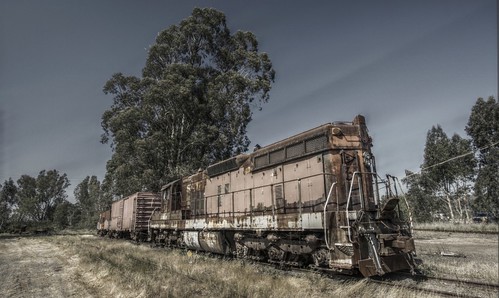
Back in the day I lived in Southern California. I have no idea what its like now, but when I grew up there the cultural message was strong. The culture demanded "sophistication". Everything from the cars one drove to the house a person lived in to the places one went to eat.
Looking back I'm very much surprised I didn't see it before. There was a distinctly condescending look on anyone who prepared their own meals from scratch. There was the strong judgment of anyone living in slightly beach worn apartments. There were laws in some parts of Southern California that prohibited the hanging of clothing on lines to dry. It was as if the entire Los Angeles and Orange County area was continually "sanitizing" itself for their own protection.
Protection from what? With the distance of time and place I still don't know.
Moving to Portland, Oregon 22 years ago began a sometimes subtle and sometimes not so subtle transformation. I started by being very aware of my place in culture and society and trying to find a way to "scramble" up the ultra-conservative cultural dung heap of expectation and judgment. I have ended up realizing that who I am will not change, regardless of what the predominant culture "demands" of me.
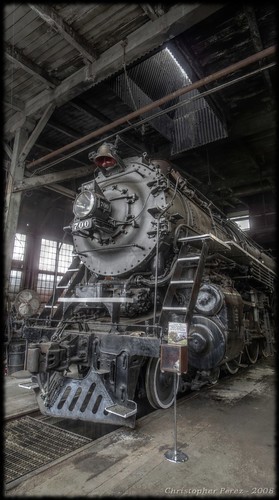
In hindsight its funny to think of Southern California as being ultra-conservative. Yet, that's exactly what my childhood and young adulthood was; very conservative. Surfers were supposed to be the very cool laid back people one see's in Endless Summer. Restaurants by the beach were supposed to be the height of cuisine production. Rodeo Drive was supposed to be somehow better with fashion than what's found in Paris, France. The media told us time and again just how wonderful it was to live in paradise.
Its nearly impossible to just be when media, cinema, traffic, voices, technology, strip malls, palaces to ultra-conservative churchianity all shout "you're never ever going to be good enough" unless you are stinking filthy rich.
Paradise? Its taken far too long, but paradise to me is living fully within one's means and within one's self. Paradise is the silence that comes with turning off the TV and the stereo. Paradise is parking the car and riding the bike to catch public transportation the rest of the way into work. Paradise is drinking a chilled pint of locally grown and prepared organic brew.
Paradise is stopping the mind from thinking and just being.
In Ram Das' book The Miracle of Love a story is told about the great mystic Neem Karoli Baba. He is said to have had a child like curiosity of the world. When he'd go for a ride in a car he would sit and smile, giggle, and laugh all the while swiveling this way and that to take in all the great sights and scenes as they passed by.
I am no mystic. Trust me on this point. Yet I find the story of Neem Karoli Baba such a beautiful juxtaposition to my earlier experiences on this planet. Its very freeing to know that its OK to be child like.
When I walk into the Brooklyn Roundhouse to tempt fate by trying to make a few fine images I feel very much like a child. My eyes invariably grow wide in their sockets. My stream of thoughts slows down. My breath catches in the throat. My mind and heart open to allow the enormity of the power steam locomotives to sink in and work their magic. This is big! fun!! stuff!!!
It is from this perspective that I am very happy that my joy and happiness come across in print as described by Brooks Jensen in his beautiful LensWork Magazine.
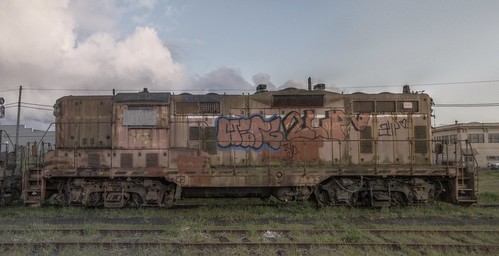
Well! Here I always viewed myself as a serious "artist". Child-like? That stopped my train of thought. Innocent? Not from a "man of the world", surely.
Yet, the more I thought about it the more I realized that was exactly the "feel" when I'm in the company of heavy railroad equipment. Let me see if I can articulate what this means to me.
Back in the day I lived in Southern California. I have no idea what its like now, but when I grew up there the cultural message was strong. The culture demanded "sophistication". Everything from the cars one drove to the house a person lived in to the places one went to eat.
Looking back I'm very much surprised I didn't see it before. There was a distinctly condescending look on anyone who prepared their own meals from scratch. There was the strong judgment of anyone living in slightly beach worn apartments. There were laws in some parts of Southern California that prohibited the hanging of clothing on lines to dry. It was as if the entire Los Angeles and Orange County area was continually "sanitizing" itself for their own protection.
Protection from what? With the distance of time and place I still don't know.
Moving to Portland, Oregon 22 years ago began a sometimes subtle and sometimes not so subtle transformation. I started by being very aware of my place in culture and society and trying to find a way to "scramble" up the ultra-conservative cultural dung heap of expectation and judgment. I have ended up realizing that who I am will not change, regardless of what the predominant culture "demands" of me.
In hindsight its funny to think of Southern California as being ultra-conservative. Yet, that's exactly what my childhood and young adulthood was; very conservative. Surfers were supposed to be the very cool laid back people one see's in Endless Summer. Restaurants by the beach were supposed to be the height of cuisine production. Rodeo Drive was supposed to be somehow better with fashion than what's found in Paris, France. The media told us time and again just how wonderful it was to live in paradise.
Its nearly impossible to just be when media, cinema, traffic, voices, technology, strip malls, palaces to ultra-conservative churchianity all shout "you're never ever going to be good enough" unless you are stinking filthy rich.
Paradise? Its taken far too long, but paradise to me is living fully within one's means and within one's self. Paradise is the silence that comes with turning off the TV and the stereo. Paradise is parking the car and riding the bike to catch public transportation the rest of the way into work. Paradise is drinking a chilled pint of locally grown and prepared organic brew.
Paradise is stopping the mind from thinking and just being.
In Ram Das' book The Miracle of Love a story is told about the great mystic Neem Karoli Baba. He is said to have had a child like curiosity of the world. When he'd go for a ride in a car he would sit and smile, giggle, and laugh all the while swiveling this way and that to take in all the great sights and scenes as they passed by.
I am no mystic. Trust me on this point. Yet I find the story of Neem Karoli Baba such a beautiful juxtaposition to my earlier experiences on this planet. Its very freeing to know that its OK to be child like.
When I walk into the Brooklyn Roundhouse to tempt fate by trying to make a few fine images I feel very much like a child. My eyes invariably grow wide in their sockets. My stream of thoughts slows down. My breath catches in the throat. My mind and heart open to allow the enormity of the power steam locomotives to sink in and work their magic. This is big! fun!! stuff!!!
It is from this perspective that I am very happy that my joy and happiness come across in print as described by Brooks Jensen in his beautiful LensWork Magazine.
Tuesday, September 02, 2008
Lenswork Magazine
In the September-October issue of LensWork Magazine, Brooks Jensen presents his views on how "Power People" in photography are different than photography "Enthusiasts". The punch-line is that "Enthusiast" images no longer mean they are in any way less than images made by "Power People".
I loved it. Finally, someone explaining me to my self in a way that was completely believable.
I really like the idea that photographs produced by enthusiasts can be the equal to those produced by the anointed power elite. Beyond the obvious reason, and beyond what Brooks wrote, I have the strong sense that what drives the photographic power elite is commerce and narcissistic attention. Money. Me.
Money is not a bad thing. Don't get me wrong. Everyone needs to eat. Me? Well, didn't the Beatles sing about that once upon a time?
Money can change a person's point of view so radically as to lead them into managing "perceptions" of themselves (Me!Me!Me!) and their work. For the power elite, "perception" is more important than image content. "Perception" of the artist, however, can lead to stagnation. Again, as Brooks points out, few photographers ever produce better work after they have been "discovered".
![Young Shaman [4]](http://farm3.static.flickr.com/2190/2803018281_4e791a2847_m.jpg)
About a year ago I was at a significant fork in the road of my own artistic endeavors. I needed to decide if I was going to don the cocktail party coat of "perception". I needed to decide if I was going to drag my wife around to cocktail parties and talk "high art". I needed to decide if I was going to put the time and effort into trying to become one of the photographic power elite.
After all, my wife and I can converse on a wide range of topics. We know our wines and food very well. We know our politics inside and out. We can speak to art and its place in culture and society. We can even dress up and look pretty darned good in the process. Alas, I knew that isn't truly me.
Through contrasts, Brooks Jensen makes a strong case for the photographic "enthusiast". Boy, am I ever glad he wrote on the topic so very strongly. I identify with what he says. I love taking and making images much more than I enjoy partying it up with groups of self proscribed photographic art "power elite". I enjoy finding ways of expressing my art more than I do worrying about how to pay the $50,000USD needed for the latest newfangled camera toy. I much prefer selling for a modest price my prints to folks who really enjoy the work than I would trying to convince anyone that a 30x40inch print of mine will help make them an acknowledged and well respected photographic art collector.
During my interview with Brooks for LensWork Extended #78 Sept-Oct In the RailYard he made two obvious points. These points are so quickly glossed over by the fast paced moneyed authoritative art power brokers that I feel too many folks don't even realize these p0ints exist. The Smoke and Mirror game has been very well played. Here's what I took from my conversation with Brooks.
First obvious point - In 200 years no one will care if you used film or digital to make an image.
Second obvious point - All that an artist can hope for is that their work stands the test of time.
In a society where money "speaks", in a culture where all that matter is how things are "perceived", in a country where all that people care about is how to get "there's", art is a nearly impossible thing to understand.
Its very useful to me to take a big step back and attempt to look at what I do and why I do it from the perspective of time.
I will never know, but I sincerely hope that some time, some where in the distant future some one will take a print I have made and find joy in looking at it.
![Young Shaman [2]](http://farm4.static.flickr.com/3248/2765939373_8e9c9139dc_m.jpg)
I loved it. Finally, someone explaining me to my self in a way that was completely believable.
I really like the idea that photographs produced by enthusiasts can be the equal to those produced by the anointed power elite. Beyond the obvious reason, and beyond what Brooks wrote, I have the strong sense that what drives the photographic power elite is commerce and narcissistic attention. Money. Me.
Money is not a bad thing. Don't get me wrong. Everyone needs to eat. Me? Well, didn't the Beatles sing about that once upon a time?
Money can change a person's point of view so radically as to lead them into managing "perceptions" of themselves (Me!Me!Me!) and their work. For the power elite, "perception" is more important than image content. "Perception" of the artist, however, can lead to stagnation. Again, as Brooks points out, few photographers ever produce better work after they have been "discovered".
About a year ago I was at a significant fork in the road of my own artistic endeavors. I needed to decide if I was going to don the cocktail party coat of "perception". I needed to decide if I was going to drag my wife around to cocktail parties and talk "high art". I needed to decide if I was going to put the time and effort into trying to become one of the photographic power elite.
After all, my wife and I can converse on a wide range of topics. We know our wines and food very well. We know our politics inside and out. We can speak to art and its place in culture and society. We can even dress up and look pretty darned good in the process. Alas, I knew that isn't truly me.
Through contrasts, Brooks Jensen makes a strong case for the photographic "enthusiast". Boy, am I ever glad he wrote on the topic so very strongly. I identify with what he says. I love taking and making images much more than I enjoy partying it up with groups of self proscribed photographic art "power elite". I enjoy finding ways of expressing my art more than I do worrying about how to pay the $50,000USD needed for the latest newfangled camera toy. I much prefer selling for a modest price my prints to folks who really enjoy the work than I would trying to convince anyone that a 30x40inch print of mine will help make them an acknowledged and well respected photographic art collector.
During my interview with Brooks for LensWork Extended #78 Sept-Oct In the RailYard he made two obvious points. These points are so quickly glossed over by the fast paced moneyed authoritative art power brokers that I feel too many folks don't even realize these p0ints exist. The Smoke and Mirror game has been very well played. Here's what I took from my conversation with Brooks.
First obvious point - In 200 years no one will care if you used film or digital to make an image.
Second obvious point - All that an artist can hope for is that their work stands the test of time.
In a society where money "speaks", in a culture where all that matter is how things are "perceived", in a country where all that people care about is how to get "there's", art is a nearly impossible thing to understand.
Its very useful to me to take a big step back and attempt to look at what I do and why I do it from the perspective of time.
I will never know, but I sincerely hope that some time, some where in the distant future some one will take a print I have made and find joy in looking at it.
Thursday, August 28, 2008
Monday, August 25, 2008
Friday, August 15, 2008
Now that I think about it... [3]
I was recently interviewed by Brooks Jensen for the LensWork Extended #78 Sept-Oct issue. Some of my "In the RailYard" will be published.
After we hung up, I got to thinking a bit more about the questions Brooks asked and my reply. Hindsight being what it is, I would like to amend or add to my comments.
The third topic I would like to cover is a furthering discussion of the use of Open Source tools for image processing.
I believe that commercial tools are valuable to commercial artists. These kinds of tools clearly define the limits of creativity. Yet, they provide a level of stability and assurance that a commercial artist can rely on. Once the investment in money, time, and energy is made, the artist can free themselves to work within the boundaries set by the commercial tools.
Open Source tools sometimes aren't as well "packaged" as their commercial equivalents. One thing that is attractive about deploying Open Source image processing is that limits are less clearly defined. To me, this means the boundaries of capability and creativity can be pushed well beyond the typical limits set by commercial offerings.
An analogy that might help describe my thoughts and feelings about commercial verses Open Source tools is this. There are woodworkers who go down to the local tools supply and buy the tools they need. The barrier to entry is money. Once the tool is in hand, they can return to their craft and continue creating whatever it is they wish to create.
On the other hand, I know a number of woodworkers who in some cases make their own tools. For instance, tools that help make a new version of an old molding for which there is no longer a pattern. For these artists, the barrier to entry is time. That is, the time it takes to make the tool that will do the job.
Similarly, in my use of Open Source tools and technologies, I feel there are few limits to creative expression. Sure, it can take time to seek out a set of applications, learn their use, and then apply them to a project of images. Once I'm done, I have pushed myself and my images well beyond the boundaries and capabilities of similar commercial tools offerings.

Perhaps a few links are in order. These might help give you a sense of where I am working today. Some of these tools are very "raw" and unpolished. Others are generations old and match or exceed the stability and capabilities of their commercial equivalents. The image above was created using a combination of nearly all of these tools. I hope you find them useful.
Applications that extend the capabilities of a normal digital point and shoot beyond any DSLR (regardless of price) - CHDK
Noise reduction software - Greycstoration
An image processing application - Gimp
High Dynamic Range control software - Qtpfsgui
Image stitching software - Hugin
After we hung up, I got to thinking a bit more about the questions Brooks asked and my reply. Hindsight being what it is, I would like to amend or add to my comments.
The third topic I would like to cover is a furthering discussion of the use of Open Source tools for image processing.
I believe that commercial tools are valuable to commercial artists. These kinds of tools clearly define the limits of creativity. Yet, they provide a level of stability and assurance that a commercial artist can rely on. Once the investment in money, time, and energy is made, the artist can free themselves to work within the boundaries set by the commercial tools.
Open Source tools sometimes aren't as well "packaged" as their commercial equivalents. One thing that is attractive about deploying Open Source image processing is that limits are less clearly defined. To me, this means the boundaries of capability and creativity can be pushed well beyond the typical limits set by commercial offerings.
An analogy that might help describe my thoughts and feelings about commercial verses Open Source tools is this. There are woodworkers who go down to the local tools supply and buy the tools they need. The barrier to entry is money. Once the tool is in hand, they can return to their craft and continue creating whatever it is they wish to create.
On the other hand, I know a number of woodworkers who in some cases make their own tools. For instance, tools that help make a new version of an old molding for which there is no longer a pattern. For these artists, the barrier to entry is time. That is, the time it takes to make the tool that will do the job.
Similarly, in my use of Open Source tools and technologies, I feel there are few limits to creative expression. Sure, it can take time to seek out a set of applications, learn their use, and then apply them to a project of images. Once I'm done, I have pushed myself and my images well beyond the boundaries and capabilities of similar commercial tools offerings.
Perhaps a few links are in order. These might help give you a sense of where I am working today. Some of these tools are very "raw" and unpolished. Others are generations old and match or exceed the stability and capabilities of their commercial equivalents. The image above was created using a combination of nearly all of these tools. I hope you find them useful.
Applications that extend the capabilities of a normal digital point and shoot beyond any DSLR (regardless of price) - CHDK
Noise reduction software - Greycstoration
An image processing application - Gimp
High Dynamic Range control software - Qtpfsgui
Image stitching software - Hugin
Thursday, August 14, 2008
Now that I think about it... [2]
I was recently interviewed by Brooks Jensen for the LensWork Extended #78 Sept-Oct issue. Some of my "In the RailYard" will be published.
After we hung up, I got to thinking a bit more about the questions Brooks asked and my reply. Hindsight being what it is, I would like to amend or add to my comments.
The second topic I would like to cover is the use of Open Source tools for image processing.
During the interview, I think I may have rambled a bit, trying to get everything that came to mind into a couple paragraphs. It might be a meaningless mess to try and listen to.
The topic of image processing tools is, for me, an important topic. I will start by comparing and contrasting commercial for sale tools with Open Source tools.
Commercial for sale tools are widely known in the West. Its how we live our lives. That is, we buy what we want and hope that it does the things we intend them to do. I think of commercial entities as large mostly inaccessible beings with few points of access to their inner sanctums. Someone or something "gives" us a tool in a one to many kind of relationship. One company, and perhaps many customers. Intellectual property and copyright protections are granted to the commercial entity, not to the human creators of a work. Furthermore, aside from what might be available from "value added partners", there are few opportunities to extend a tool beyond its original capabilities. The barrier to entry is money. Pure and simple.
This kind of approach is easy for Westerners to understand since this is what we have been raised to expect. Closed protectionist capitalism is like this. For photographic tools I think of the foundation being Microsoft Windows, with perhaps a few Apple OS-X users thrown in, just to mix things up. For the tools themselves, I think of Adobe and their Photoshop suite of applications.
For more than a decade I have been making use of Open Source infrastructure and tools. In my work-a-day life I have attempted to introduce people to the joys and freedom provided by the Linux operating system. Several companies have allowed me to influence their operating system choices in this direction. One company even makes over $400 Million a year based on products that use Linux inside.
When I transitioned from traditional mechanical-chemical tools and processes to digital, I naturally looked into what Open Source tools might be available to me.
Open Source has a few properties that stand in stark contrast to commercial entities. For instance, Open Source provides a many to many relationship. There are many developers and many consumers. Developers are protected by a license scheme that grants the originators copyright protections. This also helps protect creator's intellectual property. Open Source works are openly shared and many times cost nothing to acquire. As a user, if you make an enhancement or fix a few bugs, you give your updates back to the community at large. Over time the Open Source community strengthens as more developers participate and more good solid work is released. The most common barrier to entry in the use of Open Source tools is time, not usually money.
When I think of Open Source, I think of Google who bases their massive search engine on Linux. I think of Apache web servers, which serve over 70% of all web pages to computer users world wide. I think of Open Source works as being accessible, easy to engage, and extendible in any direction a user or developer might need or desire.
For the LensWork portfolio I used a variety of Open Source image processing tools.
I used Qtpfsgui to capture the high dynamic range of the original scene. I then used Qtpfsgui's ability to map tones using several different operators and a wide variety of parameters to achieve the desired effect. In the commercial space, Photomatrix is Qtpfsgui's equivalent.
In a few cases I used Hugin to stitch multiple images together to form the foundation image that I worked from. In the commercial space, there are several panorama applications to choose from. But unlike its commercial counterparts, Hugin offers nearly a dozen ways of projecting an image onto the final image space.
I used the Gimp for Photoshop-like manipulations. The Gimp offers all the features and functions of Photoshop, and it does it for free.
Binaries of each of these packages are available for Windows, Mac OS-X, as well as native Linux.
A final word about operating systems and compute infrastructure: In my experience of running applications on top of the Linux operating system I have found stability. Real stability. No funny wierdness of things not working, or slowing down, or corrupting my work. Furthermore, Linux runs on just about any Intel or AMD processor based computer. This includes nearly any computer a person can buy today. Windows, on the other hand... ah... how can people stand that operating system? Maybe they just don't know any better? Apple... makes brilliant stuff! But the brilliance comes at a cost. I can't afford it so I use Linux.
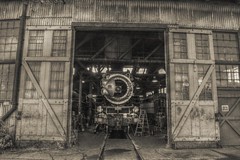
After we hung up, I got to thinking a bit more about the questions Brooks asked and my reply. Hindsight being what it is, I would like to amend or add to my comments.
The second topic I would like to cover is the use of Open Source tools for image processing.
During the interview, I think I may have rambled a bit, trying to get everything that came to mind into a couple paragraphs. It might be a meaningless mess to try and listen to.
The topic of image processing tools is, for me, an important topic. I will start by comparing and contrasting commercial for sale tools with Open Source tools.
Commercial for sale tools are widely known in the West. Its how we live our lives. That is, we buy what we want and hope that it does the things we intend them to do. I think of commercial entities as large mostly inaccessible beings with few points of access to their inner sanctums. Someone or something "gives" us a tool in a one to many kind of relationship. One company, and perhaps many customers. Intellectual property and copyright protections are granted to the commercial entity, not to the human creators of a work. Furthermore, aside from what might be available from "value added partners", there are few opportunities to extend a tool beyond its original capabilities. The barrier to entry is money. Pure and simple.
This kind of approach is easy for Westerners to understand since this is what we have been raised to expect. Closed protectionist capitalism is like this. For photographic tools I think of the foundation being Microsoft Windows, with perhaps a few Apple OS-X users thrown in, just to mix things up. For the tools themselves, I think of Adobe and their Photoshop suite of applications.
For more than a decade I have been making use of Open Source infrastructure and tools. In my work-a-day life I have attempted to introduce people to the joys and freedom provided by the Linux operating system. Several companies have allowed me to influence their operating system choices in this direction. One company even makes over $400 Million a year based on products that use Linux inside.
When I transitioned from traditional mechanical-chemical tools and processes to digital, I naturally looked into what Open Source tools might be available to me.
Open Source has a few properties that stand in stark contrast to commercial entities. For instance, Open Source provides a many to many relationship. There are many developers and many consumers. Developers are protected by a license scheme that grants the originators copyright protections. This also helps protect creator's intellectual property. Open Source works are openly shared and many times cost nothing to acquire. As a user, if you make an enhancement or fix a few bugs, you give your updates back to the community at large. Over time the Open Source community strengthens as more developers participate and more good solid work is released. The most common barrier to entry in the use of Open Source tools is time, not usually money.
When I think of Open Source, I think of Google who bases their massive search engine on Linux. I think of Apache web servers, which serve over 70% of all web pages to computer users world wide. I think of Open Source works as being accessible, easy to engage, and extendible in any direction a user or developer might need or desire.
For the LensWork portfolio I used a variety of Open Source image processing tools.
I used Qtpfsgui to capture the high dynamic range of the original scene. I then used Qtpfsgui's ability to map tones using several different operators and a wide variety of parameters to achieve the desired effect. In the commercial space, Photomatrix is Qtpfsgui's equivalent.
In a few cases I used Hugin to stitch multiple images together to form the foundation image that I worked from. In the commercial space, there are several panorama applications to choose from. But unlike its commercial counterparts, Hugin offers nearly a dozen ways of projecting an image onto the final image space.
I used the Gimp for Photoshop-like manipulations. The Gimp offers all the features and functions of Photoshop, and it does it for free.
Binaries of each of these packages are available for Windows, Mac OS-X, as well as native Linux.
A final word about operating systems and compute infrastructure: In my experience of running applications on top of the Linux operating system I have found stability. Real stability. No funny wierdness of things not working, or slowing down, or corrupting my work. Furthermore, Linux runs on just about any Intel or AMD processor based computer. This includes nearly any computer a person can buy today. Windows, on the other hand... ah... how can people stand that operating system? Maybe they just don't know any better? Apple... makes brilliant stuff! But the brilliance comes at a cost. I can't afford it so I use Linux.
Wednesday, August 13, 2008
Now that I think about it... [1]
I was recently interviewed by Brooks Jensen for the LensWork Extended #78 Sept-Oct issue. Some of my "In the RailYard" will be published.
After we hung up, I got to thinking a bit more about the questions Brooks asked and my reply. Hindsight being what it is, I would like to amend or add to my comments.
The first topic I would like to cover is printing.
Brooks asked me a couple times about how I printed the images in the portfolio. I gave rather incomplete answers.
I come from traditional analog chemical processes. So my current work emulates many of the tints and papers that I have used over the past 40 years of making prints.
I made the jump to digital daylight processes after I was convinced of the longevity of the prints (200+ years) and confirmed that I could exceed the resolution of my old work. For this reason I use a common consumer grade pigment based printer. The papers I use are "photo rag" in nature. That is to say, they have high cotton fiber content.
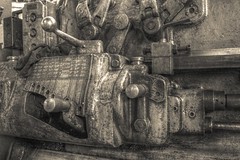
For the LensWork portfolio, I printed to Hanemuhle Photo Rag Smooth 188gsm. The images were tinted using a hand built "sepia" tone. The image sizes were selected to allow a sufficiently wide boarder for viewing.
Recently, Ted Mishima shared with me the beauty of Epson's Velvet Fine Art Matte. I love the texture and the way blacks are really black. I also love the way that light appears to be "sucked in" by the surface. This is beautiful material and I can't seem to get enough of looking at images made to it.
After we hung up, I got to thinking a bit more about the questions Brooks asked and my reply. Hindsight being what it is, I would like to amend or add to my comments.
The first topic I would like to cover is printing.
Brooks asked me a couple times about how I printed the images in the portfolio. I gave rather incomplete answers.
I come from traditional analog chemical processes. So my current work emulates many of the tints and papers that I have used over the past 40 years of making prints.
I made the jump to digital daylight processes after I was convinced of the longevity of the prints (200+ years) and confirmed that I could exceed the resolution of my old work. For this reason I use a common consumer grade pigment based printer. The papers I use are "photo rag" in nature. That is to say, they have high cotton fiber content.
For the LensWork portfolio, I printed to Hanemuhle Photo Rag Smooth 188gsm. The images were tinted using a hand built "sepia" tone. The image sizes were selected to allow a sufficiently wide boarder for viewing.
Recently, Ted Mishima shared with me the beauty of Epson's Velvet Fine Art Matte. I love the texture and the way blacks are really black. I also love the way that light appears to be "sucked in" by the surface. This is beautiful material and I can't seem to get enough of looking at images made to it.
Subscribe to:
Comments (Atom)