Tuesday, August 28, 2012

Lightweight large format view camera lenses

Another page from my old website...

----

Large Format Lens Field Kits

This is where I get to sound so much like the Oracle on the Mount... The following are my suggestions on what to carry into the field when photographing the world using a 4x5 camera. No attempt has been made to recommend lenses for use in a studio. Lenses are grouped into catagories in an attempt to illustrate different priorities. I have ranked these lenses based upon inspection of size, weight, and lens quality. Comments on each lens follow. I hope this proves helpful...

If Used/Very Low Cost/Weight is important

  • Wollensak 3 1/2" f/6.3 - $125 This lens is very reasonably priced and provides adequate preformance and coverage (no movements). These are very light and compact.
  • Schneider Xenar 135mm f/4.5 - $125 These lenses are of a tessar design, provide little movement, but are widely available, inexpensive, and quite sharp
  • Schneider Xenar 150mm f/4.5 - $150 These lenses are of a tessar design, provide a little movement, are widely available, inexpensive, and sharp
  • Schneider Symmar Convertable 150mm f/4.5 - $250 If you had room for only one lens to carry this might be the one. It converts into a 265mm long lens and provides adequate performance as a 150mm lens.
  • Kodak 203mm Anastigmat f/7.7 (uncoated) - $125 For an uncoated lens these test very well indeed! These are very light and compact. Not too much to fear for the lack of coating as this lens has only four elements that are air-spaced. So flair will not be too apparent. It's certainly not like having to coat a multi-element modern lens...
  • Kodak 203mm Ektar f/7.7 (coated) - $200 The quality of this lens is truely amazing when one considers that it started life as one of Kodak's Anastigmat lenses. The engineers did their job right. Mounted in a small Supermatic shutter, these lenses are a joy to carry into the field.
  • Rodenstock 210mm Geronar f/6.8 - $250 For a three element design that comes coated it'll provide adequate performance. The size is good for carrying into the field as well.
  • Schneider 210mm Symmar Convertable f/5.6 - $400 If you have to have a plasmat-design lens this one is adequate for the price and performance needed to properly render an image in the field.

If Used/Performance/Weight is important

  • Schneider 90mm Angulon f/6.8 - $200 Search for a Linhof shuttered example if you purchase one made in the 1950's. It's manufacturing quality was improved into the 1960's. Find one mounted in a Compur shutter that provides a focusing pre-view lever (there's lots that don't have this option, so shop carefully) to help make life easier. Shoot straight on as these have practically no coverage for 4x5
  • 1970's Schneider 90mm Angulon f/6.8 - $300 The last of the Angulons were probably the nicest as quality control was at it's peak for this series. Too bad these aren't made anymore... they are light and sharp.
  • Kodak 100mm Wide Field Ektar f/6.3 - $150/$275 This is a good lens. This lens has very nice coverage for 4x5, and allows a bit of movement where a 90mm Angulon does not. Search for good clean examples and have loads of fun!
  • Kodak 135mm Wide Field Ektar f/6.3 - $200/$375 This is a surprisingly good lens. Kodak had some of the best quality control/production control mechanisms in the industry. This lens has absolutely huge coverage for 4x5, and can be used straight on for 5x7. Search for good clean examples and enjoy the quality.
  • Fujinon 135mm W/EBC f/5.6 - $250 This lens has the quality of German lenses. F/11 and f/16 performance is good. F/22 performs right at diffraction limits. Just make sure you pick one up that has the multicoating. To know this look for the engraving on the outside of the front element rim and bright green highlights reflecting off the glass
  • Fuji 150mm W or WS f/6.3 - $350 These lenses should be more highly touted! Excellent optics with very reasonable coverage. Illumination circle is reported to be around 290mm. The usable area will be something less than this as this lens is most likely of Tessar design, but still providing 57 to 62 degrees of area to work in.
  • Rodenstock 150mm N f/5.6 - $350 This lens is small, light and provides outstanding quality. Resolution performance was outstanding in the one example we tested. Look for a recently manufactured lens as construction quality improved greatly during the 1980's.
  • Schneider 150mm Symmar-S/MC f/5.6 - $375 For a used lens you will find nothing finer. Simply excellent performance at a good price. Matches Rodenstock's Sironar-S most excellent 75 degree plasmat at half the cost used!!!
  • Nikon 200mm M f/8 - $450 These are not widely available, though they should be. These are very small, and very light. It's worth looking for as they are also very sharp. Keep your eyes open and launch that boat anchor-Plasmat design in favor of really great optics.
  • Fuji 240mm A f/9 - $500 If you're looking for the longest non-telephoto 4x5 lens mounted in a #0 shutter which is, at the same time, very highly regarded for it's outstanding image qualities (even at infinity), then look no further. Unfortunately you might pay a premium for one, even on the used market (Robert White sells new 240mm Schneider GClarons for less - thought that lens is only single coated and mounted in a #1 shutter). Kerry Thalmann considers this lens a Future Classic.
  • Nikon 300mm M f/9 - $450 These are widely available and are very small, and very light. It's worth looking for as they are also nice and sharp. Kerry Thalmann considers this lens a Future Classic.

If New/Low Cost/Weight is important

  • Congo 90mm Wide Field f/6.3 - $275 Want something that's multi-coated, in a new shutter, and light? This is worth considering. I've heard that quality control is non-existant at the factory, but for a peice of glass costing not much more than a new shutter, what can one expect? Well, for starters you can expect quality on par with the old Wollensak 3 1/2 inch wide field lenses... and that ain't 1/2 bad...
  • Congo 120mm Wide Field f/6.3 - $295 Still want something that's multi-coated, in a new shutter, and light? This is also worth considering. Think of this lens as a new 120mm Angulon, but without the quality control. So test before using, and you could come out very happy...
  • Schneider 150mm Xenar f/5.6 - $375 I was surprised to find this lens is still made. It's very small, light, and would make a great traveling companion to a Nikon 200mm M.
  • Congo 210mm tessar f/6.3 - $325 ? You roll your dice and take your chances. If you buy one test it. I think you'll find that it's performance is real similar to the Wollensak lenses of 40 years ago. That is to say, adequate for the job.
  • Schneider 210mm Xenar f/6.1 - $500 Here too I was very surprised to learn that this lens is still being made. It's mounted in a #1 shutter so is larger to haul around than an Ektar or Nikkor. But if you have to have new and like the way tessar-formula lenses render images then here it is.

If New/Performance is important

  • Schneider 80mm f/4.5 Super Symmar XL - $1300 from Badger Graphic (no idea yet what Schnieder USA will be charging). I guess I should have been surprised by the addition of more aspheric lenses from this company. This may seem a rather odd focal length but it neatly replaces two lenses at once - a 75mm and 90mm and it's smaller and lighter than either of them. Coupled with the next lens on this list and you'll have the short end of your lens collection covered.
  • Schneider 110mm f/5.6 Super Symmar XL - $1200 from Badger Graphic Give me the option of carrying only two lenses, and money no object! This would be right in the running for providing the shorter focal length. Words cannot describe the image quality of this lens. You can see it on the test negatives standing three feet away (well, if a Wollensak 108mm negaive shot at wide open is hanging literally next to it :-). It's reasonably small, fairly light, and would be worth selling one's first born for if you had to make your living in photography. Or maybe just a limb or two. Badger Graphic brings these into the US apparently straight from the factory and offers this wonderful lens at 1/2 the street price of equipment coming through other distribution channels. Kerry Thalmann considers this lens a Future Classic.
  • Schneider 120mm f/5.6 Super Symmar HM - $900 from Badger Graphic I used to poo-poo these lenses as too expensive. That was until Schneider came out with it's 110XL. If I had nearly unlimited budget I'd seriously consider purchasing this lens. When combined with a new APO 210mm lens one's field kit could accept the small weight gain and launch the 75, 90, and 150mm lenses in favor of a two lens kit. This lens is a super performer in every way. And it's cheaper now in the US by buying directly from a reputable supplier!
  • Fuji 125mm f/5.6 CM-W - $600 Don't have the money to spend on the Super Symmar? The Fuji lens continues to support their highly regarded reputation for constructing great lenses. At over half the price of a Schneider this lens provides decent coverage and excellent preformance. This is an outstanding value.
  • Rodenstock 150mm f/5.6 APO Sironar-S - $700 Need a little extra coverage for movements? This 75 degree plasmat is truley surprising. It matched an outstanding 72 degree plasmat in the Schneider 150mm APO Symmar in terms of size, weight, image quality. These guys have done their homework! Combine this lens with nice 90 and 210mm lenses and you'd have one rightous field kit.
  • Nikon 200mm M f/8 - $625 Small and sharp are the right words to describe this beauty. If you need new and want the latest coatings but need to romp the hills of Easter Island this is a great lens. In fact it should be the cornerstone of any light/portable field kit. Too bad everyone thinks they need the image circle of a nearly 8x10 lens and end up carrying those boat anchor 210mm plasmats... this is the only modern lens in my kit that fits into the folded body of an old Linhof Super Technika III.
  • Schneider 210mm APO Symmar f/5.6 - $1000 As expected this is a truely wonderful lens. It's sharp beyond sharp. If weight didn't matter this is the one lens I'd pair with that incredible 110XL or 120 Super Symmar HM. But I'd do it only if I could stand the weight. Maybe this is why God gave us mini-vans... to carry all this wonderful stuff... just don't stumble too far from home as the weight might become important.
  • Fuji 240mm A f/9 - $655 This is the longest new lens a person can buy that's mounted in a #0 shutter. And it's wonderful. Use this lens as the cornerstone of a 90/150/240 three lens field kit and you'd have a truely outstanding combination. You'll find nothing finer. And if you buy one from Badger it's also very reasonably priced.
  • Nikon 300mm M f/9 - $900 If you have enough bellows this lens is small, light, and sharp. Like it's less well known sister, the 200mm M Nikkor, this is a great performer.
  • Fuji 300mm C f/8 - $650 If you have enough bellows this lens is small, light, and sharp. Like it's well known cousin, the 240mm A Fuji, this should be a great performer.

A modest proposal - from back in the day of film

Yet another page recovered from my old website...

----

A Modest Proposal - or how to calculate the value of one's photographic system

I have been trying to come up with a way that I can evaluate lens and system costs vs. performance. I think I've hit upon one useful mechanism. Hence this Modest Proposal for evaluating the relative costs of performance for Large Format lenses and Medium Format systems. I believe _one_ way to evaluate performance vs cost can be described by:

{cost of item} / {max. resolution of item to film } = {cost of one line per mm of
resolution}


Here are several examples of what falls out of this calculation:


90mm Angulon - $200(used) / 67 l/mm       = $2.98 / line / mm

3 1/2" WARaptar - $125(used) / 60 l/mm    = $2.08 / line / mm

90mm SW Nikkor - $750(used) / 80 l/mm     = $9.30 / line / mm

90mm SW Nikkor - $1350(new) / 80 l/mm     = $16.80 / line / mm

110mm Schneider XL - $2300(new) / 80 l/mm = $28.75 / line / mm

135mm WF Ektar - $375(used) / 76 l/mm     = $4.90  / line / mm

150 mm APO Sironar S - $750(new) / 85 l/mm = $8.80 / line / mm

150mm Symmar Convertable - $300(used) / 64 l/mm = $4.60 / line / mm

200mm M-Nikkor - $450(used) / 67 l/mm     = $6.70 / line / mm

203mm Kodak Ektar - $200(used) / 67 l/mm  = $2.98 / line / mm

210 APO Symmar - $750(used) / 76 l/mm     = $9.80 / line / mm

210 APO Symmar - $1000(new) / 76 l/mm     = $13.10 / line / mm

Bronica SQA w/ 80mm - $800(used) / 67 l/mm        = $11.90 / line / mm

Fuji GW690III w/ 90mm - $1000(used) / 67 l/mm     = $1492 / line / mm

Fuji GW690III w/90mm - $1300(new) / 67 l/mm       = $19.40 / line / mm

Kodak 620 Special w/100mm = $15(used) / 63 l/mm   = $0.23 / line / mm

Mamiya C220Pro w/80mm - $225(used) / 67 l/mm      = $3.35 / line / mm

Mamiya 6 MF w/80mm - $2800(new) / 95 l/mm         = $29.47 / line / mm

Mamiya 6 MF w/80mm - $1800(used) / 95 l/mm        = $18.95 / line / mm

A couple things fall from this.


  • It could be argued _based purely on these numbers_ that the best value per line of resolution in LF is an old 3 1/2" WA Raptar or the 203mm Ektar. They'll both cost a person less than $3.00 per line per mm of resolution.
  • In MF the winner, hands down, is an old Kodak Special Six20 with 100mm f/4.5 Kodak Anastigmat. It wins by costing only $0.23 per line of mm of resolution!!! More reasonably the Mamiya C220 Pro comes out costing a person only $3.35 per line of resolution. So my modest proposal is: When newbies ask what the best value for their money is, simply take it's cost, divide it by the number of lines per mm of resolution it's capable of returning, and evaluate competing systems based on the lowest cost per line of mm of resolution...
    I hope this spins a few thought wheels... :-)
    - Chris
  • I used to go through a LOT of equpiment...

    Searching for the ultimate camera and lens used to be a game I played.  It was a convenient way of avoiding having to make a nice image.  That's all changed since I've moved to digital.  Now it's all about the image and I could nearly care less what equipment I use to achieve it.  Cameras and lenses are only a means to an end.  But it took me decades to realize that.

    ----

    Last Updated: 05/07/03
    Equipment Bought, Used, then Sold...
    This page presents a list of equipment I've purchased, used, and discarded. I include reasons for the original purchase and final sale. I hope you find it fun. Gosh, have I really used all this stuff...?
    Large Format Cameras Reason purchased/notes on use Reason sold
    Sinar F 4x5 First large format camera.  Great Swiss quality.  Simple to use, large to carry in the field.  Expensive lensboards. Traded straight for an early Linhof Technica III. No lasting regrets.
    Linhof Technica III 4x5 (early) Traded into for use in the field.  Had all the movements I thought I could ever use.  Small lens boards precluded using #3 shutters.  Built like a German tank Sold to get a lighter 4x5 field camera.  No regrets.
    Tachihara 4x5 wood field camera Bought to help the kit weigh less into the field.  Had plenty of good movements.  Bright ground glass - was one of the nicest surprises in using this camera.  Wista lensboards were cheap from MidWest Photo Sold to pay for another 4x5 camera.  No regrets. But I miss the light weight. In fact, I've been thinking of toying with a Gowland super-lite 4x5 for those occasions when I want the big image size, but don't want the weight of a German Tank!
    Speed Graphic 4x5 It was too cheap. I couldn't pass it up. Such is the price for visiting a local photo swap. The focal plane shutter worked. I even mounted up a 7inch f/2.5 AeroEktar for the heck of it. This would have worked out GREAT in the field. These are wonderful cameras. Stupidity.
    Burke and James 8x10 wood field camera Was a buy of the century.  Came with a mint 12" Commercial Ektar.  Fairly light for the format.  Was a pain to haul away from the car.  Contract prints were fabulous though.  Some of my most pleasing images from a technical standpoint were taken using this camera. Too heavy, too difficult to use (or so I thought at the time :)
    Seneca 11x14 wood field camera Was a good buy.  But needed work.  I never completed the project. Sold to make room for a 12x20 Folmer and Schwing that required less work. Talk about going from the frying pan into the fire!!!
    Folmer and Schwing 12x20 field camera Was a very good buy. But needed a small army to operate. Sold to make room for a brand new Mamiya 7 (go figure!). The size and weight of the F&S was simply too much to deal with in the field. Any my 4x5 equipment fit my ability and needs, and the new Mamiya has some of the sharpest optics I've ever tested. Besides, the smaller equipment is easier to travel with and I'm just a hobbiest, not a pro...

    Large Format Lenses Reason purchased/notes on use Reason sold
    Fujinon 240 A f/9 This was my recent madness to procure and use Fuji LF optics. This was a wonderfully small, light lens and it was very sharp. Sold due to it's very close proximity to my 200mm Nikkor M f/8, and due to the fact that I never used it, even on 8x10. OK, so I used it once in four years. But that was it. Time to liberate the money and buy something else. The proceeds were used to buy a Mamiya RZ camera kit (complete with 110mm Z lens and 220 film back). No regrets yet.
    Fujinon 450 A f/9 This was another of my recent madnesses to procure and use Fuji LF optics. This was a very small, light lens and it was very sharp for it's focal length. Sold due to the fact that I never used it, even on 8x10. It was time to liberate the money and buy something else. The proceeds were used to buy film backs, a new screen, a 180mm W-N lens, and a 65mm L-A lens for my Mamiya RZ system. No regrets yet.
    Kodak 100mm Wide Field Ektar f/6.3 This was my last attempt to press small, light lenses into use in the field. This was a wonderful lens and was sharp. Sold the make way for a fabulous new Schneider 110mm Super Symmar XL lens of greater coverage. No regrets, particularly since the Super Symmar is such an incredible piece of glass!
    Kodak 135mm Wide Field Ektar f/6.3 This was my second lens to press small, light, great coverage lenses into use in the field. This was a wonderful lens and was very sharp. Sold to help finance the purchase of a fabulous new Schneider 110mm Super Symmar XL. No regrets, particularly since the Super Symmar is such an incredible piece of glass!
    Schneider 150mm Xenar f/5.6 This was a find! I didn't realize that Schneider continued to make small, light, sharp large format lens. It was wonderfully light, sharp, and fun to use. This is highly recommended to anyone who might be on a tight budget. I paid $375 new for this one. Sold the make way for a mint Fujinon W/EBC 135mm lens.
    Kodak 200mm Ektar f/7.7 This was my first attempt to press small, light, decent coverage lenses into use in the field. This was a wonderful lens and was very sharp. Sold to help finance the purchase of a fabulous new Fuji 240mm A No regrets, particularly since the Fujinon 240 A is such an incredible piece of glass!
    Schneider 210mm f/5.6 Symmar S/MC This was my first large format lens. It was sharp, contrasty, had tons of coverage. Beautiful. But it was also a heavy lens. Sold to pay for a Kodak 203mm Ektar f/7.7 Occasional regrets.
    Schneider 90mm f/5.6 Super Angulon This was my second large format lens. It was huge and heavy. It had plenty of coverage. Sold to avoid the weight and single coating on all those elements! Eventually replaced by a Kodak 100mm Wide Field Ektar f/6.3. No regrets.
    Schneider 150mm Xenar f/4.5 Linhof This was my third large format lens. It was very light, sharp, and was fun to use. This is highly recommended to anyone who might be on a limited budget. I paid $125 for mine and it was mint! Sold the make way for a lens of far greater coverage: Kodak 135mm Wide Field Ektar f/6.3. No regrets, particularly since I found out that Schneider still makes this Xenar, and I bought one. :)
    Schneider Angulon 90mm f/6.8 Bought to replace the 90mm f/5.6 Super Angulon boat-anchor. This example was very sharp, light, and was mounted in a modern Compur shutter. Sold to make way for a wonderful Kodak 100mm Wide Field Ektar f/6.3. No regrets, particularly since the Kodak 100mm lens provides a bit of coverage over the Angulon
    Schneider Angulon 65mm f/6.8 Bought to use for 4x5 work. This example was very sharp, light, mounted in a modern Compur shutter, and extremely small. Sold out of lunacy... Regrets.
    Kodak Commercial Ektar 12inch f/6.3 This lens came on the Burke and James 8x10 view camera. This is one of the world's greatest lenses (he says ever so humbly). It was sharp, contrasty, and the Ilex shutter even worked reliably. Stupidity. Particularly since I've gone off and bought a Deardorff 8x10 and needed lenses for it... oh well... Regrets. Though I did recently pick up a 300mm G-Claron f/9 that's as sharp as any shorter lens I've ever tested! This new lens will work on the Deardorff.
    Goerz Red Dot Artar 45cm f/11 In barrel, this was a very cheap lens. I think I paid something like $89 from Midwest Photo. The coating on the rear element was coming off. It had bad marks on that element. But one would never know it from the images it produced. Along with the 12" Commercial Ektar, this was one of the sharpest lenses used in 8x10 format. Sold when I 'got out' of 8x10. No regrets.
    14inch Goerz Doppel Anastigmat Series III In barrel, this was a very beautiful uncoated lens. Easily covers 12x20 and was very very sharp. Great inexpensive way to get lenses for very large format equipment. I'd heard that they were getting harder to find. Sold when I 'got out' of 12x20. No regrets, except from a 'historic' standpoint.
    Rodenstock 24inch f/9 Ronar In barrel, this was an inexpensive and very heavy lens. The coating on the front element was coming off. Sold when I 'got out' of 12x20. No regrets.
    Medium Format Equipment Reason purchased/notes on use Reason sold
    Hasselblad 500CM system I bought this camera after testing a friends Hasselblad SWC. I thought that Zeiss lenses might be very good and that there would be no problems with reliability. I was thinking it might be nice to have a camera with interchangable backs that might also be light enough to travel with. Strange things happened with this camera. A light trap failed and I lost a few vacation images. The front and rear plates were out of alignment (who ever heard of such a thing?). The mirror was mis-aligned and caused the focus to be off by 1 foot at a focusing distance of 5 feet. One of the rear barn doors spring bent and I lost an entire shoot. So before anything else broke on it or was found to be out of alignment, I sold it. The kit was replaced with a Mamiya RZ kit. For what was paid for the 500CM, 80mm lens, and two film backs, I bought a Mamiya RZ, 65L-A, 110Z, 180W-N, 360Z, two film backs, and several odds and ends. If my experience with the Hasselblad is any indication of reliability, then it's a very overrated camera system. In contrast, my Mamiya has not failed. Ever.
    Graflex Crown Graphic 23 I was given this camera and film back by a very kind friend. I bought a 100mm Schneider Symmar Convertable for it after the 101 Ektar that it came with died in it's shutter (800 Supermatic). Due to the size being so so close to my 4x5 Linhof SuperTechIII, and the fact that the knob wind was so close to the back of the camera that my knuckles hurt, I decided I would sell this wonderful thing and buy a pair of old folder cameras. So now I have a Bessa I 6x9 and a Zeiss Ikonta 532/16 6x6. Only mild regrets.
    Rolleiflex 3.5F 6x6 I was still hoping to find the full Rolleiflexes had sharper lenses than my Mamiya C220 Pro. The optics were supposed to be world renowned. The second camera I owned turned out to be only marginally better than other equipment I already owned. And it failed to come anywhere close to matching the sharpness of my new Mamiya 7. No regrets. For the second time.
    Balda Baldix 6x6 I went crazy. The promise of light, portable 120 format cameras drove my buying for several months. I looked at everything. Or so it seemed. And I bought lots of equipment. This camera was a keeper. The lens was small, light, and sharp. The entire system was simple to use and smooth in operation. It was fun. Sold to pay for a Ricoh Point and Shoot No regrets.
    Kodak Special 620 I thought I wanted as large a negative as I could reasonably stuff into a super compact camera. This camera's optics were outstanding, even though they were uncoated! This camera's operation was even smoother than the aforementioned Balda's. Kodak did their job right with this little wonder Sold to help pay for a Ricoh Point and Shoot Moderate regrets.
    Rolleiflex MX 6x6 I was hoping to find a lighter, sharper camera than my current Mamiya C220 Pro. Rollei has a good reputation. The optics are world renowned. The camera turned out to be the same size and weight as my Mamiya. The lens wasn't any sharper than the Mamiya. It felt 'old'. No regrets, though there is still lust in my heart for someday affording a new Rollei Gx or Fx TLR...

    Working with an old Burke and James 8x10inch view camera

    Recovering yet another page off my old old website... c.1990's

    Recovered: Lost images... Around a decade ago, I purchased a Burke and James 8x10 view camera outfit. I found it at a local photo swap. It came with a few film holders, a case, a darkcloth, and a like new mint 12 inch Kodak Commercial Ektar f/6.3 lens. I quickly scrounged a tripod to hold the camera and headed out for a few shoots.

    At the time I rode motorcycles. Lots of them. Being in the community of riders, I had access to some pretty sweet machines. So I lined my friends up and started taking photos of them with their scoots.

    The images here were recovered recently. I moved to a new home and mislaid a bunch of things that I wanted to reprint. Rummaging through boxes I found some of what I was looking for. The prints here were made prior to the move. They look great. The contact 8x10 inch prints gleam and glow. There's nothing like a little film, a big camera, and subject matter. Oh, and that Ducati was mine. I later sold it to pay the mortgage off on the old place.

    Ducati 750GT (redone in the style of a Sport)

     
    Vincent Rapide and the owner of Langlitz Leathers


    Norton 850 Commando and a good friend  
    BSA Gold Star 500cc and it's owner/restorer
    Norton Manx 500cc and a good friend


    Ultra Large Format - info from my original website

    Here is some potentially useful information, for shooters of ultra large format film.  It's an old page that I maintained on my old web site (which is now defunct).
    -------
    Last Updated: 06/15/05
    Ultra Large Format re-entry...
    This page documents my experiences with 10x12, 11x14, and 7x17inch Ultra Large Format photography.
    I recently traded a lens for a 11x14 Century ultra large format view camera. The camera came with a 10 3/4inch Dagor that should cover the format. Also with the camera came a 10x12inch Korona film back. There are film holders for both formats. The condition was fairly good. The bellows are intact and the wood is in decent condition. The camera has obviously been used. I needed to cement wood shims onto the main mounting block to keep the rear section from flopping about. From years of use, the aluminum cleat had rubbed the guide channels wider than the original design allowed for. Once in place, the shims work very well and the back is now rigid. Additionally, I built an adapter for the 10x12 back to mount onto the 11x14 rear frame. Everything is now ready to go.
    Prior to this I picked up a 7x17 Korona ultra large format view camera. Its in fabulous condition. The wood looks like its new. Over the 2004 end of year holiday season I was able to take it out and try my hand at making super large negatives. The camera was very light and useful. In fact, it was a pleasure to use. I more recently took the camera down to the local roundhouse for a few images of old steam locomotives. I can't wait to process the film to see what I have.
    The bulk of what follows regards lenses, coverage, and my observations and disappointments in using various lenses on the 10x12, 11x14, and 7x17 inch view cameras.
    Optical image circle requirements
    Various ULF cameras require lenses that cover the following:
    • 11X14 - 450mm
    • 7X17 - 466mm
    • 8X20 - 540mm
    • 12X20 - 585mm
    Lenses that cover 11x14 and 7x17
    Looking at photo.net and other resources, here's a list of small light shorter lenses that have been reported to cover 7x17 with sharpness corner to corner. In increasing focal length:
    • 18cm/183mm Zeiss Protar f/18
    • 18cm/183mm Bausch and Lomb Protar Series V f/18 (built under license to Zeiss)
    • 240mm Computar f/9
    • 240mm Germinar-W f/9 (maybe, the corners might get lopped just a little)
    • some 240mm Kowa Graphics
    • 240mm Zeiss Dagor (not the Goerz version)
    • 250mm Kodak Wide Field Ektar f/6.3
    • 270mm Computar f/9
    • 270mm Goerz Dagor
    • 300mm Computar f/9
    • 305mm Schneider GClaron f/9
    • 355mm Schneider GClaron f/9
    • 360mm Fuji A f/10
    • 450mm Fuji C f/12.5
    • 450mm Nikkor M f/9
    Here is a list of potentially expensive, large, heavy, hard to find, or old lenses that reportedly cover the 7x17 format:
    • 210mm Schneider Super Angulon
    • 210mm Schneider SuperSymmar XL
    • 300mm Goerz Dagor
    • 300mm Fujinon-A
    • 305mm Germinar-W f/9 (not the APO Germinar version)
    • 355mm Schneider Symmar
    • 360mm Fujinon-W
    • 360mm Germinar-W f/9 (not the APO Germinar version)
    Calculations on 7x17 lens coverage The 7x17 format is 178 x 432 mm. A full diagonal is 18.38 inches or 466mm. Here is what various focal length lenses must cover to adequately shoot 7x17 with a usable image circle of 466mm.
    • 300mm lens - 74 degrees
    • 250mm lens - 85 degrees
    • 150mm lens - 114 degrees
    Example: If I've done the math correctly, here's the calculation for 150mm coverage on 7x17.
    9.19inches (diagonal from center of the format to the corner) divided by 5.9inches (150mm lens length) equals 1.55. The atan of 1.55 is 57 degrees. 2 times 57 degrees to get the full angle equals 114 degrees. I use a 110SS-XL on 8x10. To accomplish this, the lens needs to cover 112degrees. It does this with ease. Its probably a stretch to think the 150SS-Xl mightjust reach 114degrees. Anyways, I will never know. I sold the 150SS-XL.
    Obervations on 7x17 lens coverage
    There is some question whether an 80 degree lens like the Fujinon 250mm f/6.7 would work or not. One person on the 'net suggested that it would cover. Others said no, it wouldn't. But I purchased the lens anyway in hope that I could use a small modern 250mm lens and avoid having to deal with size and weight of an older optic.
    The gent who originally owned my camera used a 250mm Kodak Wide Field Ektar f/6.3. The WFEktar is rated at 80 degrees and is not a wide angle lens. Its a wide field lens. I didn't buy it at first due to a somewhat non-working shutter (Ilex #5) and due to its overall size and weight. But I made a deal for the optic later and it was quickly delivered.
    Over a holiday week I took the Korona into the field and tried the Fuji 250mm W f/6.7 lens. I shot at f/45 and focused somewhat near infinity. The subject was probably 50 feet away. After processing the negatives, I can say with direct personal experience that the Fuji does not cover 7x17. There is an arc about one inch from the neg edges where the light falls completely off. This is a little sad as I really like the focal length for the kinds of things I "saw" in 7x17. Well, its back to trying the old Kodak 250mm Wide Field Ektar.
    I also picked up a Fuji 250mm SF f/4.5 (soft focus) on rumors that it covered 7x17. Over the same holiday weekend I tried the SF optic too. While it "covers" the format, it "pulls" the image in very unpleasing ways around the edges. It does this to the degree that I doubt I'll use the soft focus lens for anything on 7x17 other than close ups. For soft focus work at subjects around infinity, a person will need to consider a different/longer optic.
    Computar Coverage
    The coverage of Computar f/9 lenses has been widely discussed. Some people say they cover 95degrees. Is it too good to be true? Seems like it. Here is the reported coverage at f/22:
    • 210mm Computar - 456mm (though some people have tested this at a more realistic 390mm when mounted in a #1Copal shutter, and others have told me that the lens "works on 7x17, but the corners do go soft)
    • 240mm Computar - 523mm
    • 300mm Computar - 655mm
    Further information on the camera or images using this format are found at:
      http://www.fiberq.com/cam/gundlach/pan.htm
      http://www.kerik.com/index.htm
      http://www.mutmansky.com/maingallery.html
      http://www.carlweese.com/

    Tuesday, July 31, 2012

    Looking back, looking forward...

     Update: Fifteen minutes after I posted this, the buzzer to the apartment rang.  It was la poste.  They had my 5in1 reflector.  I came back up stairs and not five minutes after that, as I was taking a leak, the buzzer rang again.  It was le livraison with my Elinchrom system.  Yea!  It's all here and I'm off to visit a new dance studio to see if I can get a more inexpensive but very serviceable place to shoot in.  Whee... the creativity train is set firmly in motion...

    --------
    Merde!

    Les lumieres, ils ne sont pas ici!  I should believe it, but I don't.  The French delivery system from ProPhot.fr is not working as the salesman said it would.  The lights have not yet arrived.  It's going on a week since I placed my order.  I might have to go back, ask a few questions, and see if I can't find the warehouse to go pick the Elinchrom system up myself.  I don't want to be a Horrible Incorrigible Foreigner, so I might have to see if I can get my Indignant Parisian "on".

    Geez.

    While kafeching my plight with a friend, he sent along a suggestion.  Maybe I should give up all this digital madness and work "real" art.  Wet plate collodion.  The process is interesting, if not a little convoluted, complex, and potentially explosive.  Ether can be that way.  Explosive, that is.

    To whet my appetite my friend sent along the following video.

    Dana Geraths - Wet Plate Photographer from Kia Anne Geraths on Vimeo.

    It reminds me of my many years of hauling around very large cameras in search of ultimate image quality.  The man in this video showed up at the 2012 Brooks Steamup out in Oregon.  I beat him by several years.  My first trip to the Steamup saw me hauling an 8x10 Deardorff and lenses and film holders and tripods and dark cloth.

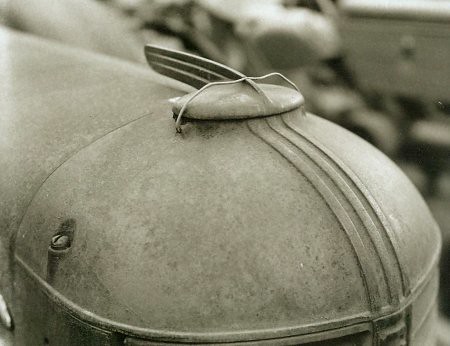
    Hood ornament

    The things I came away with pleased me well enough and there are a few fine palladium prints in storage that I'm particularly proud of.

    Alas, times change and the following year saw me carrying a new digital whiz-bang DSLR.  Such a difference in approach and such a difference in results too.

    Thinking about it, the old alternative process ship has sailed for me.  I can't go back.

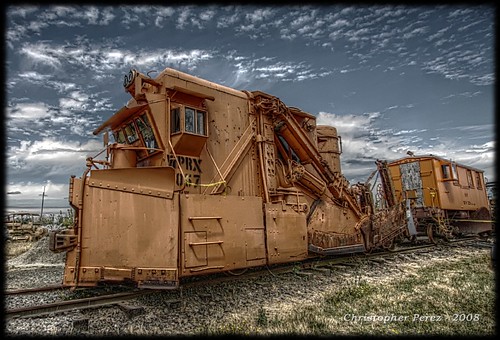
    Locomotive - Snow Plow

    Sure, it has it's own sense of beauty and grace.  Yes, the final results can be pure photographic.  But I wonder about the flexibility and I worry that so much process could easily sideline my rather mercurial creativity stream.  I'm not sure my wife would appreciate my bringing explosive materials into our small Paris apartment.

    So, I sit here impatiently waiting the arrival of my now very late Elinchrom studio lighting system.  Between fits of anxiety over whether it'll ever arrive, I dream of photoshoots and creativity and ideas and artistic frameworks of reality.  I test my ideas and hopes and dreams against other artists output.  I remain anxious to get going on new projects.

    I feel like a horse pulling against the reins wanting to get the show on the road.

    Thursday, July 26, 2012

    OK. OK. It sputters and starts again...

    To avoid shipping charges, I sold my Paul Buff Einstein 640, PLM 64 kit before moving out of the US.

    There were times when I regretted that decision.  I loved that kit.  It was flexible, fast to set up, and easy to carry.  Three heads, tripods, parabolic parapluies, portable back drop rig, and I was good to go.

    After arriving in France I realized that for me to replace that kit would set me back nearly 4000USD.  Quel dommage!  Quel horreur!!  C'est vraiment trop cher. 

    What to do?

    "Use the Force", hook up Google's search engine, and do a little investigating, that's what's to do.

    It took me some time, since I was so partial to the Einsteins.  I really wanted that old system, so nothing I looked at was ever good enough.

    The problem, I saw, was that Paul Buff's European rep added a ton of uplift to the cost and padded things a bit to make sure their doors stayed open.  In other words, the cost of doing business put the cost of the Einsteins straight out of my price range.

    Fortunately, after the fog in my thinking cleared and I realized there MUST be other good, if not better, manufacturers of photographic lighting equipment, I stumbled upon Elinchrom.

    Elinchrom offers several light sources, heads, stands, and battery packs.  Since I plan on using these lights only where power is readily available, I could by-pass the rather large costs of a battery pack.

    There were several kinds of heads to choose from, so it came down to choosing what I felt I could afford.

    I sit, even now, out on the back porch of our new apartment down in the 15th arrondissement, in Paris, France, on a rather hot 33C day, listening to a couple several floors up eat a very late dejuner, watching the doves nesting in a tree near by, and wait, not so patiently, for ProPhot.fr to deliver my new three head Elinchrom BX 500 Ri kit.  They said they'd bring them before 18h00.  It's now 16h00 and my foot is tapping the varanda.

    The portable backdrop, muslin, 109cm parapluies, and reflectors should arrive tomorrow from Amazon.fr.

    With luck, I might have two models lined up to work with in August and maybe two more to make images with in September.  Though I'm still looking for creative people like those I worked with back in Portland, Oregon, USA.  They'll come.  Soon, I hope.

    Tuesday, July 03, 2012

    I'm growing stale...

    It's been a full three months since we've moved to Paris, France.

    My wife and I have been rather busy.  We needed to visit the OFII to process our long stay visa requests.  We needed to find a new apartment, one that we could live in for at least a year.  We need to get things moved.  All of this has taken an incredible amount of time.


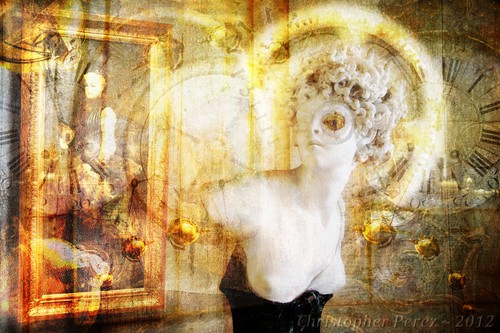
    Time Keeper's Goddess
    Timekeeper's Goddess

    In the meantime, I have been attempting to make connections into the creative community here.  I've been hoping to begin making images again.


    Alas, I'm constrained, just as I said I would be, to making travel photos.

    I have started to look for a place to work in.  I started with dance studios to see if I could find a room I could rent by the hour.  It's possible that there is such a place down in the 14th, but I'll have to see how far it is from our new apartment.

    I have started looking for people to work with.  This is where the differences in cultures between the USA and France seem to be hitting hardest.  The French are indeed conservative.

    Sometimes, back in the States, I would come across someone who felt that the only valid art was "good, professional" art.  In other words, art that hangs in galleries and museums.  Art that plays out on a "professional" stage.  Art that is somehow "acknowledged" to be good by some ill-defined group of "experts".


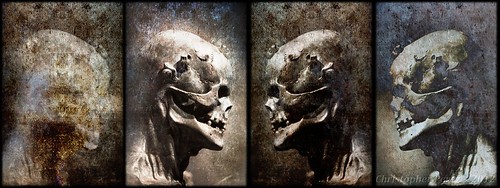
    Saint Rationalism
    Saint Rationalism

    It's disappointing to find this approach to art is in full play here in France.


    I'm used to finding creative people, sharing a bit of what I do and how I do it, and to come to a point, in many cases, where we could find common ground where all parties could share the results of an art work party.  Some on some level were professional.  Others were simply very creative people looking to extend their art.

    I have yet to find that kind of creativity, quick understanding and engagement here.

    I will need to remain patient.  We've only been here three months.  Still, I look forward to getting out of the habit of making travel photos.

    Thursday, June 07, 2012

    ... just as quickly...

    Just as quickly as the muse arrives to make a "straight" image (see my prior post), she turns and opens the enormous heavy oak doors to reveal a different sister muse.  The first muse leaves and slams the doors behind her.  The second muse comes in and sits herself right down and says "Now is the time to get on with it.  Got it?"

    My wife and I had a visitor.  She was a neighbor of ours back in the States who had come over for a two week science study of marmots in the Alps.  We had laughed, shortly before I lost my job in high tech, that it'd be good fun if we met up in Paris after her study was complete.

    Our change of life experiences was so vast and so complete that we indeed had the opportunity to see our neighbor.  Right here.  In Paris.  For three full days of fun and exploration.


    Study in Anthropomorphism [2]
     Our world is not as it first appears...
     
    The line to the Louvre was long and reached from the pyramid all the way back to the gates of the original pre-pyramid entry.  We stood there and hem'd and haw'd trying to decide if we wanted to stand in line for hours.

    But, since we couldn't figure out what else to do, and since the line looked like it might be moving nicely, we walked to the end of the line and joined the queue.

    We bitched and moaned and complained about all kinds of things.  Which led to a conversation with an Australian couple who were just in front of us in line.  It was a great way to pass the time and before we knew it, 20 minutes had passed and we were going through the screening station inside the pyramid.  Another 20minutes standing in line to get our tickets and we were on our way to see the Vermeers.

    Alas, the Vermeers had to wait.

    The three of us got completely lost into our own worlds as we experienced the incredible [Bob] Marley statues and the religious stone carvings that date from over 500 years ago.  I had never been in this wing of the Louvre, so it came as a very pleasant surprise to find this treasure trove of incredible art.

    I knew fairly quickly that something interesting might come from the visit.

    Mortal Soul Revealed

    Friday, June 01, 2012

    Well...

    To anyone who follows my work, seeing a "straight" photograph must come as something of a surprise.

    I tend to work in textures and pulled/pushed colors.  My static objects tend to be heavily re-worked to express a time and place that never existed.  My people photos tend to also be heavily worked to move a scene in directions that, hopefully, express what I feel.  In nearly all cases, seldom, if ever, do I make a solitary image.  I prefer to work larger projects where a common theme, look and feel can be expressed.

    So, you can imagine my own surprise when I stumbled across an image I made in the Passy Cemetery.  Just the one image.  Nothing else.

    Passy is a wonderful place to live.  It's in the 16th arrondisement in Paris, France.  It's people are completely and utterly Parisians.  They are quiet, reserved, and, in many cases, rather well to do.  I sometimes feel more than a little out of place.  Afterall, I'm not much more than a retired software engineering manager of modest means.

    Passy's markets are as up-scale as their clientele.  The bread here is incredible.  The cheeses... words escape me.  The tartelettes are scrumptious.  The chickens, sheep, beef, and pigs are over the top tasty.  The fruits and vegetables are fresh.  Meals around are apartment are generally accompanied with moans and squeals that come from the pleasure of eating fabulous food.

    There is also a small art filled cemetery here.  In fact, it sits on the Trocadero.  Due to the high walls, it sits up and over the place where it can collect the light breezes that sometimes waft their way over the city.  Many people don't even know this place exists, such is their intent on seeing la tour Eiffel sitting off in the opposite direction.

    One day, my wife wanted to sun a bit and I was looking to make a few images.

    The mid-day sun can be difficult to contend with, photographically.  Yet the shade side of the crypts can be wonderful to work near.  The reason is that shadows are filled with light reflecting off near-by light-colored stone crypts.

    Working the image back at the apartment I quickly realized that a light touch was all that the image needed.  A little burning.  A little color space manipulation.  A little contrast control.  Et voila!


    Passy Cemetery

    Medium Format lens tests

    Here is another page from my original "hevanet" website devoted to camera system/optics/film testing -


    Medium Format Cameras - Testing Lenses
    Copyright 1998/1999/2000 Christopher M. Perez/Kerry L. Thalmann/Mike McDonald - All Rights Reserved
    Copyright 2002/2003/2004 Christopher M. Perez - All Rights Reserved
    Last Updated: 19 April 2004 


    Medium Format (120/620)
    Camera / Lens Resolution Testing


    Please note: there are four sections found on this page.  Each section represents a particular camera type.  There are sections for SLRs, TLRs, Coupled Rangefinder Cameras, and Folding Cameras (with coupled and non-coupled rangefinders).


     Single Lens Reflex (SLR)
    Camera Model Lens cnt mdl edg (l/mm) f/stp Comments
    Bronica SQA 80mm f/2.8 Zenzanon-PS 67 53 53 f/2.8
    67 67 60 f/4
    60 67 60 f/5.6
    60 60 60  f/8
    60 67 60  f/11
    53 53 53 f/16
    53 53 53 f/22
    very heavy
    Bronica SQA 40mm f/4  Zenzanon-PS 60 50 50 f/4
    60 52 60 f/5.6
    52 52 66 f/8
    52 60 66 f/11
    60 60 60 f/16
    60 54 54 f/22
    Big and Beautiful
    Bronica SQA 200mm f/4.5  Zenzanon-PS 46 33 33 f/4.5
    47 33 33 f/5.6
    33 42 27 f/8
    42 47 42 f/11
    24 26 24 f/16
    26 33 26 f/22
    Big - take special care for stability
    Hasselblad 903 SWC 38mm f/4.5 Biogon T* 68 76 54  f/4.5
    96 96 60  f/5.6
    85 106 76 f/8
    68 76 68  f/11
    60 60 60  f/16
    Great optics!
    Hasselblad 500CM (late 1980's) 80mm f/2.8 Planar CT* 68 68 38  f/2.8
    60 60 34  f/4
    96 96 54  f/5.6
    96 107 60 f/8
    85 76 60  f/11
    68 68 60  f/16
    54 48 48  f/22
    Great optics!
    Hasselblad 500CM (late 1980's) 120mm f/5.6 Planar-S C (early) 85 85 48  f/5.6
    85 85 54  f/8
    76 76 60  f/11
    76 68 68  f/16
    54 54 54  f/22
    Nice, if not a little old, optics.
    Hasselblad 500CM (late 1980's) 150mm f/4 Sonnar CT* 60 60 48  f/4
    76 68 54  f/5.6
    85 85 76  f/8
    85 85 68  f/11
    68 60 60  f/16
    60 60 54  f/22
    42 38 38  f/32
    Nice optics.
    Mamiya RZ 65mm f/4 L-A
    (floating element)
    76 76 68  f/4
    76 68 68  f/5.6
    96 85 76 f/8
    96 96 68  f/11
    68 76 60  f/16
    Big and Beautiful and very sharp
    Mamiya RZ 110mm f/2.8 Z 68 60 60  f/2.8
    60 68 68  f/4
    76 85 68  f/5.6
    76 76 68 f/8
    76 68 76  f/11
    68 68 68  f/16
    54 54 54  f/22
    I was hoping that Mamiya's brochure was right and that these optics were "ultra high performance".  Oh well, the Hasselblad still wins the day... but you certainly can't tell from looking at the final prints!
    Mamiya RZ 180mm f/4.5 W-N 54 54 42  f/4.5
    60 68 60  f/5.6
    54 54 60 f/8
    54 60 60  f/11
    60 68 60  f/16

    Pentax 67 - Mirror Lock Up 45mm f/4 66 60 36 f/4
    66 66 42 f/5.6
    76 66 54 f/8
    76 66 54 f/11
    66 66 54 f/16
    54 48 48 f/22
    Big and Beautiful
    Pentax 67 - Mirror Lock Up 105mm f/2.4 54 34 19 f/2.4
    60 42 19 f/4
    76 67 21 f/5.6
    67 67 33 f/8
    67 67 48 f/11
    60 60 60 f/16
    48 48 42 f/22
    Big and Heavy


    Coupled Rangefinder (non-folding)


    Camera Model Lens cnt mdl edg (l/mm) f/stp Weight
    Fuji GW690III 90mm f/3.5 Fujinon 60 53 47 f/3.5 
    60 53 47 f/4
    67 67 47 f5.6
    67 60 53 f/8
    60 67 47 f/11
    53 60 60 f/16
    53 47 60 f/22
    47 47 47 f/32
    1460 grams
    Mamiya 7 50mm f/4.5 68 76 68 f/4.5
    107 96 42 f5.6
    107 107 48 f/8
    96 96 68 f/11
    85 85 68 f/16
    54 54 60 f/22
    .
    Mamiya 7 80mm f/4 120 120 60 f/4
    120 120 68 f5.6
    120 107 68 f/8
    107 107 76 f/11
    76 76 68 f/16
    60 60 60 f/22
    1210 grams 
    Mamiya 6 MF 75mm f/3.5 76 76 53 f/3.5 
    76 67 53 f/4
    95 76 53 f5.6
    95 85 53 f/8
    85 85 60 f/11
    76 67 67 f/16
    60 60 53 f/22
    1150 grams
    Plaubel Makina 67 80mm f/2.8 Nikkor 54 48 60 f/2.8 
    60 60 60 f/4
    48 60 67 f5.6
    48 60 76 f/8
    60 67 67 f/11
    76 67 67 f/16
    67 67 67 f/22


    Focused approx 5 inches 'closer' (acording to scale) at 61 inch distance from target-
    67 48 48 f/2.8 
    76 54 48 f/4
    67 60 60 f5.6
    85 76 67 f/8
    85 76 67 f/11
    85 67 60 f/16
    60 60 60 f/22


    Focused approx 6 inches 'farther' (acording to scale) at 61 inch distance from target-
    19 19 19 f/2.8 
    24 19 24 f/4
    17 19 24 f5.6
    21 27 42 f/8
    30 36 54 f/11
    54 60 67 f/16
    ?
    Twin Lens Reflex (TLR)


    Camera Model Lens cnt mdl edg (l/mm) f/stp Weight
    Mamiya C220 Pro 80mm f/2.8 48 24 33 f/2.8
    60 48 42 f/4
    67 60 48 f/5.6
    60 67 60 f/8
    67 67 60 f/11
    67 60 54 f/16
    54 54 48 f/22
    42 38 38 f/32
    3 pounds
    Mamiya C220 Pro 55mm f4.5 34 42 21 f/4.5
    42 38 21 f/5.6
    48 48 21 f/8
    60 48 24 f/11
    48 48 27 f/16
    .
    Mamiya C220 Pro 135mm f4.5 42 30 21 f/4.5
    48 42 34 f/5.6
    60 54 34 f/8
    60 54 34 f/11
    54 54 38 f/16
    48 48 38 f/22
    34 28 24 f/32
    .
    Mamiya C220 Pro 180mm f4.5 38 38 24 f/4.5
    42 42 24 f/5.6
    54 54 24 f/8
    54 54 38 f/11
    54 48 38 f/16
    38 38 30 f/22
    32 30 30 f/32
    .
    Rolleiflex 2.8E Model 1 US 
    (serial #1,62x,xxx)
    80mm f/2.8 Schneider Xenotar 54 30 13 f/2.8
    107 96 13 f/4
    120 68 17 f/5.6
    107 96 27 f/8
    85 68 48 f/11
    76 76 54 f/16
    54 54 48 f/22
    1280grams - without meter
    Rolleiflex 2.8E Model 1 US 
    (serial #1,66x,xxx)
    80mm f/2.8 Zeiss Planar 68 68 42 f/2.8
    76 96 68 f/4
    68 76 68 f/5.6
    96 96 76 f/8
    96 85 68 f/11
    68 76 60 f/16
    54 60 48 f/22
    1200grams - without meter
    Rolleiflex 3.5E Model 1 US 
    (serial #1,7xx,xxx)
    75mm f/3.5 Schneider Xenotar 48 48 24 f/3.5
    85 96 42 f/5.6
    96 96 68 f/8
    76 85 60 f/11
    68 68 54 f/16
    54 54 42 f/22
    1120grams - with meter
    Rolleiflex
    3.5F Model 3 US 
    (serial #2,29x,xxx) 
    75mm f/3.5 Zeiss Planar 76 85 48 f/3.5
    96 85 60 f/5.6
    85 85 60 f/8
    76 68 60 f/11
    60 68 54 f/16
    60 54 48 f/22 
    1120grams - with meter
    Rolleiflex 3.5F 
    (serial #2,2xx,xxx)
    75mm f/3.5 Schneider Xenotar 42 38 34 f/3.5
    60 60 34 f/4
    67 67 34 f/5.6
    76 60 60 f/8
    67 67 60 f/11
    60 54 42 f/16
    54 54 38 f/22
    1120grams - with meter
    Rolleiflex 3.5T
    (serial #2,199,xxx)
    75mm f/3.5 Zeiss Tessar 54 68 21 f/3.5
    68 68 27 f/5.6
    68 68 42 f/8
    68 60 68 f/11
    60 60 48 f/16
    48 48 42 f/22
    1000 grams (approx)
    Rolleiflex
    ***
    (please see note)
    Rolleiflex 75mm f/3.5
    Schndeider Xenar
    31 56 39 f/3.5
    22 22 31 f/4
    35 39 63 f/5.6
    35 35 70 f/8
    22 35 70 f/11
    39 50 70 f/16
    50 50 50 f/22
    1100 grams (approx) - This camera must have been out of alignment.  There is no way the Xenar can be this much worse than the other three Rolleis I tested.
    Yashica Yashicamat 80mm f/3.5 Yashnon 67 60 53 f/3.5
    42 67 53 f/4
    53 60 53 f/5.6
    38 76 60 f/8
    38 67 67 f/11
    53 60 60 f/16
    47 47 47 f/22
    ?
    Koni-Omega RF system


    Focal Length Lens type cnt mdl edg (l/mm) f/stp
    58mm f/5.6 Hexanon serial number 7210xxx 42 48 42 f/5.6
    54 60 42 f/8
    76 76 67 f/11
    67 67 60 f/16
    60 60 54 f/22
    48 48 42 f/32
    58mm f/5.6 Wide Omegon serial number 501xxx 67 67 54 f/5.6
    67 67 54 f/8
    67 76 54 f/11
    67 67 60 f/16
    54 60 54 f/22
    42 42 32 f/32
    58mm f/5.6 Hexanon serial number 721x7xx 67 60 30 f/5.6
    67 76 30 f/8
    67 76 54 f/11
    76 67 60 f/16
    67 67 60 f/22
    90mm f/3.5 Hexanon serial number 37xx71 60 60 19 f/3.5
    67 76 24 f/4
    76 67 24 f/5.6
    85 95 33 f/8
    85 95 38 f/11
    76 76 48 f/16
    67 60 54 f/22
    48 42 38 f/32
    90mm f/3.5 Hexanon serial number 37xx68 60 60 38 f/3.5
    54 60 38 f/4
    67 67 38 f/5.6
    67 67 42 f/8
    67 76 48 f/11
    76 76 60 f/16
    67 60 54 f/22
    48 48 42 f/32
    135mm f/3.5 Hexanon serial number 513xxxx 54 54 42 f/3.5
    54 48 48 f/4
    33 33 60 f/5.6
    76 76 76 f/8
    76 76 67 f/11
    67 67 67 f/16
    54 54 54 f/22
    42 48 42 f/32
    180mm f/4.5 Tele Omegon serial number 901xxx 48 54 30 f/4.5
    54 60 34 f/5.6
    67 54 42 f/8
    67 67 48 f/11
    67 60 48 f/16
    60 54 42 f/22

    Folding Camera


    Camera Make Shutter Lens cnt mdl edg (l/mm) f/stp  Weight
    Balda Enna Werk Munchen  Prontor-SV B, 1 - 1/300 Ennagon 7.5cm f3.5 33 30 30 f/3.5 
    48 42 42 f/4
    42 30 34 f5.6
    34 30 38 f/8
    42 30 42 f/11
    53 53 48 f/16
    60 43 48 f/22
    505 grams
    Kodak Special Six20  Compur-Raplid 100mm f/4.5
    Kodak Anastigmat
    21 19 15 f/4.5  at approx 7'
    19 17 17 f/5.6
    12 19 19 f/8
    14 19 19 f/11
    19 24 33 f/16
    24 33 43 f/22
    42 42 38 f/32


    Re-tested at 12 feet:
    57 50 36 f/11 at 12' on scale
    40 63 45 f/11 at 13' on scale
    63 57 31 f/11 at 11' on scale
    57 63 36 f/16 at 12' on scale
    63 57 50 f/22 at 12' on scale 
    Less than 800 grams
    Muscova Zeiss Super Ikonta C - like camera made in  Russia ? 11cm f/4.5 16 16 16 f/4.5
    19 16 16 f/5.6
    13 13 19 f/8
    13 12 17 f/11
    17 17 19 f/16
    26 24 19 f/22
    48 38 38 f/32
    Less than 900 grams
    Graflex Corp. Pacemaker Crown Graphic- RH8/120 rollfilm back (ie: film 'bows' in the middle and needs be compensated for) Supermatic 800 101mm f/4.5 Ektar 17 19 19 f/4.5
    54 76 30 f/5.6
    76 76 53 f/8
    76 85 60 f/11
    85 76 60 f/16
    67 67 67 f/22
    System weight is heavier than other folding cameras, but much less than a TLR or SLR
    Graflex Corp. Pacemaker Crown Graphic - RH8/120 rollfilm back (ie: film 'bows' in the middle and needs be compensated for) Rapax 3 1/2"(90mm) Wollensak Wide Angle Raptar 15 30 42 f/6.8
    17 15 60 f/8
    26 54 67 f/11
    54 54 60 f/16
    42 54 42 f/22
    .
    Graflex Corp. Pacemaker Crown Graphic - RH8/120 rollfilm back (ie: film 'bows' in the middle and needs be compensated for) Linhof-Compur Schneider 65mm Angulon f/6.8 19 24 48 f/6.8
    34 42 48 f/11
    34 54 60 f/16
    60 60 42 f/22
    .
    Voigtlander Perkeo I Pronto B, 1/25 - 1/200 Vaskar 75mm f/4.5 13 24 24 f/4.5
    13 24 21 f/5.6
    19 30 30 f/8
    33 42 42 f/11
    38 42 38 f/16
    515 grams

    Notes:
    ***It appears that the Rollei lens may be quite fantastic.  Just look at the edge numbers!  But the lack of accurate top lens calibration (happened sometime after leaving the factory) is enough to cause serious sharpness issues.  The Mamiya C220 or Yashica didn't have this problem...
    1. It appears that film flatness is a serious issue with some medium format cameras.  It may be that 120 film "bows" in the middle of the pressure plate for some of the cameras tested.  It shows up most frequently when shooting 6x9 (2 1/4 x 3 1/4) format cameras and film backs and earlier Rolleis.
    2. Many camera lenses were tested at 20:1 distance to focal length ratio.  Those that weren't are noted in the above table.  For 75mm/80mm lenses this works out to 5 feet from the test target or 50 to 61 inches.  For 100/105mm lenses this works out to 7 feet from the target.
    3. For folding cameras the target proximity required that the distance be calculated using a tape measure and the lens being tested was set to that distance on it's scale.  If the distance scale on the lens is mis-calibrated then the lenses optimum resolution would be compromised in these tests.  In many cases this 'reality' is borne out in the test results.  In 'three space' many of these systems will perform better than shooting against a 2D target would suggest.
    Test Conditions-
    • All tests were made using Kodak's TMax100 film, processed in D-76 to my system's requirements (zone system), and viewed under 40x magnification.
    • All cameras that supply direct focusing were tested as a system using the focus provided by the direct mechanism.  In the case of the Muscova this is a rangefinder (which may not be accurate as the system tested poorly at 7 feet).  In the case of all TLRs and SLRs the focus was set using the std. groundglass.


    Thursday, May 24, 2012

    Photography costs!

    [This was cross-posted to my Retiring out of America blog]

    Yesterday evening I decided to make a few images of la tour Eiffel from out the front window doors.  This time I wanted to make some very high resolution photographs.  This involves taking multiple overlapping photographs of a scene and then stitching them together after the work is downloaded off the camera.

    I set up the tripod and worked on the scene from around sunset until just after 2200h.

    At 2230 the door bells rings.

    Ancient Photographer (me): "Qui est-ce?"

    La Police (the oldest of them): "La police."

    Thinking as fast as I could about home invasion robberies and the likelihood that these aren't the police, I took a chance and opened the door.  I was greeted by three men in normal street clothes.  One showed me their badge and said...

    LP:  "Vous prenez des photos, n'est pas?  Votre voisin nous téléphonons.  Vous avez une télescope, oui?"


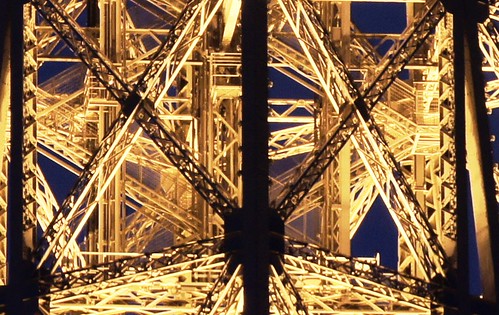
    100percent crop - la tour Eiffel

     Center section of la tour Eiffel - 100% crop

    It turns out, someone across the street from us in the general direction of la tour was concerned I was taking their photo!


    AP: "Non.  Je n'ai pas une télescope.  Mais, oui.  J'ai pris des photos.  Et, je ne m’intéresse pas de mes voisins.  Ce qui m’intéresse est la tour Eiffel."

    If the man wanted to see a real telescope, I could have showed him a big brass monster that someone across the way keeps in their window.  No doubt for star gazing purposes.  Hah!

    LP: "La tour Eiffel?"

    AP: "Oui."

    He then asked me to show some ID and show him the photos.  But I was a little peeved and asked about how they were clothed.

    LP: "Vous n'avez pas de police dans les États-Unis?"

    AP: [gestering to my clothing] "Pas comme ça!  Et, ce qui concerne votre identité..."

    There must have been just the right tone inflection and indignation as the officer went on to explain they were from the Municipal Police and all they were going to do was go back to the caller and explain I wasn't taking a photo or acting as a "peeping Tom."  The other two police showed me their badges as well.


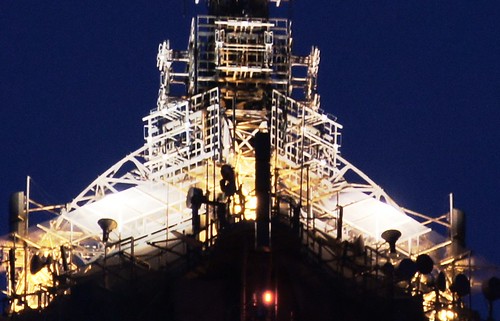
    100percent crop - la tour Eiffel

     Near the very top of la tour Eiffel - 100% crop

    About this time, Jude shows up at my elbow and peeks around me to have a look.  She, it turns out, was concerned about the same thing I was.  Home invasion.

    AP: "Bouge pas!" [turning to get my passport and camera]

    My wife locked the door behind me, but not before I heard the officer saying "... oh, rest assured, I'm not going anywhere..."  I knew I'd hit a cord, yet I had no idea if it was "good" or "bad".  AND having the door locked behind me must have really driven home a point.  Again, I'm still not sure which point that might have been.


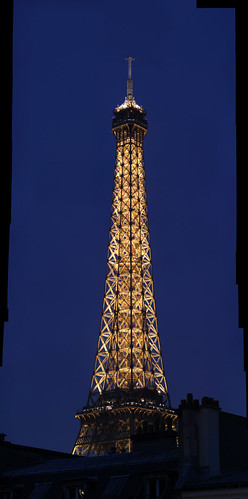
    la tour Eiffel ~ Creative Commons Licensed

     The Offending Photo at 1/4 resolution of the final result 
    ~ over 7500x17000 pixels ~

    After showing my passport, giving our telephone number, and showing the officer the images of la tour, they bid us a "bon soir" and left.

    Jude asked me "Did they really think you would be taking photos of someone in their apartment?  You should've told them "If the person who phoned you is so pretty that they need to be concerned about other people sneaking photos of them, you should have brought them with you so we could've had a look-see for ourselves.""

    Funny thing was, while being indignant and trying hard not to be too condescending, I was thinking exactly the same thing.

    Alas, my French language skills are several light-years away from that level of banter. Particularly with the "authorities".

    Monday, May 14, 2012

    Old stuff...

    Here is an interesting bit of news.  An early prototype Leica just fetched 2.16MILLION Euros at a recent auction.  That's a far amount of money for something that used 35mm movie film stock.

    I suppose I'm not sure how I feel about that amount of money changing hands for a prototype instrument.


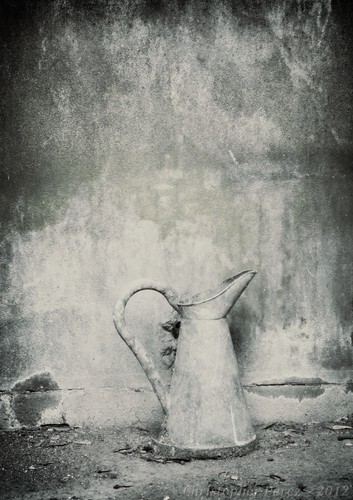
    Pitcher ~ tin type

     Vintage image?  Or not?  And does it matter which it is?

    On the one hand, it could be viewed as an interesting bit of history.  If so, then it should be put in a museum somewhere.  On the other, it makes me wonder why anyone would feel this particularly instrument would be worth that kind of money.

    The BBC article notes that "The prices such cameras fetch show the growing interest in early photographic materials."

    If this were true, then why these small format cameras and not some of the potentially fascinating equipment from the mid-1800's?  After all, there was an incredible explosion of engineering creativity at the birth of photography.


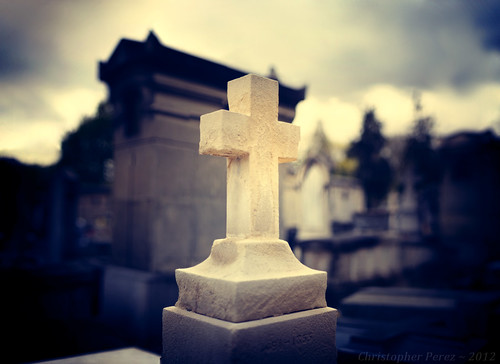
    Montmartre Cemetery

    What was used to make this image? Does it matter?

    I think of Petzval formula large format lenses.  They were mathematically designed to render out of focus areas of an image in very specific ways.  Few equivalents exist for small format cameras today.  And the lenses which do similar things to the Petzval likely achieve the effects quite by accident, not by design.

    That is just a simple single example of something I feel could have incredible value at auction.  If only people understood what went into the making of very early photographic instrumentation.

    Then I think about tools of creative expression.  Would this kind of money change hands if it were, say, one of Matisse's paint brushes or a have used glob of Rembrandt's paint?

    I suppose the dictum is true: How we spend our money is a direct reflection of our values.

    What is valuable in this?  This exercise is left to the reader to sort it out.

    Friday, April 27, 2012

    ... oh... the active mind...

    Before we moved to Paris I nearly sold my Nikon manual focus fast apertured lenses.  In fact, I did sell the incredible 180mm f/2.8 Ai I owned.  Fortunately, I kept nearly everything else, including the 24mm and 35mm f/2 Ai lenses, a 50mm f/1.4 and the very sharp 85mm f/2 Ai.

    While visiting the Montparnasse Cemetery to say thank you to Soeur Rosalie, I took just a few moments to try my hand at making three images.  So far I have processed two of them and find that I'm very pleased with the results.


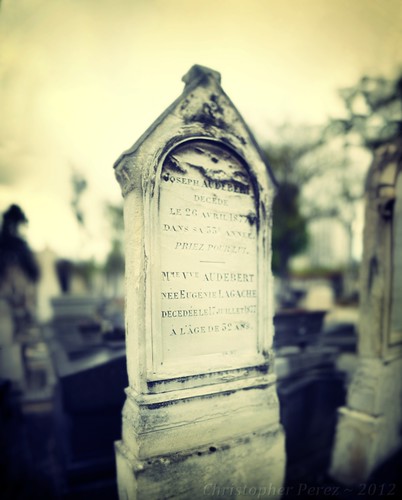
    Montparnasse Cemetery


    The technique is rather straight forward.  Take one Sony APS-C sensored NEX5 and mount up that nice Nikon 50mm f/1.4 and shoot it wide open (you might need a ND or Polarizing filter to knock down the exposure in full sun).  Put the camera into Manual exposure mode and meter the most important part of the scene.  Use that exposure for all shots in the sequence that follows.  Take a series of overlapped images somewhat near the primary subject, spilling the scene well beyond the subject so as to make sure you have covered the scene with enough room to work with.  Stitch the images using Hugin's latest version of open source software or the University of British Columbia's "Autostitch" trial version.  Save a sufficiently large result of the "Ransac'd" output (I like 6000x6000 pixels for the level of resolution I get in the final processed images).  Process to taste.


    Yes.  I think the technique works.


    Montparnasse Cemetery


    It reminds me of shooting 4x5inch large format film using old fast optics shot wide open.  I LOVED those old cameras and lenses and sometimes miss the technique.  Alas, in the digital age my output has increased so dramatically that I can't go back.  So I'm very happy to have found a hybrid approach that helps me achieve the kinds of things I used to dream of doing in 4x5.

    All it takes is a little vision and away you go!