Friday, May 23, 2014

Leica ~ from BBC Magazine

Leica cameras were unique, strong, and very capable photographic tools.

Years before the Flapping Mirror of SLR became the industry standard (ie: Nikon, Contax, Zeiss, Canon), Oskar's cameras came with a rangefinder to focus lenses and a nearly silent shutter.  The shutter was so good that the cameras could be used in US courts of law where nothing else was allowed.  Who needed ultra-wide or super-long lenses when "real" reporters/photographers entered the fray and became part of the action?

I owned two M3 with a 5cm f/1.5 and a 35mm f/3.5.  I got some great photos with those old hockey pucks and only recently sent some of the old negatives to be recycled.  They were fun cameras.

With the advent of digital, Leica has struggled to recreate it's former Film Days Dominant Differentiation from the strongest players (Canon, Nikon, Sony, Fuji, Sigma, etc).  Image quality is no longer Leica's strongest suit.  Product pricing is, it seems to me.  They can charge whatever they want and Leica cultists willingly shell it out.  This, even as image makers costing a fraction of a Leica are demonstrably better.

Price.  Such is the lasting power of "brand."  The brand is, yes, rather Long in the Tooth, now.  We've Turned a Corner and it's fun to see retrospectives and historical essays on the topic old camera gear.  It's easy to wax nostalgic, me-thinks.

BBC Magazine is running a visual article on their site just now, wherein you can see how it enabled very creative photographic expressions.  Leica cameras remain one of the strongest icons of the Film Age.  Here in Paris Henri Cartier-Bresson posters are plastered about and he's holding a IIIf (or somesuch).

I wonder if BBC Magazine will run a similar article on Rolleiflex twin-lens cameras?  There too was a unique, strong, and very capable image making tool.  How hard it would be to demand equal time for other creative imaging tools?


Sunday, May 18, 2014

Summer 2014 ~ Things to Do in and around Paris

Have a camera?  In or around Paris this summer?  Here is a short list of fun things to do:

7 to 8 June -
14 to 15 June -
2 to 6 July -
  • Japan Expo 2014 ~ Anime, Manga, Cosplay, Lolita.  It's how France's youth "puts on the dog."
4 to 6 July -
3 August -
Year round -


la traversee de Paris ~ hivernale ~ 2014

...and from the first half of the year...

Couldn't attend as we were headed back to the States to clear out Plan B, our storage unit - 30 March -
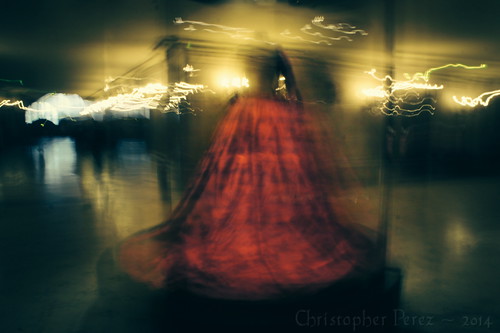
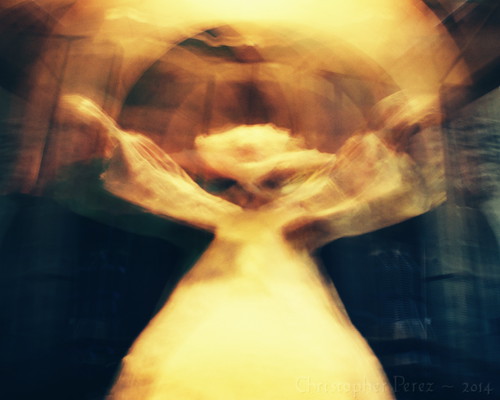
  • Carnival of Women ~ Men and women dressed up as royalty, queens, and other femininity.
Couldn't attend as we were deep into a Mook project with M.Morgan - 2 March -
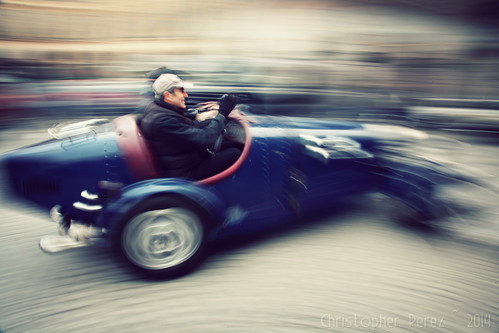
  • Retromobile ~ Old cars, motorcycles, and motor memorabilia at la porte de Versailles.

Thursday, May 15, 2014

Considering macro work...

I recently stumbled on a few seriously beautiful images by

The way the background and foreground elements are thrown out of focus, as well as the lighting and of course the sharpness of the central subject all attracted my attention.  He seems to have used a Sigma 150mm f/2.8 macro shot at f/2.8 (if the EXIF info is accurate).

This made me wonder what was in my own kit that might do something similar should I ever find the right combination of bugs and light.  So I threw a couple New Yorker Magazines on the table, set up the tripod, hauled out the Canon 7D, opened it up in Live-View to v.carefully focus the bunch of lenses I had on hand.  Here's what I took a look at -
  • Pentax Takumar-Macro 50mm f/4
  • Nikon Nikkor Micro 55mm f/3.5
  • Nikon Nikkor-H 85mm f/1.8 with cheap Chinese extension tubes
  • Canon 24-105mm L f/4 at 105mm
  • Nikon Nikkor-Q 135mm f/2.8 with cheap Chinese extension tubes
  • Canon 70-200mm L f/4
Be sure to enlarge the attached image to 100 percent and scroll around the screen to see comparisons at different apertures.


A couple things to note -

  • Cheap Chinese extension tubes do NOT hold EOS mount lenses securely.  The lens tilts from it's own weight.  I'm thinking of throwing mine into the recycle and buying something more properly made.
  • Lenses not designed for macro work seem just as sharp as those made for the task.  Look at everything at f/4 and f/5.6.  There's nothing _not_ brilliant in the bunch.  At f/2.8 the 85mm and 135mm Nikkors are very nice optics indeed.
  • The Honeywell Pentax Takumar Macro racks out to 1:1 _without_ the need for extension tubes.  The Nikon Micro 55mm only goes to 1:2.  Yes, all the non-Canon optics are old manual focus and require an EOS adapter and careful work to get decent results.
  • Short lenses need closer working distances to a subject.  In this case I was around 12 inches from the subject when using the short lenses.  I can see why folks who photograph bugs like the longer macro optics.  They'd give the photographer work to work with.
  • The Canon L-lenses are great and focus rather closely.  I'll have to see when I get into the field, but at first blush, these are sufficient for the task.  If not, the Takumar or Micro Nikkor are very light and small and won't be any problem carrying with me "just in case."
  • If you don't have the dosh for a new-wowy-zowy AF macro, old manual focus lenses can be rather inexpensive.  Things start selling around 25USD for early f/4 50/55mm lenses to 300USD for the "high end" multi-coated 100mm f/2.8 stuff.  I see that Olympus' 90mm f/2 Macro from the old OM series still fetches north of 500USD.  Which means either it's a brilliant optic or it contains just the right amount of "un-obtainium" to keep the prices higher than even new AF macros.

Monday, May 12, 2014

Mook Release! - working with writers in France...

In the month leading up to our short return to the US we were very busy.  With the help of my wife, Judith,  I worked to create a series of images for a mook (magazine/book) called Fiction - la revue qui defie la gravite.  French writers Étienne Barillier and Arthur Morgan provided the story-lines. 

We worked with a crowd of models that M.Morgan organized.  Images were made around the streets of Paris and in the studio.  It was quite the mix of serious "strobist" situations.

Here is Fiction's blog.

M.Morgan has scheduled an apero for later this month where we get to see the finished product.  I can't wait to see how it all came out.

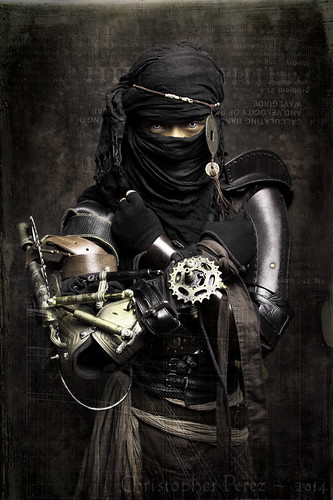
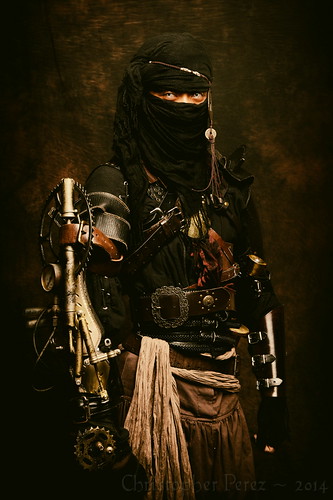
Ninja ~ out of the Age of Steam

Sunday, May 11, 2014

Hasselblad...

This is just in from Sony Rumors.  It's a piece about how Hasselblad might be folding.  As in: Closing it's doors.

If true, all I can say is Wow!

I owned a 500CM/80Planar/150Sonnar kit for a short time.  It took nice images.  But it kept breaking on me.  The springs in the rear light trap doors kept bending for no good reason.  The light traps in the film backs kept the light out for a year or two before needing to be replaced.  The in-lens shutters started to slow, even after recent CLA's by the factory.

That was years ago when I preferred my Rollei TLRs and Mamiya 7 systems.

Still, as far back as I can remember, Hasselblad was a seriously Class Act.  Saint Ansel used one.  Many fashion and wedding photographers used them.  Some of the best photos of several generations were made using Hasselblads.

When I worked in a Black and White photo lab on Sunset Blvd, we could always tell a 120 negative print from a 35mm print.  It didn't matter the film nor the subject nor the final print size.  The medium format advantage was always clear.

When digital came to town, Hasselblad offered backs that worked on their old 500-series cameras, and entered into an agreement with Fuji to sell the H-system.  Like whomever owned the Rollei name, Hasselblad continued to offer film cameras too, perhaps for those Luddites who weren't ready to Jump Ship.

The world had changed out from under these great marques.  Rollei stopped making cameras and Hasselblad tried to expand their market by offering small-ish rather odd Lunar and Stellar cameras.

The days when Rollei, Hasselblad, and Leica could show clear advantage over other image making systems are long gone. For me, the first nail in Hasselblad's coffin came when a rather famous photographer held two large prints up and asked a working pro-photographer audience which camera had made which print.  One print came from a Canon 5D MkII.  The other from a medium format digital camera with more pixels. 

Any advantage medium format had during film days had been lost in the digital era.  The proof was in the print.  A 35mm full frame digital camera could turn out an image every bit as technically brilliant as the larger "medium format" sensored, much steeper priced Hasselblad/Mamiya/PhaseOne systems.

I doubt Hasselblad is really finished.  Not yet, at least.  They recently announced an H-series camera that will now carry a new CMOS sensor.  If Hasselblad is able to sell these in sufficient volume I'm sure they'll keep their doors open for business, even if it continues to be Fuji building the cameras and now Sony (not Kodak) providing the sensors. 

Stiff competitive "head winds" continue to arrive with the announcement of Pentax's lower priced cameras that carry the very same Sony "medium format" sensor.  To add gas to the Hasselblad funeral pyre, Sony is rumored to be working on their own MF camera system that may look and feel a lot like that old lovely Mamiya 7.

The Hasselblad brand, at least, still may mean something to some people.  For how much longer?  It's difficult to tell.


Thursday, May 08, 2014

... so many words... [2]

I found this over on Canon Rumors in the Forum section.  Check out what he says around the 3 minute mark and see if it doesn't strike a nerve or a cord or say a truth of some kind or other.

I'm glad folks are thinking seriously about their "needs" as compared with their "desires."


Wednesday, May 07, 2014

... so many words...

I try to write about the contrast between marketing and equipment fan-boy perceptions, the reality of photographic equipment and it's capabilities, and the art of photographic expression.  It's far too easy for me to get wrapped up in the minutiae of trivialities.

Every now and then I come across something that helps Clarify Things.

Today, Bill Gekas posted a link to an article through his Facebook page that really caught my attention.

If you are passionate about photography as an avenue of creative self-expression, take a moment and read DEDPXL Dispatch::CUBA.


Oregon Rail Heritage ~ the new shed

Sunday, April 27, 2014

Looking for "goodness" wide open in Nikon Nikkor 85mm lenses...

OK.  So I was in the market for a fast old manual focus 85mm lens for the Canon 5D MkII.

I've owned several wonderful 85mm lenses since moving to digital.  I put an old Nikon Nikkor-H 85mm f/1.8 up against an 85mm f/2 Nikkor Ai and an early Takumar 85mm f/1.9 (Pentax).  The Nikon f/2 and Takumar f/1.9 wide open were indistinguishable at 100 percent resolution from a Canon 5D MkII file.  That isn't saying much about resolution as the 5D's sensor can only resolve 75-ish line pair per mm.  The Nikkor-H was a distant second.  It was visibly softer wide open than the other lenses, so I sold it before moving to France.  I also sold the Takumar and sorely regret this equipment pruning.

Fast forward 5 years and I'm thinking that my 85mm f/2 Ai isn't all that great, particularly after reading stuff on the 'net about the original Nikkor-H.  Maybe I had a bad copy?

A comment that really struck me was one made by "RidingWaves" over on APUG who said "...I won't go into KR mental fantasyland but I own all of the MF Nikkor 85's including two of the F2's and I can assure you from testing many times both film and dig that while the F2 is a fine lens the 1.8 is better. Better wide open, better 1 stop down..."

I trust Ken Rockwell.  He used to sell highly technical engineering electronic test and measurement equipment by a company I used to work for.  His tests are objective, so I wondered what RidingWaves had seen in his lenses that he'd have such a strong response to Ken's comments.

My wife and I were in our old home town clearing out a storage unit that contained our "Plan B" items should Paris not have worked out as well as it has.  While posting a ton of stuff on Craigslist, I came across an inexpensive well used Nikkor-H.

Using a 118 line pair per mm resolution Canon 7D APS-C sensor I knew if resolution were an issue that I'd be stressing any lens I put on the body.  118 line pair per mm matches the resolution of Kodak's great B&W TMax100 film when shooting a 6:1 contrast scene and souped in D76.  I wanted to have another "go" at getting at the truth.

For my little "look-see" I compared my recently acquired Nikkor-H against my Nikon Ai, and, just to keep things interesting, against my also recently acquired Canon EOS 70-200 f/4 L non-IS set at 85mm.

My conclusions?  If Ken Rockwell said the f/2 is sharper than the f/1.8-H, well, he is right.  In my experience, at least.  I've now owned and tested two of these 85mm Nikkor-H lenses.  My test results are consistent. My second "H" lens is better than the first I had.  Still, the f/2 Ai Nikon is a better lens wide open than the earlier Nikkor.

Look very carefully at the in focus wavy blue background regions of the cover of a recent New Yorker Magazine.  It's close, but the difference between them can be seen.  If you need absolute resolution wide open the Nikon 85mm f/2 Ai is the resolution winner between the two optics, even at f/2.8.

Where the old Nikkor-H does incredibly well is in rendering the out of focus regions of an image.  It's wide aperture spherical aberrations yield a creamy smoothness that is hard to deny.  So the Nikkor-H will remain in my kit.  It will make for some beautiful portraits of a certain style that I've had in mind for some time now.

Lastly, as I've demonstrated several times here on this blog, by f/4 old vs new lenses are indistinguishable.  I use old manual focus optics for wide aperture work.  The ease of use of the AF EOS lenses allow me to work more quickly and accurately.  So my manual focus lenses are used when I want limited depth of field.

Put a different way, if all you had was $100 to spend on a lens, early manual focus optics can be the match of anything made today.  Certainly by f/4 this is true.  There is no need to spend several K-dollars for fancy L-glass if you can live with manual focus and all that it implies in the world of modern hyper-reactive AF systems.

Be sure to enlarge the attached image to 100 percent resolution.


Tuesday, April 01, 2014

Ninja ~ Out of the Age of Steam [troisieme part]...

 I watch 500px.com and 1x.com and watch their "Popular" streams.  Ideas sometimes occur to me.

One day rather recently I stumbled across two images that made me stop and go "hmmm..."  For whatever reason, my being tired or stressed with an up-coming return visit to the States, I felt I couldn't make a decent image.

Jude (my wife) noticed and mentioned something about being a perfectionist.  That's probably the way it is for me.

I knew with the way I was feeling that I needed to give image processing a day or two of rest.

Thinking very long and hard about how the two images I liked were made, I wanted to improve my own approach to image processing.  A little research using The Force (google) lead me to the realization that the image styles I liked were approaches that I myself had been taking for a few years.

Armed with this understanding, I revisited a series of images I made with Tithann Thanh as part of a steampunk effort with Arthur Morgan and a French publishing house.  Yes.  That was more like it to my way of seeing things.  Watch this full screen in 1080p or 720p (whichever your computer monitor is best at).


My continued and many thanks to Arthur Morgan for connecting me to the Paris Steampunk community.
 

Saturday, March 15, 2014

... Ninja out of the Age of Steam... [deuxieme part]

The work for the mook with Arthur Morgan appears to be complete.  So, in my not so spare time I've turned to working a few images.  These are works unrelated to the mook project.

I can't wait to share what we've done with the incredible steampunk community here in Paris.  I'm blown away and very happy with the results.  Patience was never my strong suit, but patience is what is required.

Now that I've met a few great artists here, I hope the future will be filled with wonderful collaborations.

Ninja ~ out of the Age of Steam
Ninja ~ Tithann Thanh

Check out the growing set of images from this shoot.  It's amazing what a strobist can do in a rather small apartment space (our's).

Thursday, March 06, 2014

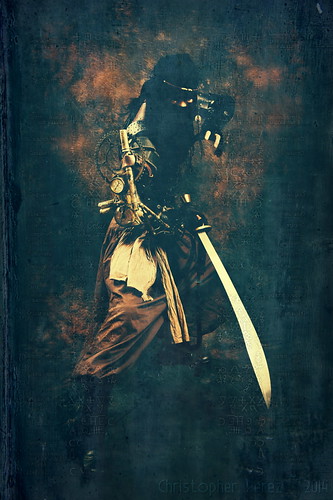
... a Ninja out of the Age of Steam...

While working on a new body of work to be published here in Europe, one of our  models brought an extra change of clothes unrelated to the original project.  After shooting for an hour, we took a break, cracked open a couple beers (my wife had a nice glass of wine), chatted for a bit, and then dove into making a new series of photographs.

Ninja ~ out of the Age of Steam
 Ninja ~ out of the Age of Steam

Needless to say, I'm "blown away" by the level of creativity the model, Tithann Thanh, brought to the image making effort.  I have more photographs to work on and am anticipating coming away with an interesting story in images to share.

It's taken two years and a lot of patience to get connected with the group of creative people here.  Now that I'm learning who's who in the community (with a MILLION thanks to Paris-based writer Arthur Morgan), I hope the models remember me in the future. I would really like to continue to work with all the wonderful people I've met over the past three weeks of working on the original project.  I would love to work with folks to make a few more interesting image-based stories.


Check out the eye detail.  This is a 100 percent crop from the full rez file (click on the image to enlarge).

Saved by equipment... or not...

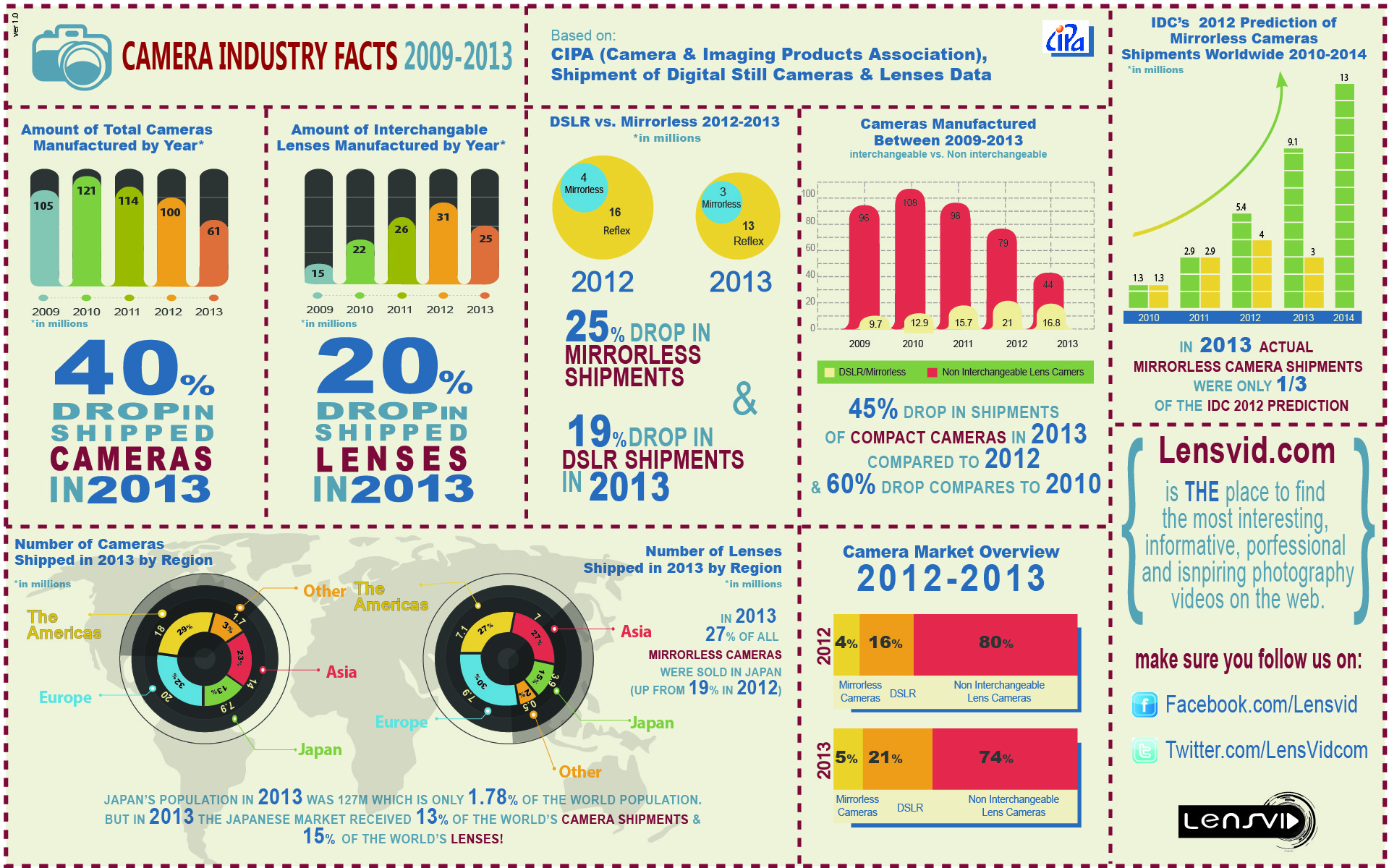
We all know about how cell/mobile/portable phones have replaced point and shoot cameras.  But what about the rest of the market?  Well, here's something just posted on Canon Rumors that breaks it all down.

In short, consumption of camera equipment is decreasing.  The incredible "mirrorless" camera market growth has stalled.  Camera sales seem to be down 40 percent, year over year, 2012 to 2013.

Interesting, isn't it?

Or perhaps a better question would be what impact might all this have on our abilities to make artistic, creative images?  You likely already know my position on the topic.  LOL!!!

Still, for those who like color eye charts, check it out.


Thursday, February 27, 2014

Story Telling ~ in images

Last week I spent a wonderful hour and a quarter on the phone with Brooks Jensen, one of the editors of Lenswork Magazine.  I was being interviewed for Lenswork Extended #111, wherein my Hauntings of Gothic Ghosts will be published.

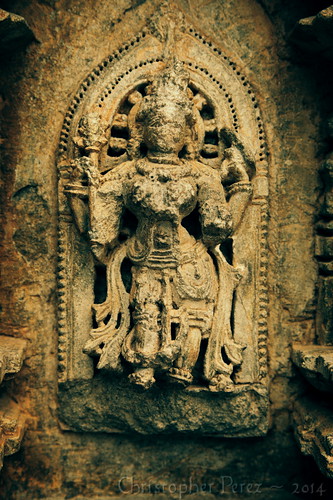
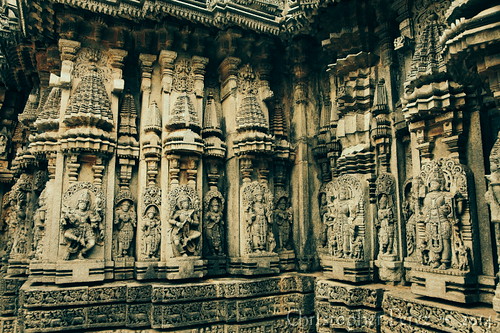
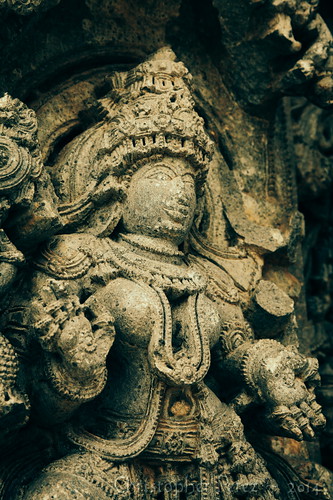
Somanathapura ~ Karnataka ~ India

I've since thought a bit about our talk and want to take a moment to expand a little on what Brooks and I shared.  It seems easier to come back later and think "I could have said that better."  So this is my chance to do exactly that.

To begin with, I teasingly blamed M. Jensen for starting me down the path using photographic art as a means of telling a story.  His editorials on using portable document format (PDF) to distribute electronic copies of one's work, as well as his thoughts on photography moving in the direction of producing many related images set the tone and direction for my own images.  M. Jensen neatly conveyed the potentials in using modern technologies to express one's creativity cleanly and clearly.

He shared something with me that I think is worth repeating.  He couldn't remember who said it, but the line goes something like this.  In former times, a photographer might be known, after decades of diligent work, for perhaps 12 images.  One of which could be called "famous."

Ansel Adam's "Moonrise over Hernandez", Edward Weston's "Pepper number 30", Robert Capa's "Muerte de un miliciano", as well as Steve McCurry's "Afghan Girl" all come to mind.

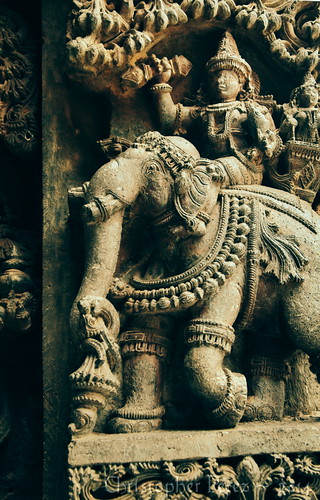
Somanathapura ~ Karnataka ~ India

We then talked about how technology is no longer a barrier to image creation and how this allows current artists to explore a broader range of possibilities.  One such possibility is, as I instantly understood it, to create bodies of work.  Each collection of work consists of many images.  While each image can be individually outstanding, in total they can used to tell moving stories.

I foresee a time when a photographic artist can move beyond being known for a small collection of images to becoming known for a small collection of bodies of work.

Later in our conversation I may not have properly expressed to M. Jensen the strength of influence Lenswork Magazine has had on me.  I've read and looked at the magazine for nearly a decade.

Of all the publications, electronic and printed, Lenswork stands out for a number of reasons.  They publish photographic _art_, not just a few possibly interesting photos stuck around a large gathering of camera equipment advertisements.  Their concentration on photography as art has such a laser beam like quality that one can't help be forget about the technology (cameras, lenses, software, printers, etc.) and think long and hard about what makes a wonderful image.  There is no advertising to influence or distract from experiencing fine photography.

Somanathapura ~ Karnataka ~ India

I've been known to rile against the on-line forums which do nothing but cater to the adoration and fetish-izing of camera gear.  This is why I tend to down-play what cameras and lenses I use.  For myself, I've long ago learned these things are probably the least important aspects to image making.

The magazine sent me a collection of works by Kim Kaufman.  I was instantly thrilled and my senses were overwhelmed by the beauty of her prints.  I understand the technology she used to create these fine images, but this knowledge does nothing to over-power my initial response every time I look at them.  In fact, how she made the images means nothing.  Certainly not when you realize how drop dead gorgeous her work is.

Somanathapura ~ Karnataka ~ India

"Hauntings of Gothic Ghosts" is my second publicized collection of images.  My first collection was titled "In the Railyard".  It has been published several different ways, including being featured in Lenswork Magazine (Extended #78) as well as in Volume 3 from the Center for Fine Art Photography.

Waiting in the wings are works telling stories about alchemy and it's relation to the Roman Catholic church, further explorations into the nature and power of steam and locomotion, a new work that takes a look at 12th century Hoysala dynasty south Indian spirituality, as well as a body of work related to death and preservation.

After my talk with M. Jensen I feel more strongly compelled than ever that I'm headed "in the right direction." I can't thank him and his crew at Lenswork Magazing enough for helping hone the focus and direction of my own work.


Somanathapura ~ Karnataka ~ India

Sunday, February 16, 2014

Projects...

I have oft-times said here that I enjoy working with talented, creative people and that I enjoy working with these kinds of people on projects of duration, breadth and depth.  The bodies of work that can result are things that bring me happiness and contentment.

When we lived in the States, working with Eyerish and Nagasita as well as a host of other incredibly talented folks helped me find my style and to tap into that deep strong river of passionate art.

So... when someone in the local creative community suggested a subject and a project, I instantly threw my hat into the ring.  Some might say I begged to be included in the effort.  My insistent begging may have just paid off.  :-)

All I can say for now is that several wonderful avenues of creativity are being discussed.  When the venues are ready for public announcement I'll be happy to share the details.

Until then, here's a sneak preview.


Monday, February 10, 2014

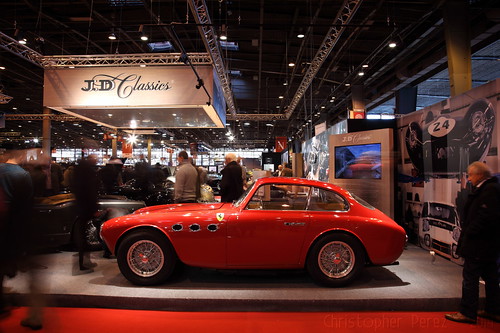
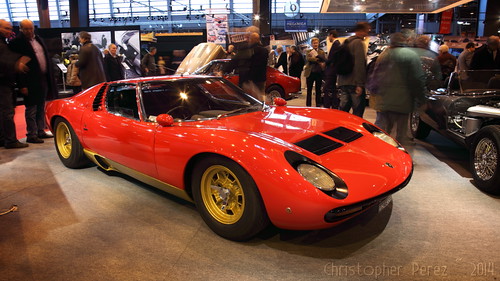
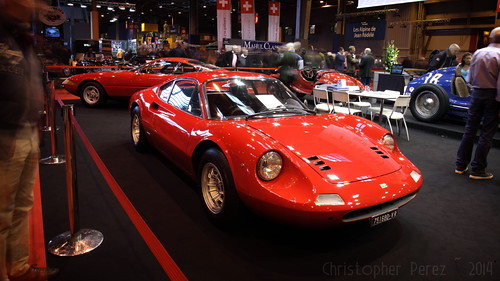
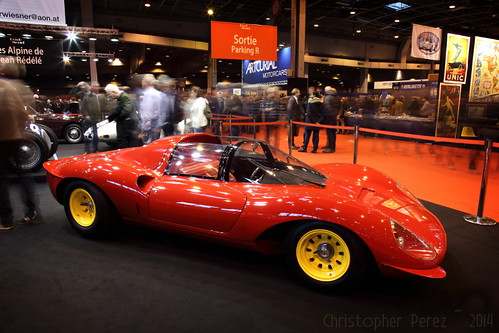
Photography Around Pars ~ Retromobile

Off to the Retrombile!

Retromobile 2014 ~ in Red
 Ferrari
Just the thing for blasting the long straights of Le Mans...

Even though we no longer own one, I enjoy photographing automobiles.  To get around, we walk, take the Metro, RER/Translien, and TGV.  It's amazing to feel free from maintenance, insurance, and gas costs.  This doesn't mean I can't appreciate the art in automobile styling.  Europe seems to have styled their automobiles with grace, charm, and sometimes brute strength.

Auto exhibitions here tend to be packed affairs.  It's hard to move around with all the people crowding the aisles.  I worried about using a tripod at this year's Retromobile.  It couldn't be all that bad, right?  I was inspired when I saw several photographers using them at last year's event, regardless of the crowds.

For camera equipment I had a choice between taking a Sony mirrorless and one of the big Canon DSLRs.

Retromobile 2014 ~ in Red
 Ferrari
Such a pretty little thing, isn't it?

If I took the Sony NEX5 I would have light weight and sufficient detail to make some fun and interesting images.  Things like their HDR function add image creation flexibility that I don't yet have in my Big Canons.  They're cute and, after three years of very heavy use, somewhat battered. 

Cringing, I turning my thoughts to the Canon DSLRs.  They're old, heavy, and... um... why should I cringe?    They have more mpixels than the Sonys.  Not that that matters a bit for the kinds of images I make at these events. Canon lenses are much better built than Sony's low-end optics offerings.  Not that viewing the final results could tell any difference when printed to B+ size 13x19inches.

Retromobile 2014 ~ in Red
 Lamborghini Mura
I can still hear one as it lights up before
heading out into Sunset Blvd traffic...

The decision on what to carry was really an easy one to make.  I love the way Canon's Big Guns feel.  After nearly six years of continual use, I know how to work with them like I was born with one in my hands.  I know where all the buttons and functions and menu selections are.  I can work those cameras like there's No Tomorrow.

All I needed to do was remember to turn the lens' IS off.  You see, I forgot to do that at this year's la traversee and I lost several great shots.  The IS moves the image around as it "settles".  When mounted on a tripod and with a sufficiently long exposure, images are quickly blurred by the IS trying to Work it's Magic.

The kit ended up being this:
  • Canon 5D MkII
  • Canon 24-105L lens
  • Big Manfrotto tripod - legs set somewhat close together so as to not trip the crowds
Retromobile 2014 ~ in Red
 Ferrari 246GTB Dino
Make mine Fly Yellow, please.  It'd be
Just the Thing for touring northern Italy...

The first images I processed were of red cars.  I've been drawn to the color red Italians seem to have used since the Dawn of Time.  Cars and motorcycles look great when draped in it.  Alfa Romeos, Ferraris, Lamborghinis, Ducatis, and Moto Guzzis still turn my head when I see the flash of Italian red.

Pixel-peeping the processed files leaves a huge smile on my face.  They are sharp, sharp, sharp.  And I know that if I wanted to make a 40x60inch print, I could and that they would retain more resolution than the human eye could resolve.

Retromobile 2014 ~ in Red
Ferrari prototype
... be still, my beating heart... 

All of these things are technical details and do nothing to predict how a viewer might respond.

The real challenge is "seeing" something interesting.  That's where I get stuck.  I love the overall views of the show that place a subject in the middle of a swirling crowd.  I like seeing entire cars because I like to take in their lines as complete subjects.  This is what I "saw", right?

Is any of it "art"?  Probably not.  I'll just have to live with things as they are, because I like the results.  That should be sufficient.

-----
[My Flickr set from Retromobile 2104]

Friday, February 07, 2014

The answers...

This blog entry will provide a few answers to the questions posed in two recent contests that I ran, where readers were invited to tell me what lens made which photograph.

Needless to say, no one was able to determine anything about the lenses that made each image.  That is my point. It is impossible to say what lens took what, except in a few, rare exceptions where lens properties are unique.  I'm thinking of portrait lenses like the Petzval, Eastman Kodak, or Wollensak series of very large format film lenses.

I wanted to turn the common question questions of "which lens is best...?" inside out and try to lead people to consider what they really need in a lens by looking at end results.  Common questions asked differently free me to look beyond "tests" which more often than not prove lenses are sharper than current generation digital sensors.

Liquid Light

It comes down to asking two simple, short questions -
  • Does the lens fit my need?
  • Can I afford it?  
It's as simple as that.  Except, most of us don't know what our needs are, do we?

If we want a "sharp" lens, just about any lens will do.  Cheap kit lenses are typically sharper than the sensor.  I've used my NEX5 at 200ISO with an off-center Sony 18-55mm kit lens (yes, Sony seems to have trouble manufacturing lenses) at f/5.6 or f/8 and the results are as sharp from edge to edge as anything I've ever made using "better" equipment.

If we want a lens that separates the foreground from the background, just about any large aperture lens made for 35mm film camera since 1960 will do nicely.  I have a Nikon 50mm f/1.4 pre-Ai that is stunningly sharp from wide open.

If we want to impress strangers with displays of "expensive taste" there are plenty of very expensive cameras and lenses that serve that purpose.

Liquid Light

Some of the on-line camera forums lit up when Sony introduced their A7-series and a rather expensive 35mm f/2.8 Zeiss branded lens.  People went to great lengths to show it is a stunning optic.   Well, it had better be, because I have a Nikon 35mm f/2 Ai where measurable optical performance is every bit the equal of the new Wonder Lens at a tenth the cost.

From the Beer Contest, I asked if people could tell which lens made which image.  Bonus points were to be given to those who determined the apertures of the lenses, with half a bottle of beer offered to anyone who could correctly guess who made the lenses.

I own many old manual focus lenses.  When available inexpensively, they tend to follow me home.  It's from this "collection" that I took two lenses.  One was a 50mm and the other was an 85mm.  The apertures or makers?  I'll leave that for readers to ponder.

Liquid Light

From the second contest, I broadened the number of lenses to include modern as well as truly old optics.  I thought it might be interesting to mix multi-coated zoom AF lenses with old single coated or non-coated manual focus. The only thing I will say is that it should be obvious which lens is the late 1800's Paris flea market dumped in the middle of a table of junk Petzval formula lens.  It's an unmarked 15cm f/3 taking lens that can only be shot wide open.  As you look at the images taken using that lens, remember that it's purpose is to cover a 4x5inch or 5x7inch sheet of film.  At those dimensions images are surprisingly sharp.  On full frame DSLRs it's an interesting lens that gives pronounced "portrait" effects, just like it was designed to do.

You might ask why, in the end, I won't reveal the names, focal lengths, and apertures of the other lenses.  To me these sample comparisons prove that the makers, focal lengths, and apertures don't matter.

What matters is the brain and heart of the person standing behind the camera.

Thursday, February 06, 2014

Sony is in the tank...

CNN Money just posted this article about Sony Corporations on-going weakness in the electronics marketplace.  Here are a few things that struck me.

"Sony sells PC business, cuts 5,000 jobs...

...The Japanese electronics group said it expects to lose 110 billion yen ($1.1 billion) for the year ending March 31. The forecast was a surprise, and a sharp downgrade from its previous estimate of 30 billion yen profit...

... things are now so bad that Moody's has decided that Sony is no longer worthy of an investment-grade credit rating. The agency downgraded Sony to junk last month, warning that profitability would likely remain "weak and volatile." Fitch made the same move in late 2012..."

No mention was made of Sony's imaging businesses.

Sony is a huge manufacturer of digital sensors for imaging applications.  Their sensors appear not only in their own products, but in those of other manufacturers, too.  Nikon reportedly uses Sony's sensor masks, modifies them for Nikon's needs, then uses Sony foundries for production.  Olympus and Ricoh reportedly use Sony built sensors in some of their products.  Pentax and Phase One (who bought Mamiya) use Sony's 50mpixel CMOS medium format sensor.

I like Sony cameras.  I use a pair of their first generation NEX5 and like the bodies (but find their lenses just "OK").  Their recent full frame mirrorless A7 and A7R announcements seem rather interesting (though not interesting enough for me to leave Canon DSLRs behind).  If they can get their AF speed to match the phase lock AF systems of high end DSLRs, I feel they'd have a Market Dominator on their hands.  Leaving the mirror-box behind seems, on paper, to be a very good idea.  Though Canon's shutter assembly reliability will be hard to beat (300,000 clicks for pro-units, and 150,000+ on semi-pro bodies).

While it's hard to imagine that Sony Corps financial woes will cause them to leave the imaging market, it's hard for me to imagine their camera groups not being effected in one way or another by budget cuts and company reorganization.  Until specific announcements are made, what will happen is anyone's guess.

Liquid Light

Tuesday, January 28, 2014

Great news! Lenswork Magazine just picked up some of my work!!

Ce matin, après nous nous sommes levés, après le petit déjeuner, et après j'ai pris une douche, I opened my morning email to find the following.

Christopher,
Congratulations! We've reviewed your PDF submission to LensWork titled Hauntings of Gothic Ghosts and have selected it for publication in issue #111 (Mar-Apr 2014) of LensWork Extended. We are very excited to include your work and know that our readers around the world will find your photographs of interest an inspiration.


This is great news!

It will be the second time Lenswork Magazine has picked up my work to share it with their readers.  The first time I got to share some of my steamlocomotive images.  That was in Lenswork Extended #78.  During the interview I was very nervous and the room I recorded my answers in sounded like a barn.  It was the restart of a growing list of published works.


When I was much younger, my images were published from time to time in motorcycle and automobile magazines.  Southern California was the place to be for photographers and motorsports writers at that time.  While I never participated in that culture to the degree successful artists did, it is fun to look back and consider those early days.  I still have some of the magazines in storage back in the States and may have to dig them out and bring them back to France with me.

Over the past ten years as I have engaged digital photography, my image output has increased dramatically.  I always shot a lot of film, but the new technologies allow me to simultaneously explore numerous veins of creative expression.  Wherever my mind's eye looks, it seems, I'm off and running to see what can be created.

Two years ago my wife and I moved from America to Paris, France.  When we made the move, I knew I would have the chance to spend time in places that tourists usually only get a few moments in.  The great monuments, the wonderful parks, and the lesser known places are all within 20 minutes of our apartment.  It would be a shame to squander such a fabulous opportunity.


When I shot the Hauntings of Gothic Ghosts, I wanted to express how I feel whenever I visit one of Paris' great 1800's cemeteries.  The history, funerary art, and roll-call of who is buried in these sites is to me continually impressive.

Looking at some of the themes I tend to shoot in (heavy textures, modified color spaces, subjects who dress at the edges of culture) I am smiling to think the Hauntings of Gothic Ghosts series is nearly "straight" photography.  "Straight" in the sense of fewer rather than more image manipulations.

Those who know me are probably laughing, shaking their heads, and wondering what I'll be up to next.  "Stay tuned", as we used to say.

Monday, January 27, 2014

Photography around Paris ~ Palais Garnier

I've been cranky lately.


My prior two posts have been rants and challenges about camera equipment, how we think about it, and what we really know about what's important in images.  You see, I made a mistake of looking at an on-line forum and saw that questions regarding what is "best" or what is the "sharpest" lens remain evergreen topics.  I shouldn't have looked.  Really.  I don't like being that worked up for other people's problems of reality.  I need to simply stay away so I can concentrate my energies on image making and the exploration of image art.

Yesterday, Jude suggested we visit the Palais Garnier Opera House.

We'd never been before.  Sure, we'd been to Paris as tourists many times and we moved here two years ago.  Somehow, the Palais Garnier never rose to the top of our list of things to do.  After discussing the possibility of visiting the Little Corporal at Invalids, the opera house won out.  There's always time for death and destruction and so little time for beauty.


Into a driving rain we dove and up to the metro we went.  It was nice and warm in the metro and we knew that would change at metro stop Opera when we re-emerged at ground level.

The good thing about rain, and cold and winter too for that matter, is that it tends to keep the Pesky Tourists to a minimum.  Sure, the Chinese Hoards still show up, but nearly everyone else stays away.  The ticket line was non-existent and we were "in like a cheap suit."

As we approached the staircase I knew I'd chosen the right way to photograph the adventure.  Floating ISO (200 to 1600 on this particular device), set to Program mode, with the image style set to B&W.  Saving files in both RAW and jpg is a great trick when using in-camera "filters", or whatever the marketing guys like to call such things.  If needed, I could always rework the RAW file as it retained all the original information of the scene in color.  Only the jpg was in this case saved in B&W.


I wasn't prepared for how incredible the Palais Garnier is.  I'd read about it, which didn't amount to much.  Reading and experiencing something can be two completely different things.  Such was this opera house.

The light in the Palais is beyond description.  The marble carved balustrades and stairs are lush and rich.  The bronze castings are voluptuous.  Incredible opulence, all of it.  I could see why the Rich and Famous love this place.

As I wandered from space to space, from room to room, I let each scene unfold before me.  When I saw something that I liked, I tried hard not to over-think the composition or the subject.  I simply raised the camera and hit the button.  I let all that modern technology that comes in current digital cameras do what it was meant to do, while freeing my mind and vision to respond on an emotional level.


The curator of the Portland, Oregon gallery that was started by students of Minor White has been following something called "miksang".  Doctor Scott Jones explained it to me as a way of photographing something without engaging it in what has become the traditional photographers way of making images.  Look at his site and perhaps you'll see what I mean.

I can't say I was able to enter the Open Mind state as I photographed the Palais Garnier.  What I can say is that I very much enjoy the fact that I now have over forty images that please me in ways I was unprepared to experience.

Saturday, January 25, 2014

Contest Time!... um... let's take a closer look at this...

Yesterday I posted a contest to win a free beer.

As you think about the two lenses whose images I posted there, I thought I'd throw four more lenses at you.  This time to illustrate several ideas which we will get to in a moment.

As background, I chose similar effective focal lengths so as to retain a common perspective to the scene.  For the first run I shot the lenses all at the same aperture.  For the second run, I let just one of the lenses shoot wide open where it was stopped down during the first run.  Three lenses were shot wide open for both runs.

To start, here was the "test" setup -
  • Canon 5D MkII or Canon 7D
  • ISO50 (5D MkII) and ISO100 (7D)
  • 2 second shutter release delay
  • With manual lenses I Live View focused, otherwise AF was used
  • Stout tripod
  • In-camera sharpness set to 3 in both cases
  • CR2 output converted straight into jpg without any processing
  • Light "curves" adjustments applied to help match the subtle difference between the images after conversion
To start, here was the overall scene shot with four lenses.  As in yesterday's contest, enlarge these images to 100 percent to observe any subtle, or not so subtle differences.


Here is the first run.  These are 100 percent crops of the sharpest area in the scene.  There is one image where I sharpened the output.  It should be fairly obvious.  And if it's obvious to you, think about what kind of lens might make the original image.  Then think about which lenses made the other three selections.


Here are 100 percent crops of an out of focus region.  One of the lenses was stopped down to match the aperture of the other three lenses.  Knowing what you do about lens design, consider what kind of lenses might be used to render the various out of focus areas.  Then consider which you find most pleasing.


Here are 100 percent crops of the same out of focus region as the images we just considered.  This time only three lenses are used.  One lens was shot wide open (instead of stopped down to match the aperture of the other three lenses).  Consider which it is and take another close look at the comparative images.


Can you answer the following questions?
  • What focal lengths do you think these are, remembering that I shot two in APS-C and two in Full-Frame
  • What lens would have made the sharpest images?
  • Can you tell if zoom lenses were used?
  • Conversely, can you tell if fixed focal length lenses were used?
  • If you can tell any of these things, can you tell the apertures these were shot at?
  • If you can tell any of these things, can you name the lenses?
I am being deliberately provocative in presenting these "tests" in this way and asking the previous questions.

Here is a processed image.  While I will give the full set of answers to all the questions asked in this post later in the comments section in a week or two (so as to give people time to consider their answers carefully), I will say that the lens used in the making of the following image is ancient.  It's purpose is more in line with late 1800's Pictorialism than modern ultra-sharp, ultra contrasty image making.  With all this in mind, I like the style and the way the lens behaves.


Think about it.  Ponder it.  Then answer the next set of questions.
  • What are the important factors in making a fine image?  
  • Do you rely on people to inform you what is the "best"?  
  • Do you rely on the latest "advancements" in imaging technologies to give you a "edge" in image creation?
  • Are you handing your creative process and artistic output over to the control of others (private or corporate) who might not have the same goals as you?

For myself I've found that answering all of these questions openly and honestly can provide real insight into what I do, what I have control over, what I expect others to do for me, and what is very much my responsibility to understand and manage.

Which leads me to asking this very provocative question:
  • If you can't tell which lens made which image, what other ways might you have in deciding what makes a fine image?

Artistic liberation is just around the corner.