Monday, April 15, 2019

Nikkor Soft filters ~ another look

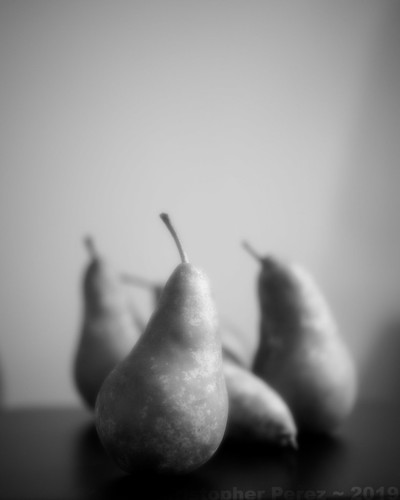
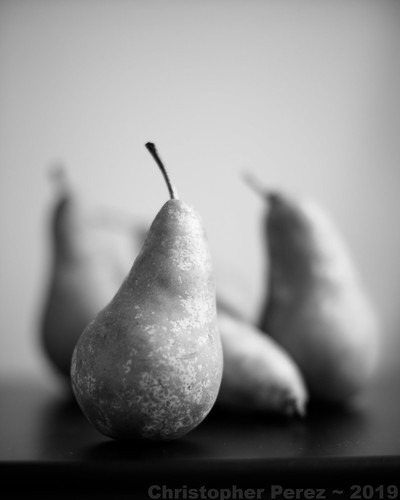
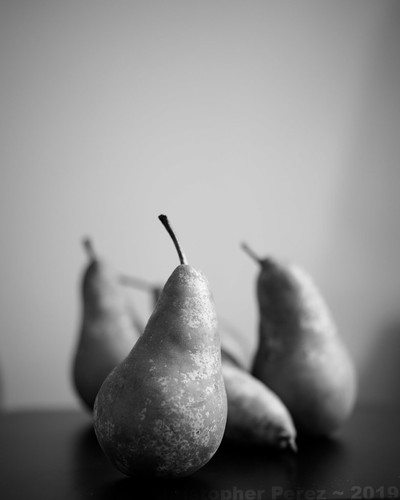
I quickly realized that using a point light source to explore how Nikkor Soft #1 and #2 filters might influence out of focus regions was insufficient.  Since the camera was out and the pears were in season, I took a series of images to illustrate optical renditions a bit more clearly.

What I wanted to see was what effect, if any, a soft filter might have on out of focus rendition comparing a neutrally corrected for spherical aberration against an under-corrected lens.

Setup -
  • Sony NEX5T, ISO 100, 2 second timer, -1 EV
  • Big Beefy Manfrotto tripod
  • Lenses using with a Lens Turbo II focal reducer -
    • Nikon Micro-Nikkor 55mm f/2.8 Ai (neutrally corrected spherical aberration)
    • Nikon Nikkor 85 f/1.8 K pre-Ai (under-corrected spherical aberration)
  • NOTE1: Lenses were shot at the widest aperture only
  • RawTherapee to convert RAW files into black and white and to set the black levels
 Comparison -

If you click on the following images you can inspect them at 100 percent.

Nikon Micro-Nikkor 55mm f/2.8 nofilter
Nikon Micro-Nikkor 55mm f/2.8 Ai - no filter

Nikon Micro-Nikkor 55mm f/2.8 Number 1 softfilter
Nikon Micro-Nikkor 55mm f/2.8 Ai - #1 Soft filter

Nikon Micro-Nikkor 55mm f/2.8 Number 2 softfilter
Nikon Micro-Nikkor 55mm f/2.8 Ai - #2 Soft filter

Nikon Nikkor 85mm f/1.8 K ~ nofilter
Nikon Nikkor 85mm f/1.8 K ~ no filter

Nikon Nikkor 85mm f/1.8 K ~ Number 1 softfilter
Nikon Nikkor 85mm f/1.8 K ~ #1 Soft filter

Nikon Nikkor 85mm f/1.8 Number 2 softfilter
Nikon Nikkor 85mm f/1.8 K ~ #2 Soft filter


Comments -

Differences between the neutrally and under-corrected spherical aberration out of focus renditions can be subtle.  Look at the out of focus stems and the shadows on the left side of the pears.  If you study the images carefully, you will begin to see the real world effects of out of focus rendition optical corrections.

When using Nikkor Soft filters, you can see how mid-tone contrast is lowered as well as reducing resolution.  Looking carefully, again, you can begin to see how the light/dark transitions are different between the two lenses.

Here is one final example.  It was made using a Nikon Nikkor 50mm f/1.8 AiS which is under-corrected for spherical aberration in the out of focus areas behind the point of focus.  I added a Nikkor #1 Soft filter and shot the lens wide open to get the maximum out of focus rendition effect.

Nikon Nikkor 50mm f/1.8 soft one


Resources -

For further information on how the topic of out of focus rendition, optical properties, and Nikon lens design history, please refer to the following -

A PhD thesis on the impact of "soft focus" lenses on the history of photography - http://research-repository.st-andrews.ac.uk/handle/10023/505

An excellent starting point for understanding out of focus rendition (I might not completely agree with his interpretations/observations, but his foundation of understanding is quite good) - http://jtra.cz/stuff/essays/bokeh/

Nikon lens design histories - https://imaging.nikon.com/history/story/

Point light source discussions - https://www.dpreview.com/forums/thread/4031515

Zeiss comments on optical design -  https://lenspire.zeiss.com/photo/en/article/how-does-zeiss-define-bokeh-an-interview-with-dr-stefan-ballmann

Metabones Focal Reducer whitepaper - https://www.metabones.com/assets/a/stories/Speed%20Booster%20White%20Paper.pdf

Sunday, April 14, 2019

Nikkor Soft filters 1 and 2 ~ point light source comparison

Here's a question: What effect might a soft focus filter have on out of focus rendition?  I decided to have a look.

For many years I looked at just one dimension of commercially available optics - resolution.  Now I wanted to start looking at other aspects of optical performance.  For this series I look at spherical aberration (looking for under, neutral, or over correction) in out of focus rendition on subject matter behind the point of focus.

More specifically, I wanted to see how Nikkor soft filters might influence the out of focus regions of under-corrected spherical aberration lenses.

Setup -
  • Sony NEX5T, ISO 100, 2 second timer, -1 EV
  • Big Beefy Manfrotto tripod
  • Lenses using with a Lens Turbo II focal reducer -
    • Nikon Nikkor 50mm f/1.8 AiS
    • Nikon Micro-Nikkor 55mm f/2.8 Ai
    • Nikon Nikkor 85 f/1.8 K pre-Ai
  • NOTE1: Lenses were shot at the widest aperture only
  • NOTE2: Out of focus samples are from points _behind_ the point of focus to compare background out of focus rendition
  • RawTherapee to convert RAW files into black and white and to set the black levels
 Comparison -

If you click on the following image you can inspect it at 100 percent.

Nikkor 50mm, 85mm, Soft Filter ~ point light source comparision


Comments -

NOTE: I feel the Lens Turbo II focal reducer adds a bit of under-corrected spherical aberration.

The Nikon Nikkor soft filters appear to mute out of focus disk intensity.  The stronger the number filter, the stronger the effect.  In general, the basic underlying effect of spherical aberration appears to remain, such as the bright center spot that is common to under-corrected lenses.

So, what have I shown?  Not much that is readily/easily visible from the point light source comparison.  Based on experience, however, the effects of using a soft filter are more easily judged across a full image.  Even though I doubt I will significantly deepen my understanding of soft filters, I will take a look at this effect in a future post.


Resources -

For further information on how the topic of out of focus rendition, optical properties, and Nikon lens design history, please refer to the following -

A PhD thesis on the impact of "soft focus" lenses on the history of photography - http://research-repository.st-andrews.ac.uk/handle/10023/505

An excellent starting point for understanding out of focus rendition (I might not completely agree with his interpretations/observations, but his foundation of understanding is quite good) - http://jtra.cz/stuff/essays/bokeh/

Nikon lens design histories - https://imaging.nikon.com/history/story/

Point light source discussions - https://www.dpreview.com/forums/thread/4031515

Zeiss comments on optical design -  https://lenspire.zeiss.com/photo/en/article/how-does-zeiss-define-bokeh-an-interview-with-dr-stefan-ballmann

Metabones Focal Reducer whitepaper - https://www.metabones.com/assets/a/stories/Speed%20Booster%20White%20Paper.pdf

Friday, April 12, 2019

Nikon Nikkor 80-200mm f/4.5 N Ai zoom ~ point light source comparison

I heard that spending time along the Cote d'Azur could be good for one's art.  While I make no claims to be an artist, spending time in the sun along the Mediterranean Sea inspired me to more deeply consider optics as applied to the craft of photography.

For many years I looked at just one dimension of commercially available optics - resolution.  Now I wanted to start looking at other aspects of optical performance.  For this series I look at spherical aberration (looking for under, neutral, or over correction) in out of focus rendition on subject matter behind the point of focus.

Setup -
  • Sony NEX5T, ISO 100, 2 second timer, -1 EV
  • Big Beefy Manfrotto tripod
  • Lens using with a Lens Turbo II focal reducer -
    • Nikon Nikkor 80mm - 200mm f/4.5 N Ai zoom
  • NOTE1: Lens was shot at the widest aperture only
  • NOTE2: Out of focus samples are from points _behind_ the point of focus to compare background out of focus rendition
  • RawTherapee to convert RAW files into black and white and to set the black levels
 Comparison -

If you click on the following image you can inspect it at 100 percent.

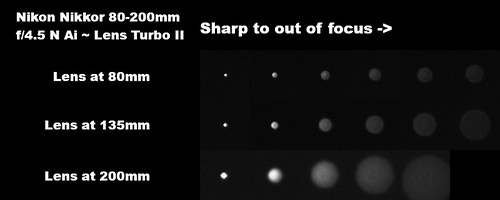
Nikon Nikkor 80mm to 200mm ~ Out of Focus Rendition


Comments -

NOTE: I feel the Lens Turbo II focal reducer adds a bit of under-corrected spherical aberration.

The Nikon Nikkor 80mm - 200mm f/4.5 N Ai zoom at 80mm and 135mm shows slight under-corrected spherical aberration in the out of focus regions.  Based on this comparison, in normal photographic use this lens at this focal length should produce a very smooth out of focus rendition.

At 200mm, this Ai zoom shows very very neutral out of focus rendition.  Under normal photographic conditions I would expect this lens at this focal length to produce extremely smooth out of focus rendition.


Resources -

For further information on how the topic of out of focus rendition, optical properties, and Nikon lens design history, please refer to the following -

A PhD thesis on the impact of "soft focus" lenses on the history of photography - http://research-repository.st-andrews.ac.uk/handle/10023/505

An excellent starting point for understanding out of focus rendition (I might not completely agree with his interpretations/observations, but his foundation of understanding is quite good) - http://jtra.cz/stuff/essays/bokeh/

Nikon lens design histories - https://imaging.nikon.com/history/story/

Point light source discussions - https://www.dpreview.com/forums/thread/4031515

Zeiss comments on optical design -  https://lenspire.zeiss.com/photo/en/article/how-does-zeiss-define-bokeh-an-interview-with-dr-stefan-ballmann

Metabones Focal Reducer whitepaper - https://www.metabones.com/assets/a/stories/Speed%20Booster%20White%20Paper.pdf

Thursday, April 11, 2019

Nikon 75-150mm f/3.5 E-series zoom ~ point light source comparision

I heard that spending time along the Cote d'Azur could be good for one's art.  While I make no claims to be an artist, spending time in the sun along the Mediterranean Sea inspired me to more deeply consider optics as applied to the craft of photography.

For many years I looked at just one dimension of commercially available optics - resolution.  Now I wanted to start looking at other aspects of optical performance.  For this series I look at spherical aberration (looking for under, neutral, or over correction) in out of focus rendition on subject matter behind the point of focus.

Setup -
  • Sony NEX5T, ISO 100, 2 second timer, -1 EV
  • Big Beefy Manfrotto tripod
  • Lens using with a Lens Turbo II focal reducer -
    • Nikon E-series 75mm - 150mm f/3.5 AiS zoom
  • NOTE1: Lens was shot at the widest aperture only
  • NOTE2: Out of focus samples are from points _behind_ the point of focus to compare background out of focus rendition
  • RawTherapee to convert RAW files into black and white and to set the black levels
  Comparison -

If you click on the following image you can inspect it at 100 percent.

Out of Focus Rendition ~ Comparisons


Comments -

NOTE: I feel the Lens Turbo II focal reducer adds a bit of under-corrected spherical aberration.

The Nikon 75mm to 150mm f/3.5 AiS zoom at 75mm shows under-corrected spherical aberration in the out of focus regions.  Based on this comparison, in normal photographic use this lens at this focal length should produce a very smooth out of focus rendition.

At 100mm, this AiS zoom continues to show under-corrected spherical aberration.  Under normal photographic conditions I would expect that this lens at 100mm will continue to show a very smooth out of focus rendition.

At 150mm, this AiS zoom shows very very neutral out of focus rendition.  Under normal photographic conditions I would expect this lens at this focal length to produce extremely smooth out of focus rendition.


Resources -

For further information on how the topic of out of focus rendition, optical properties, and Nikon lens design history, please refer to the following -

A PhD thesis on the impact of "soft focus" lenses on the history of photography - http://research-repository.st-andrews.ac.uk/handle/10023/505

An excellent starting point for understanding out of focus rendition (I might not completely agree with his interpretations/observations, but his foundation of understanding is quite good) - http://jtra.cz/stuff/essays/bokeh/

Nikon lens design histories - https://imaging.nikon.com/history/story/

Point light source discussions - https://www.dpreview.com/forums/thread/4031515

Zeiss comments on optical design -  https://lenspire.zeiss.com/photo/en/article/how-does-zeiss-define-bokeh-an-interview-with-dr-stefan-ballmann

Metabones Focal Reducer whitepaper - https://www.metabones.com/assets/a/stories/Speed%20Booster%20White%20Paper.pdf

Wednesday, April 10, 2019

Nikon Nikkor 35mm f/3.5 - 105mm f/4.5 zoom ~ point light source comparison

I heard that spending time along the Cote d'Azur could be good for one's art.  While I make no claims to be an artist, spending time in the sun along the Mediterranean Sea inspired me to more deeply consider optics as applied to the craft of photography.

For many years I looked at just one dimension of commercially available optics - resolution.  Now I wanted to start looking at other aspects of optical performance.  For this series I look at spherical aberration (looking for under, neutral, or over correction) in out of focus rendition on subject matter behind the point of focus.

Setup -
  • Sony NEX5T, ISO 100, 2 second timer, -1 EV
  • Big Beefy Manfrotto tripod
  • Lenses using with a Lens Turbo II focal reducer -
    • Nikon Nikkor 35mm f/3.5 - 105mm f/4.5 Ai zoom
  • NOTE1: Lens was shot at the widest aperture only
  • NOTE2: Out of focus samples are from points _behind_ the point of focus to compare background out of focus rendition
  • RawTherapee to convert RAW files into black and white and to set the black levels
  Comparison -

If you click on the following image you can inspect it at 100 percent.

Nikon Nikkor 35mm f/3.5 - 105mm f/4.5 ~ point light source comparison


Comments -

NOTE: I feel the Lens Turbo II focal reducer adds a bit of under-corrected spherical aberration.

The Nikon Nikkor 35mm f/3.5 to 105mm f/4.5 Ai zoom at 35mm shows under-corrected spherical aberration in the out of focus regions.  Based on this comparison, in normal photographic use this lens at this focal length should produce a fairly smooth out of focus rendition.

At 50mm, this Ai zoom shows under-corrected spherical aberration with a somewhat bright over-corrected spherical aberration out of focus disk edge.  Under normal photographic conditions I would expect that this lens at 50mm might product a "busy" and slightly confusing out of focus rendition.

At 105mm, this Ai zoom shows very neutral out of focus rendition.  Under normal photographic conditions I would expect this lens at this focal length to produce very smooth out of focus rendition.


Resources -

For further information on how the topic of out of focus rendition, optical properties, and Nikon lens design history, please refer to the following -

A PhD thesis on the impact of "soft focus" lenses on the history of photography - http://research-repository.st-andrews.ac.uk/handle/10023/505

An excellent starting point for understanding out of focus rendition (I might not completely agree with his interpretations/observations, but his foundation of understanding is quite good) - http://jtra.cz/stuff/essays/bokeh/

Nikon lens design histories - https://imaging.nikon.com/history/story/

Point light source discussions - https://www.dpreview.com/forums/thread/4031515

Zeiss comments on optical design -  https://lenspire.zeiss.com/photo/en/article/how-does-zeiss-define-bokeh-an-interview-with-dr-stefan-ballmann

Metabones Focal Reducer whitepaper - https://www.metabones.com/assets/a/stories/Speed%20Booster%20White%20Paper.pdf

Tuesday, April 09, 2019

Nikon and Schneider 135mm lenses ~ point light source comparison

I heard that spending time along the Cote d'Azur could be good for one's art.  While I make no claims to be an artist, spending time in the sun along the Mediterranean Sea inspired me to more deeply consider optics as applied to the craft of photography.

For many years I looked at just one dimension of commercially available optics - resolution.  Now I wanted to start looking at other aspects of optical performance.  For this series I look at  spherical aberration (looking for under, neutral, or over corrections) in out of focus rendition on subject matter behind the point of focus.

Setup -
  • Sony NEX5T, ISO 100, 2 second timer, -1 EV
  • Big Beefy Manfrotto tripod
  • Lenses using with a Lens Turbo II focal reducer -
    • Nikon Nikkor 135mm f/3.5 Ai
    • Nikon Nikkor 135mm f/2.8 Q Ai'd
  • Lens using a straight through adapter (ie: no focal length reduction to APS-C sensor) -
    • Schneider Keuznach Tele-Xenar 135mm f/3.5 (late 1950's to early 1960's)
  • NOTE1: Lenses were shot at their widest apertures only
  • NOTE2: Out of focus samples are from points _behind_ the point of focus to compare background out of focus rendition
  • RawTherapee to convert RAW files into black and white and to set the black levels
  Comparison -

If you click on the following image you can inspect it at 100 percent.

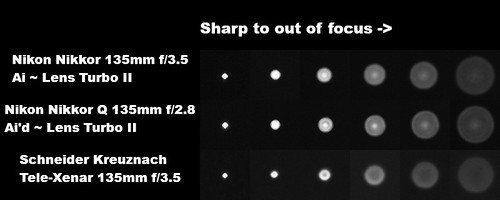
Nikon Nikkor, Schneider (3)135mm ~ Out of Focus Rendition


Comments -

NOTE: I feel the Lens Turbo II focal reducer adds a bit of under-corrected spherical aberration.

The Nikon Nikkor 135mm f/3.5 Ai lens shows under corrected spherical aberrations.  In normal photography I would expect, based on these comparisons, that there will be a very smooth and delicate (to use Nikon's own word on the topic) out of focus field rendition.

The Nikon Nikkor 135mm f/2.8 Q Ai'd lens shows under corrected spherical aberrations. The out of focus disk shows variable luminosity and is not as smooth as the f/3.5 Ai.  In normal photography I would expect, based on these, that there will be a smooth and delicate (to use Nikon's own word on the topic) out of focus field rendition.

The Schneider Kreuznach Tele-Xenar 135mm f/3.5 lens shows over corrected spherical aberrations. In normal photography I would expect, based on these comparisons, that there will be the tendency to hollow out highlights and brighter areas of the out of focus field rendition.  Some would call this a tendency toward a "harsh" out of focus rendition.


Resources -

For further information on how the topic of out of focus rendition, optical properties, and Nikon lens design history, please refer to the following -

A PhD thesis on the impact of "soft focus" lenses on the history of photography - http://research-repository.st-andrews.ac.uk/handle/10023/505

An excellent starting point for understanding out of focus rendition (I might not completely agree with his interpretations/observations, but his foundation of understanding is quite good) - http://jtra.cz/stuff/essays/bokeh/

Nikon lens design histories - https://imaging.nikon.com/history/story/

Point light source discussions - https://www.dpreview.com/forums/thread/4031515

Zeiss comments on optical design -  https://lenspire.zeiss.com/photo/en/article/how-does-zeiss-define-bokeh-an-interview-with-dr-stefan-ballmann

Metabones Focal Reducer whitepaper - https://www.metabones.com/assets/a/stories/Speed%20Booster%20White%20Paper.pdf

Monday, April 08, 2019

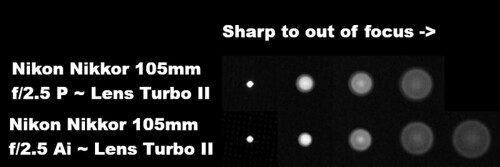
Nikon Nikkor 105mm f/2.5 P and Ai ~ point light source comparison

I heard that spending time along the Cote d'Azur could be good for one's art.  While I make no claims to be an artist, spending time in the sun along the Mediterranean Sea inspired me to more deeply consider optics as applied to the craft of photography.

For many years I looked at just one dimension of commercially available optics - resolution.  Now I wanted to start looking at other aspects of optical performance.  For this series I look at under, neutral, and over corrected spherical aberration in out of focus rendition on subject matter behind the point of focus.

Setup -
  • Sony NEX5T, ISO 100, 2 second timer, -1 EV
  • Big Beefy Manfrotto tripod
  • Lenses using with a Lens Turbo II focal reducer -
    • Nikon Nikkor 105mm f/2.5 P pre-Ai (early Sonnar design)
    • Nikon Nikkor 105mm f/2.5 Ai (later modified Sonnar, slightly more symmetrical design)
  • NOTE1: Lenses were shot at their widest apertures only
  • NOTE2: Out of focus samples are from points _behind_ the point of focus to compare background out of focus rendition
  • RawTherapee to convert RAW files into black and white and to set the black levels
  Comparison -

If you click on the following image you can inspect it at 100 percent.

Out of Focus Rendition ~ Comparisons


Comments -

NOTE: I feel the Lens Turbo II focal reducer adds a bit of under-corrected spherical aberration.

Both Nikon Nikkor 105mm f/2.5 P pre-Ai and Ai lenses show under corrected spherical aberrations.  In normal photography I would expect, based on these comparisons, that there will be a very smooth and delicate (to use Nikon's own word on the topic) out of focus field rendition.


Resources -

For further information on how the topic of out of focus rendition, optical properties, and Nikon lens design history, please refer to the following -

A PhD thesis on the impact of "soft focus" lenses on the history of photography - http://research-repository.st-andrews.ac.uk/handle/10023/505

An excellent starting point for understanding out of focus rendition (I might not completely agree with his interpretations/observations, but his foundation of understanding is quite good) - http://jtra.cz/stuff/essays/bokeh/

Nikon lens design histories - https://imaging.nikon.com/history/story/

Point light source discussions - https://www.dpreview.com/forums/thread/4031515

Zeiss comments on optical design -  https://lenspire.zeiss.com/photo/en/article/how-does-zeiss-define-bokeh-an-interview-with-dr-stefan-ballmann

Metabones Focal Reducer whitepaper - https://www.metabones.com/assets/a/stories/Speed%20Booster%20White%20Paper.pdf

Sunday, April 07, 2019

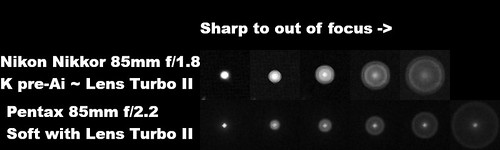
Nikon Nikkor 85mm, Pentax 85mm Soft ~ point light source comparison

I heard that spending time along the Cote d'Azur could be good for one's art.  While I make no claims to be an artist, spending time in the sun along the Mediterranean Sea inspired me to more deeply consider optics as applied to the craft of photography.

For many years I looked at just one dimension of commercially available optics - resolution.  Now I wanted to start looking at other aspects of optical performance.  For this series I look at under, neutral, and over corrected spherical aberration in out of focus rendition on subject matter behind the point of focus.

Setup -
  • Sony NEX5T, ISO 100, 2 second timer, -1 EV
  • Big Beefy Manfrotto tripod
  • Lenses using with a Lens Turbo II focal reducer -
    • NikonNikkor 85mm f/1.8 K pre-Ai
    • Pentax 85mm f/2.2 Soft in Nikon F mount (rare? I've never seen this lens in a Nikon mount before)
  • NOTE1: Lenses were shot at their widest apertures only
  • NOTE2: Out of focus samples are from points _behind_ the point of focus to compare background out of focus rendition
  • RawTherapee to convert RAW files into black and white and to set the black levels
  Comparison -

If you click on the following image you can inspect it at 100 percent.

Out of Focus Rendition ~ Comparisons


Comments -

NOTE: I feel the Lens Turbo II focal reducer adds a bit of under-corrected spherical aberration.

The Nikon Nikkor 85mm f/1.8 pre-Ai shows under corrected spherical aberrations.  In normal photography I would expect, based on these comparisons, that there will be a smooth out of focus field rendition.

The Pentax 85mm f/2.2 Soft shows very strongly under spherical aberration corrections.  In normal photography I would expect, based on these comparisons, that there will be an extremely smooth and very soft rendition across the field.

There is something interesting about the Pentax soft that should be carefully noted.  The point light source remains strongly represented in the center of the out of focus disk well beyond what might be considered the normal point of focus. This is physical evidence for how a severely under-corrected spherical aberration optic can exhibit extreme depths of field, even when the lens is shot wide open.


Resources -

For further information on how the topic of out of focus rendition, optical properties, and Nikon lens design history, please refer to the following -

A PhD thesis on the impact of "soft focus" lenses on the history of photography - http://research-repository.st-andrews.ac.uk/handle/10023/505

An excellent starting point for understanding out of focus rendition (I might not completely agree with his interpretations/observations, but his foundation of understanding is quite good) - http://jtra.cz/stuff/essays/bokeh/

Nikon lens design histories - https://imaging.nikon.com/history/story/

Point light source discussions - https://www.dpreview.com/forums/thread/4031515

Zeiss comments on optical design -  https://lenspire.zeiss.com/photo/en/article/how-does-zeiss-define-bokeh-an-interview-with-dr-stefan-ballmann

Metabones Focal Reducer whitepaper - https://www.metabones.com/assets/a/stories/Speed%20Booster%20White%20Paper.pdf

Saturday, April 06, 2019

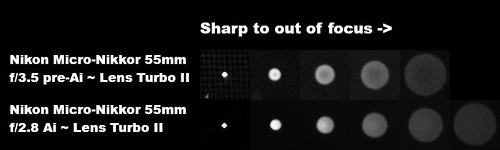
Nikon Micro-Nikkor 55mm lenses ~ point light source comparison

I heard that spending time along the Cote d'Azur can be good for one's art.  While I make no claims to be an artist, spending time in the sun along the Mediterranean Sea inspired me to more deeply consider optics as applied to photography.  For many years I have looked at one dimension of commercially available optics.  Now I wanted to start looking at other aspects of optical performance.  For this series I look at under, neutral, and over corrected spherical aberration in out of focus rendition on subject matter behind the point of focus.

Setup -
  • Sony NEX5T, ISO 100, 2 second timer, -1 EV
  • Big Beefy Manfrotto tripod
  • Nikon lenses using with a Lens Turbo II focal reducer -
    • Nikon Micro-Nikkor 55mm f/2.8 Ai
    • Nikon Micro-Nikkor 55mm f/3.5 pre-Ai
  • NOTE1: Lenses were shot at their widest apertures only
  • NOTE2: Out of focus samples are from points _behind_ the point of focus to compare background out of focus rendition
  • RawTherapee to convert RAW files into black and white and to set the black levels
  Comparison -

If you click on the following image you can inspect it at 100 percent.

Nikon Micro-Nikkor (2)55mm ~ Out of Focus Rendition


Comments -

NOTE: I feel the Lens Turbo II focal reducer adds a bit of under-corrected spherical aberration.

The Nikon Nikkor 55mm f/3.5 pre-Ai shows very very slight over corrected spherical aberrations.  In normal photography I would expect, based on these comparisons, that there will be a smooth out of focus field rendition.

The Nikon Nikkor 55mm f/2.8 Ai shows quite neutral spherical aberration corrections with just a hint of under-corrected behavior in the center of the out of focus disk.  In normal photography I would expect, based on these comparisons, that there will be an extremely smooth out of focus field rendition.

There is something interesting about the Micro-Nikkor 55mm macro lenses.  They are pretty neutral in their renderings.  These are the first (though not the only) lenses I encountered that exhibit this kind of behavior.  In practical use I loved the f/3.5 version in this regard for many of the images I made along the Cote d'Azur this winter.  Now, after these comparisons, I have mounted the f/2.8 version on a camera and have already found it's out of focus rendering to be as beautiful as I expected/hoped it would be.


Resources -

For further information on how the topic of out of focus rendition, optical properties, and Nikon lens design history, please refer to the following -

A PhD thesis on the impact of "soft focus" lenses on the history of photography - http://research-repository.st-andrews.ac.uk/handle/10023/505

An excellent starting point for understanding out of focus rendition (I might not completely agree with his interpretations/observations, but his foundation of understanding is quite good) - http://jtra.cz/stuff/essays/bokeh/

Nikon lens design histories - https://imaging.nikon.com/history/story/

Point light source discussions - https://www.dpreview.com/forums/thread/4031515

Zeiss comments on optical design -  https://lenspire.zeiss.com/photo/en/article/how-does-zeiss-define-bokeh-an-interview-with-dr-stefan-ballmann

Metabones Focal Reducer whitepaper - https://www.metabones.com/assets/a/stories/Speed%20Booster%20White%20Paper.pdf

Friday, April 05, 2019

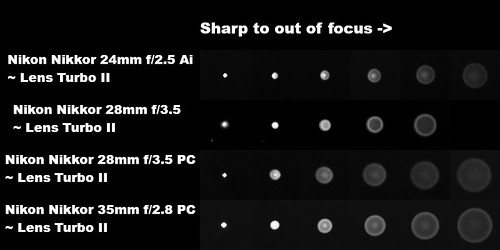
Nikon Nikkor 24mm, (2)28mm, 35mmPC ~ point light source comparison

Returning home after passing a winter in the south I am inspired to continue my look into point light source in-focus, out of focus comparisons.

Setup -
  • Sony NEX5T, ISO 100, 2 second timer, -1 EV
  • Big Beefy Manfrotto tripod
  • Nikon lenses using with a Lens Turbo II focal reducer -
    • Nikon Nikkor 24mm f/2.8 Ai
    • Nikon Nikkor 28mm f/3.5 pre-Ai
    • Nikon Nikkor 28mm f/3.5 PC
    • Nikon Nikkor 35mm f/2.8 PC
  • NOTE1: Lenses were shot at their widest apertures only
  • NOTE2: Out of focus samples are from points _behind_ the point of focus to compare background out of focus rendition
  • RawTherapee to convert RAW files into black and white and to set the black levels
  Comparison -

If you click on the following image you can inspect it at 100 percent.

Nikon Nikkor 24mm, (2)28mm, 35mm ~ Out of Focus Rendition


Comments -

NOTE: I feel the Lens Turbo II focal reducer adds a bit of under-corrected spherical aberration.

The Nikon Nikkor 24mm f/2.8 Ai shows under-corrected spherical aberrations with just a hint of a bright ring around the edge of the image circle.  In normal photography I would expect, based on these comparisons, that there will be an ever so slightly "busy" rendition in a smooth, delicate out of focus field.

The Nikon Nikkor 28mm f/3.5 H shows strong over-corrected spherical aberration.  I find this interesting as this was designed by the man who developed the 105mm f/2.5 P and 50mm f/1.4 S Nikkors.  He clearly understood the effects of under-corrected spherical aberration on out of focus rendering.  In normal photography I would expect, based on these comparisons, that there will be a strong "soap bubble bokeh" rendition of the out of focus field.

The Nikon Nikkor 28mm f/3.5 PC (perspective control) lens shows moderate under-corrected spherical aberration with a hint of a bright ring around the edge of the out of focus disk.  In normal photography I would expect the lens to be slightly "busy" against a smooth out of focus field rendition.

The Nikon Nikkor 35mm f/2.8 PC (perspective control) lens shows moderate under-corrected spherical aberration with a somewhat strong bright ring around the edge of the out of focus disk.  In normal photography I would expect the lens to be "busy" against a somewhat smooth out of focus field rendition.


Resources -

For further information on how the topic of out of focus rendition, optical properties, and Nikon lens design history, please refer to the following -

A PhD thesis on the impact of "soft focus" lenses on the history of photography - http://research-repository.st-andrews.ac.uk/handle/10023/505

An excellent starting point for understanding out of focus rendition (I might not completely agree with his interpretations/observations, but his foundation of understanding is quite good) - http://jtra.cz/stuff/essays/bokeh/

Nikon lens design histories - https://imaging.nikon.com/history/story/

Point light source discussions - https://www.dpreview.com/forums/thread/4031515

Zeiss comments on optical design -  https://lenspire.zeiss.com/photo/en/article/how-does-zeiss-define-bokeh-an-interview-with-dr-stefan-ballmann

Metabones Focal Reducer whitepaper - https://www.metabones.com/assets/a/stories/Speed%20Booster%20White%20Paper.pdf

Wednesday, April 03, 2019

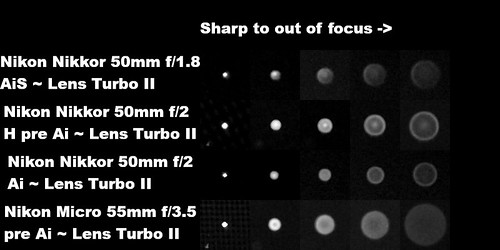
Nikon Nikkor 50mm and Micro-Nikkor 55mm ~ point light source comparison

Returning home after passing a winter in the south I am inspired to continue my look into point light source in-focus, out of focus comparisons.

Setup -
  • Sony NEX5T, ISO 100, 2 second timer, -1 EV
  • Big Beefy Manfrotto tripod
  • Nikon lenses using with a Lens Turbo II focal reducer -
    • Nikon Nikkor 50mm f/1.8 AiS "pancake"
    • Nikon Nikkor 50mm f/2 H pre-Ai single coated
    • Nikon Nikkor 50mm f/2 Ai multi-coated
    • Nikon Micro-Nikkor 55mm f/3.5 pre-Ai
  • NOTE1: Lenses were shot at their widest apertures only
  • NOTE2: Out of focus samples are from points _behind_ the point of focus to compare background out of focus rendition
  • RawTherapee to convert RAW files into black and white and to set the black levels
  Comparison -

If you click on the following image you can inspect it at 100 percent.

Out of Focus Rendition ~ Comparisons


Comments -

NOTE: I feel the Lens Turbo II focal reducer adds a bit of under-corrected spherical aberration.

The Nikon Nikkor 50mm f/1.8 AiS "pancake" lens shows under-corrected spherical aberration from the moment the point light source goes out of focus.  The brighter ring around the outside of the image circle seems to indicate a bit of over-corrected spherical aberration as well.  In normal photography I would expect, based on these comparisons, that there will be an ever so slightly "busy" rendition in a smooth, delicate out of focus field.

The Nikon Nikkor 50mm f/2 H pre-Ai single coated lens shows rather strong under-corrected and over-corrected spherical aberration.  In normal photography I would expect, based on these comparisons, that there will be a somewhat strong "busy" rendition set against a smooth, nuanced out of focus field.

The Nikon Nikkor 50mm f/2 H Ai multi-coated lens shows rather strong over-corrected spherical aberration.  In normal photography I would expect, based on these comparisons, that there will be a strong "busy" rendition of an out of focus field.  It would expect strong "soap bubble bokeh" rendition.

The Nikon Micro-Nikkor 55mm f/3.5 pre-Ai single coated lens shows neutrally corrected spherical aberration.  In normal photography I would expect, based on these comparisons, that there will be a smooth out of focus field.


Resources -

For further information on how the topic of out of focus rendition, optical properties, and Nikon lens design history, please refer to the following -

A PhD thesis on the impact of "soft focus" lenses on the history of photography - http://research-repository.st-andrews.ac.uk/handle/10023/505

An excellent starting point for understanding out of focus rendition (I might not completely agree with his interpretations/observations, but his foundation of understanding is quite good) - http://jtra.cz/stuff/essays/bokeh/

Nikon lens design histories - https://imaging.nikon.com/history/story/

Point light source discussions - https://www.dpreview.com/forums/thread/4031515

Zeiss comments on optical design -  https://lenspire.zeiss.com/photo/en/article/how-does-zeiss-define-bokeh-an-interview-with-dr-stefan-ballmann

Metabones Focal Reducer whitepaper - https://www.metabones.com/assets/a/stories/Speed%20Booster%20White%20Paper.pdf

Tuesday, March 19, 2019

Something other than resolution and sharpness...

As you are no doubt aware, there are many ways an interested party can consider photographic optical performance.

For going on thirty years I've been looking at camera system resolution.  Now I would like to begin to consider how lenses transition from sharp to out of focus regions behind the point of focus.

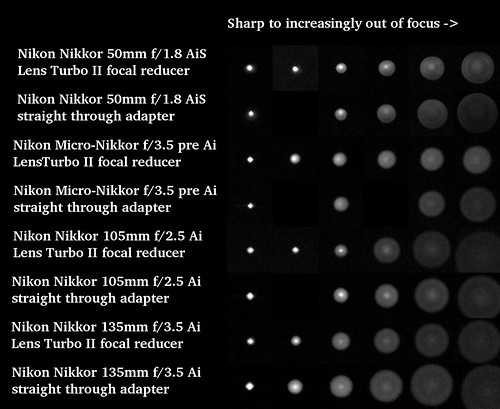
There is a useful approach outlined by Mariane Oelund in a discussion thread on DPReview.  For my look at the question I displayed a 2 pixel wide "dot" on a computer screen and photographed it with lens apertures set to wide open from sharp to increasingly out of focus.

Here are the results for a few lenses shot wide open, with and without a Lens Turbo II focal reducer.

Out of Focus transition ~ Comparison


 Comments and Observations -

The immediate question is how to interpret what we see?  Zeiss provides an good starting point.  On a practical level, Jakub Travnik provides a useful illustration

If an out of focus circle is bright around the outside edges, it is said to be over-corrected for spherical aberration.  Some people refer to this as "soap bubble bokeh."

If the out of focus circle is evenly lit across the disk, it is said to be neutrally corrected.  Zeiss currently champions this approach to lens design.

If the out of focus circle is bright in the center and less bright toward the edges then the lens is said to be under-corrected for spherical aberration.

With these things in mind, we can see that my Nikon Nikkor 50mm and 55mm lenses used with a Lens Turbo II focal reducer increases under-corrected spherical aberration.  The Nikon Nikkor 105mm and 135mm lenses seem to be under-corrected for spherical aberration to very similar degrees when used with or without the Lens Turbo II focal reducer.

An important question is how does this work in the real world?

We already have a hint from the way the over-corrected spherical aberrations are interpreted photographically.  That is, such lenses create "soap bubble bokeh" in the out of focus regions.

For neutrally corrected lenses we have two very good examples.  One is Zeiss' own 135mm f/2 and, perhaps surprisingly, the Rokinon/Samyang 135mm f/2.  These lenses are said to provide neutrally corrected out of focus renditions.

Lastly, the thing that started me on this quest (which I am only now beginning and am by no means understanding as fully as I would like) were comments made about the history of Nikon lens designs.  Read carefully I found out that Nikkor designers from the outset deliberately under-corrected for spherical aberrations in certain designs (1950's Sonnar formula RF lenses - 5cm, 8.5cm, and 105cm as well as many standard and longer than stardard focal length lenses for the F-series SLRs).  Nikon appears to have continued this approach up until rather recently.

Nikon designers felt that under-corrected spherical aberrations in the out of focus areas behind the point of focus lead to a "delicate rendition" of a scene.  This property of a lens would change as the aperture was stopped down.  One or two stops down from wide open would change a lenses character to being sharp across the field and quickly reduced/eliminated spherical aberration in out of focus areas.

At the same time I read the Nikkor lens history site I stumbled upon information provided by the Metabones adapter manufacturer.  They suggest that their focal reducer adds a little under-corrected spherical aberration.  While the Zhongyi Lens Turbo II I use was likely not designed by Metabones, I'm wondering if it too doesn't add a bit of spherical aberration to some lenses?  Nearly all of my 50mm-ish lenses seem to "improve" their out of focus renditions when mounted on the Lens Turbo II.

I really appreciate Nikon's lens designer comments and feel they have given us an idea of why their lenses behave the way they do.  If anyone knows of similar sources of lens design choices for Zeiss, Leica, Canon, and other photographic application lens manufacturers, please let me know.

Tuesday, March 12, 2019

Now Available ~ le Mans Classic ~ dans les Paddocks ~ 2018

I have published a second book.  This is also from le Mans Classic.  This time its from year 2018.

As with the first book, the 2018 book is rendered in black and white.  The print edition is high quality and uses heavy paper that gives the book a certain "heft."

The print copy is rather expensive, as far as books go.  So if you'd like to see what the book is about, consider the PDF edition that is also available through Blurb.

Thanks for looking.

le Mans Classic ~ 2018

Wednesday, February 06, 2019

Capturing the "glow" of old Black and White photographs - Vastly Simplified Procedure

In May 2018 I wrote about black and white conversions in digital.  It was a very early effort and I see I rather missed the mark.

It is going on a year, now, and I am very much enjoying the process.  I find I have a renewed enthusiasm for black and white photography.  And I find that converting digital files is, in general, nowhere near as complicated as I first wrote.

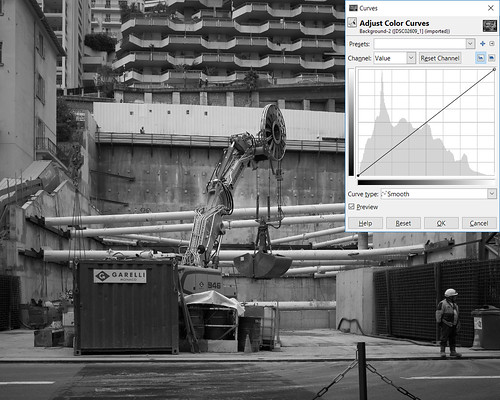
So here is a vastly simplified process, complete with examples of the image and the curves function that I use to make digital black and white images "glow" like old silver halide prints.

Step One

Start with a color image where the highlights and shadows are not clipped.

Color Curves Base

Step Two -

Convert the color image to black and white.  In this example I simply desaturated the image.

BW Base Conversion

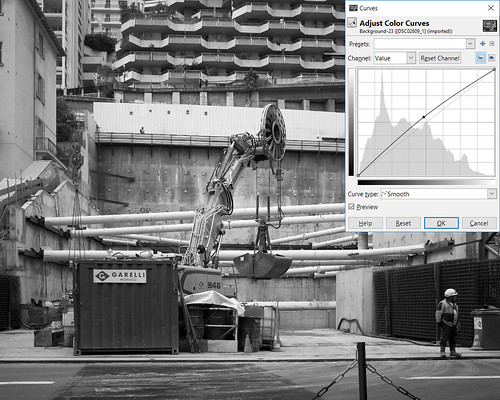
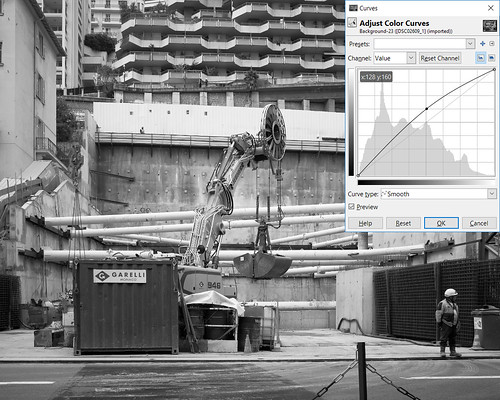
Step Three

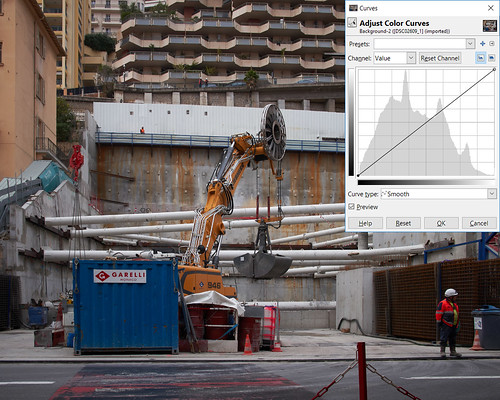
Open the curves function, grab the middle of the curve, and raise it.

BW Curves Raised - Step One

If the image you are working on looks like it might benefit from being lighter or brighter, simply raise the center of the curves more.  I deliberately "overcooked" the effect to illustrate the effect.

BW Curves Raised - Step Two

Example Image -

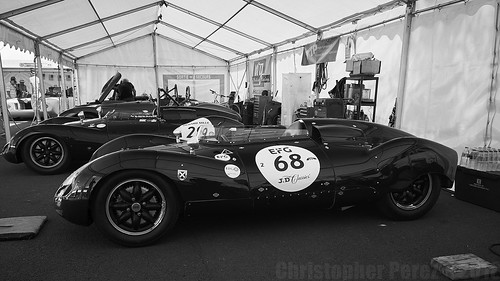
Here is an example of something that I feel fully expresses the gray tones and looks a lot like something I would have printed back in the day of film.

Example BW conversion image

Comments

Desaturating a color image to make a black and white photograph in digital photography creates a dead, lifeless image.  Just look at the results of Step Two.  Ghastly, I say.

Now take a look at the results of Step Three (first image).  The image is starting to "sing."  The effect is now beginning to mirror film photography.

Important Observation: Scanning a black and white film negative will give the same results as in Step Two above with the very same ghastly results.  The "magic" is how the tones are raised when a print is made.  Silver halide papers effectively raised the mid-tones.

Borrowing further from film photography, keep in mind that the viewer's eye will seek lighter portions of an image.  This is why the classic technique is to vignette the edges of the frame.  I find that around a 1/2 stop works well for the kinds of subjects I photograph.

Once you have these basic steps sorted out you can now move the brightness slider to lighten or darken the overall image.  You can also move the contrast slider to increase or decrease contrast.  Using the two sliders a person can quickly find the balance between tones and contrast that appeals to them.

The topic of filtering an image can quickly become complex, so I make the following over-simplification to start from.  If a starting image was made out of doors under bright sunlight I find that using a yellow, orange, or red digital filter to convert the file can have some benefit in darkening the sky, just like in film photography.   

For myself I feel I have made a lot of progress using the simple three step technique illustrated above and tend not to mess around with contrast while in some cases gently moving the brightness slider.

Tuesday, January 15, 2019

Macro vs Non-Macro ~ a small comparison

Something I've wondered about for far too long is what, if any, meaningful difference is there between a dedicated macro and "normal" lenses when shooting close-up subjects?  So, one dull morning I grabbed a few "supplies" and set about looking at what kind of answer I might come up with.

Setup -

  • Sony NEX-5T, 100ISO
  • Big Beefy Manfrotto tripod 
  • Nikon lenses -
    • Micro-Nikkor 55mm f/3.5 pre-Ai
    • Nikkor 105mm f/2.5 P pre-Ai (early Sonnar design) with Nikkor F E2 extension tube
    • Nikkor 105mm f/2.5 Ai (later modified Sonnar design) with Nikkor F E2 extension tube
  • 0Euro Napoleon "currency" - for it's sharp image, text and paper fibers
  • Sony RAW converter software used at it's default settings (no sharpening, no contrast, no exposure changes) to convert 100 quality jpg

Scene setup ~ macro

Comparison Results -

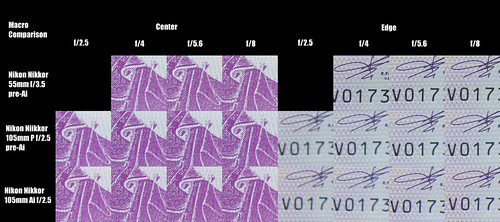
[If you click on the image it'll take you to the Flickr hosting site. Once there, look at the file at full resolution. In many cases the differences between lenses is small and likely can't be seen until you take a squint at the comparison at 100 percent.]

55mm Micro-Nikkor vs 105mm Nikkors with extension tubes ~ Comparison


Comments -

The Micro-Nikkor 55mm f/3.5 pre-Ai is a very fine optic.  I've tested this on subjects at "normal" working distances and it's brilliant.  I see for macro work that two things stand out.  First, the lens is, indeed, very sharp from wide open.  Second, the field is flat from wide open (just as advertised). 

I'm enjoying this lens so much that I've brought it with me to the cote d'Azur where my wife and I are spending the winter.  This lens is shouldering the bulk of the photographic duties while we're here.

I wasn't entirely sure what to expect from the 105mm Nikkors.  These are of two slightly different optical designs and I wasn't sure if that would play a role in their macro performance.  Hence this comparison, right?

For the 105mm Nikkors with an E2 extension tube I see the optical performance wide open suffers visibly.  The centers are slightly soft and the edges are visibly soft (when viewed at 100 percent file resolution).  But stop either lens down to f/4, and things clean up quite nicely.  The centers become as sharp as the Micro-Nikkor and the edges are getting better.  By f/5.6 and certainly at f/8, the center and edge resolutions look to be as good as the Micro-Nikkor.

Based on prior comparisons and what I learned about field curvature in many lenses I wondered how much that might come into play with the 105mm lenses used here.  So I went back to the camera, set the focus magnifier in a corner of the field of view and changed the focus slightly.  Both lenses were still soft in the corners wide open, but it wasn't quite as bad as the comparison images.  At f/4 I could clearly see that if an absolutely flat optical field isn't required that the edges would be in clear good focus somewhere near the center focus point, but not exactly.

One of the things I learned in this comparison is that I might not "need" a 105mm Micro-Nikkor (either f/4 or f/2.8) when shooting close ups.  If I made my living shooting 2D subject matter with the lens set wide open, well, yes, then I might see a good benefit by acquiring additional lenses. 

But since I'm retired and am making these kinds of comparisons out of intellectual curiosity, I think my current Toy Collection remains sufficient to just about any task.  Unless, that is, I happen to stumble upon a nice Micro-Nikkor 105mm lens at a rather attractive price.  Then all bets would be off.  Isn't there always room for "more" if it comes along for cheap?

Thursday, December 20, 2018

Now Available - dans les Paddocks ~ le Mans Classic ~ 2016

dans les Paddocks ~ le Mans Classic ~ 2016

I am happy to announce that a book project of over 100 images is now available.  The work is printed in classic black and white.  I chose monochrome to pay honor to the time and style of reportage many of the automobiles have come from.

Aston Martin ~ le Mans Classic ~ 2016

Saturday, December 08, 2018

A little something called "SuperResolution"...

A friend recently picked up a Nikon D850 and more recently a new Fuji GFX 50R.  Both are very high resolution cameras.  In my case, the highest resolution camera in the closet is a 24mpixel Sony A6000.  Beginning to feel a little "behind the curve" in the Mpixel Race (whatever that is) I wondered how close I could come to 50mpixel sensor output given my current tool set.

Several years ago I saved a link to an article that described a process for creating very high resolution photographs.   I found that recipe after having written about how to generate high resolution images from a single base image.  This blog entry combines the two techniques, and adds a few things that I've learned along the way (which I will Note: in the text below).

Base setup -
  • Sony NEX-5T set to jpg output (to streamline the stack blend processing)
  • Lenses
    • Sigma 19mm EX DN E
    • Nikon Nikkor 50mm f/1.8 AiS
    • Nikon Nikkor 85mm f/1.8 K pre-Ai
  • Camera handheld
  • Multiple exposures shot using the "S" fastest continuous shutter release function
    • Shot 20 to 30 images of each subject that would next be used to create an image stack
  • Follow the "SuperResolution" recipe (with two important Notes and one Observation) using
    • Hugin to align the image stack
    • Gimp (v2.8) to perform a linear 2x "cubic" uprez from approx 4900 pixels (native Sony NEX-5T file size) to 9500pixels
    • Gimp (v2.8) to blend the layered image stack
    • Gimp (v2.8) to apply a 2 pixel unsharp mask
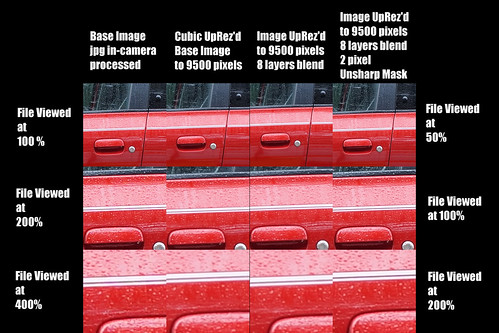
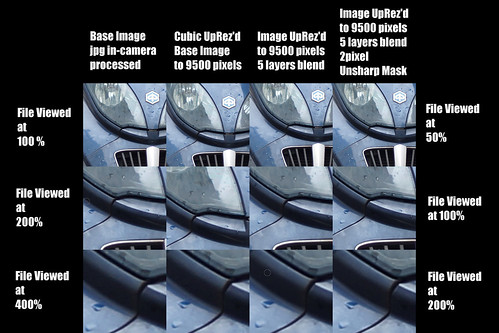
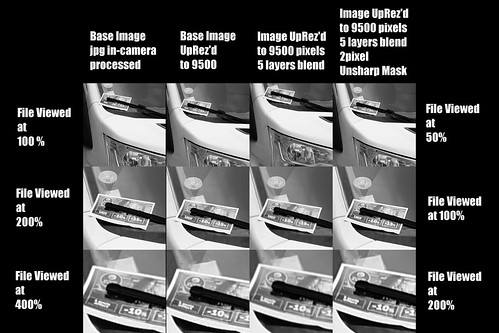
In the following side by side comparisons, along the left hand side I have labeled from "File Viewed at 100%" to "File Viewed at 400%".  This applies in all three comparison cases to the left hand column only and represents the base image at its native resolution viewed at the indicated enlargements.  The right hand indications of "File Viewed at 50%" thru "File Viewed at 200%" apply in all three cases to right three image columns.  These three columns represent the output of various processing techniques I used to explore the idea of "superresolution".

Setup One - Nikon Nikkor 50mm f/1.8 Ai set at f/8

Super Resolution Investigation ~ Base Image
Scene Setup

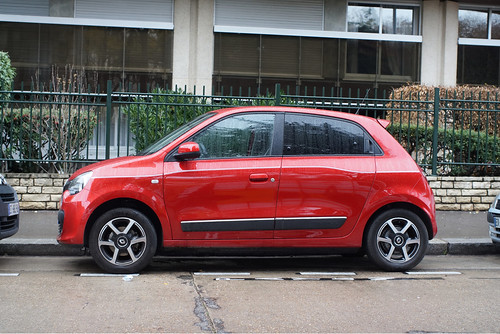
Super Resolution Investigation ~ Comparisons

Setup Two - Nikon Nikkor 85mm f/1.8 K pre-Ai set at f/1.8

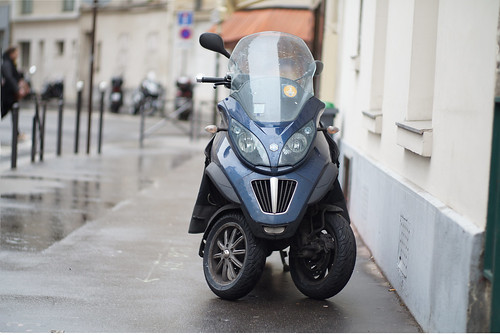
Super Resolution Investigation ~ Base Image
Scene Setup

Super Resolution Investigation ~ Comparisons

Setup Three - Sigma 19mm f/2.8 EX DN E set at f/4

Super Resolution Investigation ~ Base Image
Scene Setup

Super Resolution Investigation ~ Comparisons


Comments -

Regarding the optics, all three lenses performed very well, indeed.  They are sharp and contrasty in the base image.  Printing at 300dpi using the native 16mpixel sensor resolution of the Sony NEX-5T will easily generate a 17inch on the long dimension high resolution image.

As for the "superresolution" techniques, here is what I have thus far experienced.

My early understanding of how "cubic" up-rez works was insufficient.  Up-rez'ing an image at 150dpi or 300dpi will yield jagged edge transitions and will amplify "noise" across an image field. 

Note: What I've learned is that by increasing the sample rate of the "cubic" filter that the output up-rez'd image will contain fewer artifacts.  In clear terms - to perform a 2x up-rez requires, minimally, a 600dpi filter sample rate.  This is fundamental to understanding how to retain the most image quality when performing an up-rez. 

For this comparison I set the "cubic" filter sample rate to 1200dpi.

Using the Gimp's "cubic" Image Scale function quickly generates a 9500pixel file from the base 4900+pixel image.  No new information is added, of course.  Image problems (shake, mis-focus, etc) and sensor "noise" are amplified.  Following my early attempts at understanding "superresolution", this approach still has some promise.  Compared with the following two "superresolution" examples that follow, the simple "cubic" up-rez technique is somewhat lacking.

Looking at the blended image stack examples I see the results can be pretty interesting.  The very first thing I see is a dramatic drop in sensor "noise".  The images are much smoother than even the original base image.  In fact, blending just two images produces a very useful reduction in noise, even in a non-up-rez'd image, that this technique is worth utilizing.

The second thing I see is that stacked images do indeed appear to add information to the resultant image.  This is much like what we expect out of the "superresolution" functions in some Olympus and Sony mirrorless cameras where, in those cases, they "wiggle" the sensor electronically.  For the handheld technique, this is a very nice finding.

The technique of image stacking wasn't as straightforward as described in the recipe.  My first attempts were actually rather soft.  On close inspection I found that the Hugin "aligned" image output was not really "aligned."  The images were all too often many pixels mis-aligned, but only in the "y" dimension.  The "x" dimension seemed to be correctly positioned.  There is something I don't yet understand about the Hugin image stack output and how to import them correctly aligned into the Gimp.

Note: To achieve correct image stack alignment I chose a scene segment with clear dark to light transitions (like a raindrop or door keyhole or a piece of paper with writing) and set the "view" to 400% so that I could see every pixel magnified.  Using the base image (the image at the bottom of the stack) as the reference I worked with each layer, one at a time (turning off the visibility to all the other layers and by setting the "opacity" to 50% so I could see both the layered image and the base image). Then I used the keyboard arrows to move the layered image to set the exact alignment.  It was time consuming but yielded, obviously, the best results.

Observation: The recipe calls for a minimum of 20 images stacked and blended to get the most information.  In my case, I found that as few as 5 layers above a base image can yield outstanding results.  Perhaps my process technique isn't as accurate as it could be, but I can't see any "improvement" in the amount of information an image stack gives by going beyond those first 5 layers.

The last item in the recipe was the strong suggestion that a 2 pixel unsharp mask sharpen function be applied to the up-rez'd blended "superresolution" image stack.  To my eyes the results are quite impressive.  It appears, at first glance, as if a 300dpi 30inch print can be made while retaining all the native blended layer file resolution of the up-rez'd image stacked file.

It appears that my output is similar to the recipe examples.  Before declaring victory and moving on to another area of investigation I needed to compare my results, not only with the original "superresolution" recipe, but with the output of the latest generation of high resolution cameras.  Looking thru Flickr for Fuji GFX full resolution images I have come to realize that the handheld "superresolution" technique produces a different "look."  The native GFX file resolution is clearly superior to the approach being explored here.  Have I missed something in my own process?  Or is this just the way things are?

While clearly superior to native resolution base image output, using the handheld "superresolution" technique produces an image that reminds me of the soft, gentle tonal transitions I see in old contact print large format film. That is, the "feeling" of the image is that of light gently scattering through the gelatin surface coatings of traditional 20th century print papers. 
Saturday, December 01, 2018

Process ~ when it seems to work

Looking back over the past two years I see that a lot has changed in my understanding of the craft of photography.  I've looked as deeply as I could (without access to a full optical lab) at the subject of lenses, resolution, and what really happens when we talk about resolution and "sharpness".

I was prodded into action by a couple of articles on The Online Photographer's blog about how to make "good" black and white images from digital files.  The outcome of that was I rediscovered how much I enjoy making monochrome images.  As a bonus it seems to me that my current output has become "sharper" and "smoother" than my earlier 4x5inch and 8x10inch enlargements and contact prints.

Which leads me to a short story about the path I've taken in transitioning from large format film to APS-C digital.

Uffizi Gallery ~ Florence, Italy 2018

The thing that kicked me into digital was it's ease of access and immediacy.  I could see something, snap a photo of it, and review the results before I continued on my way.   The change certainly was not because digital was as sharp as large format film.  It wasn't.

When I started into digital I acquired a Canon 40D (later a 50D, a 7D, and a 5D MkII) and two lenses, a 24-105L and a 10-22mm EF-S.  I paid a lot for all this equipment so I was "all in" as they say.

Looking back I'm shocked at my early digital work.  In a small size the images are merely OK.  But comparing the original files against my current output I can't believe I hadn't chucked the whole plot into the ocean and returned to film.  The Canon sensors and lenses, while famed and widely lauded, are "soft".  The original files are nearly unusable.  I can't stand to "pixel peep" them.

Thinking I might shoot a bit of video I started picking up old Nikon Nikkor manual focus lenses.  They are widely available and can be had for little money.  I went with Nikon because Canon's old R/FL/FD mount lenses would not fit on Canon EOS without serious modification.

Uffizi Gallery ~ Florence, Italy 2018

With the Nikkor lenses all I needed was a simple adapter.  But manually focusing, even with AF confirmation chips in the adapters, was a hit and miss operation.  For this one reason I never could see how much sharper than Canon zooms a good fixed focal length lens really is.

One of the first things I did after buying a Sony A6000 was to mount one of my Nikkors on the camera and see how sharp the system was.  I was shocked by what I saw.  The APS-C sensored images were demonstrably sharper than anything I ever saw out of the Canon system.

Knowing what resolution was possible and wanting a bit of auto focus, I purchased a trio of Sigma Art DN lenses, tested them, found them to be as sharp as my Nikkors.  Back when I owned Canon cameras Sigma was still known as a low cost, low quality aftermarket supplier.  Over the years Sigma's reputation changed and some of that is due to the quality of the Art DN series.

Now I have a choice between using the old manual focus Nikkors and newer AF capable small lenses.  I find that around town and when I can relax and take my time I like using the Nikkors.  When my wife and I are traveling the Sigma lenses are just about perfect.

Accedemia ~ Florence, Italy 2018

On this end of the long road of experience I find that coupling high quality imaging with a better understanding of how to make a "luminous" black and white image that something startling to me is possible.  When I compare my old 8x10inch film contact prints with a digital print, the digital image in many ways "looks" better.  When I compare a 20x24inch enlarge 4x5 image to a similarly sized digital image I see the very same thing.   The digital image in many ways "looks" better.

While there is so much more I could say about all this (I have obviously skimmed over many important details), the bottom line is: The tiny, very lightweight Sony APS-C mirrorless cameras produce images at least the equal in terms of quality as any high quality large format film camera I ever hauled through the world.

Wednesday, October 24, 2018

On William Mortensen...

This just popped up today and I thought I ought to share it.

While certain details of Mortensen's life might not be accurately recounted here, the overall subject is interesting. 

I'm happy to see people talking about him.  His Camera Craft published books were a source of information and inspiration to me for years.  In fact, I still have a book or two of his on the bookshelf.

Saturday, October 20, 2018

On the Art of Photography...

I very much enjoy this interview with Keith Carter.  It's a very human, non-equipment centered conversation.